
Andere Kunden interessierten sich auch für
 Who Decides Who Becomes a Teacher?58,99 €
 How Values Education Can Improve Student and Teacher Wellbeing43,99 €
 Repatriation of Indigenous Cultural Heritage22,99 €
 Sámi Research in Transition167,99 €
 The Routledge Handbook of Australian Indigenous Peoples and Futures245,99 €
 The Routledge Companion to Global Indigenous History49,99 €
 Routledge Handbook of Critical Indigenous Studies52,99 €

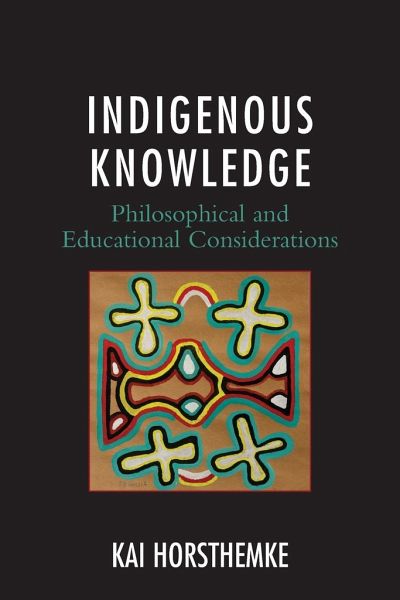
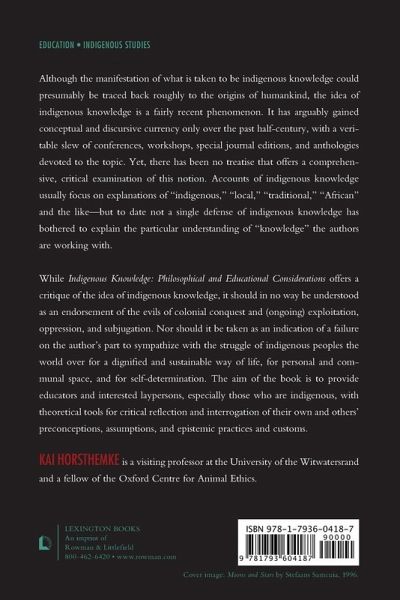
Indigenous Knowledge provides all educators, especially indigenous educators, with theoretical tools for critical reflection and interrogation of their own and othersâ preconceptions. The book challenges our conception of knowledge as a tool in anti-discrimination and anti-repression discourse with profound educational consequences.