
Andere Kunden interessierten sich auch für
 Because Internet23,99 €
") Community Medicine - Family Adoption Program (FAP)22,99 €
Community Medicine - Family Adoption Program (FAP)22,99 € Learning Social And Consumer Psychology How To22,99 €
 Aratchi muraimai12,99 €
 The Social Labs Revolution15,99 €
 Applied Meta-Analysis for Social Science Research52,99 €
 Generations17,99 €





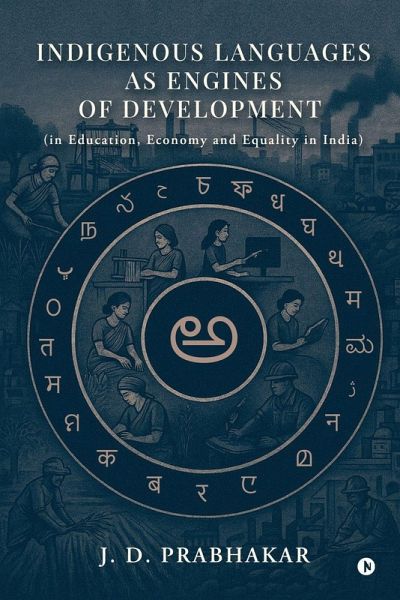
The present work is an ambitious and wide-ranging sociolinguistic-economic study that argues for a fundamental rethinking of how indigenous languages- especially Telugu-function within India's economic system. The author emphasizes that language is the basis of knowledge transfer, and knowledge is the basis of skill formation. Skill formation is the basis of productivity, and productivity drives national wealth. Thus, language-particularly the mother tongue is portrayed as a means of production in itself, on par with labor, capital, and technology. This conceptualization is one of the book's most original contributions. The author argues for a shift from English-centric developmental thinking toward an economic model that recognizes the Mother tongue as a form of human capital, Local languages as drivers of productivity and safety, Indigenous knowledge systems as economic assets, and the need for early education in native languages to strengthen long-term skill formation. I cannot but strongly support the views of the author that India cannot achieve its economic potential without integrating its linguistic diversity into education, industry, and public policy. - Uma Maheshwara Rao, G. Formerly Professor of Linguistics, University of Hyderabad, Formerly President of Linguistic Society of India (LSI) Honorary Professor, Central University of Kerala