
Andere Kunden interessierten sich auch für
 Measurement of Trends in Wellbeing, Poverty, and Inequality with Case Studies from Bolivia and Colombia71,80 €
 Economic Challenges in Early 21st Century Guyana151,99 €
 Poverty, Inequality and Migration in Latin Amerika92,95 €
 The Economics of Corruption and Bureaucratic Inefficiency in Weak States54,90 €
 Illegal Markets, Violence, and Inequality42,99 €
 Diversity of Capitalisms in Latin America76,99 €
 Sustainability in Latin America129,99 €







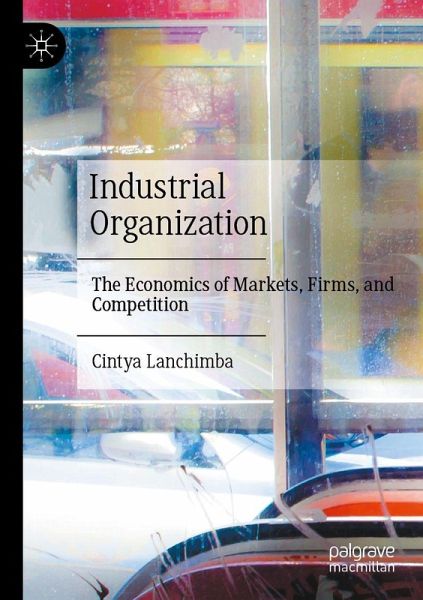
This book provides a clear and accessible introduction to industrial economics, designed to help readers understand how markets and firms operate in theory and practice.
Beginning with the benchmark model of perfect competition, the book explains why economists use this idealized structure to assess efficiency and consumer welfare. The book examines real-world market structures monopoly, oligopoly, and monopolistic competition where firms exercise strategic power over prices and output. Chapters explore how companies compete, cooperate, and innovate, drawing on case-based examples to illustrate the dynamics of market behavior. The text also addresses regulation and competition policy, tracing the origins of antitrust legislation and presenting tools for measuring market power. These chapters equip readers to evaluate policy interventions and their implications for business strategy and consumer outcomes.
In its final section, the book turns to the economics of information, focusing on contract theory and the principal agent problem. It demonstrates how incentives and asymmetric information shape decision-making within firms and markets, offering insights into governance and organizational design.
Combining rigorous analysis with practical applications, this book is an essential resource for undergraduate and graduate students in economics and business, as well as for readers seeking to understand the forces that shape modern industry.
Beginning with the benchmark model of perfect competition, the book explains why economists use this idealized structure to assess efficiency and consumer welfare. The book examines real-world market structures monopoly, oligopoly, and monopolistic competition where firms exercise strategic power over prices and output. Chapters explore how companies compete, cooperate, and innovate, drawing on case-based examples to illustrate the dynamics of market behavior. The text also addresses regulation and competition policy, tracing the origins of antitrust legislation and presenting tools for measuring market power. These chapters equip readers to evaluate policy interventions and their implications for business strategy and consumer outcomes.
In its final section, the book turns to the economics of information, focusing on contract theory and the principal agent problem. It demonstrates how incentives and asymmetric information shape decision-making within firms and markets, offering insights into governance and organizational design.
Combining rigorous analysis with practical applications, this book is an essential resource for undergraduate and graduate students in economics and business, as well as for readers seeking to understand the forces that shape modern industry.