
Andere Kunden interessierten sich auch für
 International Conference on Industry 4.0 for Agri-food Supply Chains50,99 €
 Lean Manufacturing and Industry 4.077,99 €
 Applications and Challenges of Maintenance and Safety Engineering in Industry 4.0200,99 €
 Design and Operation of Smart Reconfigurable Manufacturing Systems in Industry 4.0/5.0149,99 €
 Industry 4.0 Technologies: Sustainable Manufacturing Supply Chains83,99 €
 Ontology-Based Development of Industry 4.0 and 5.0 Solutions for Smart Manufacturing and Production121,99 €
 Industry 4.0 Driven Manufacturing Technologies174,99 €
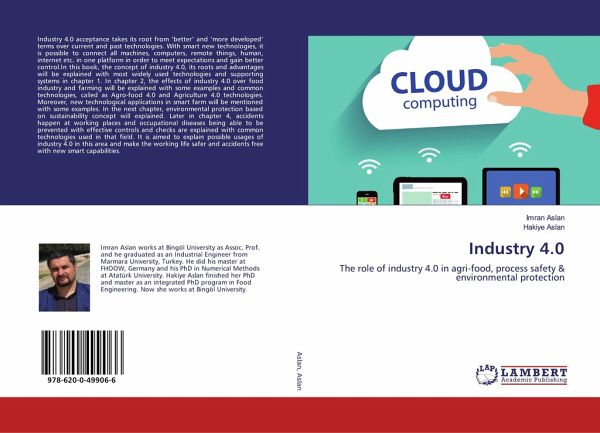
Industry 4.0 acceptance takes its root from 'better' and 'more developed' terms over current and past technologies. With smart new technologies, it is possible to connect all machines, computers, remote things, human, internet etc. in one platform in order to meet expectations and gain better control.In this book, the concept of industry 4.0, its roots and advantages will be explained with most widely used technologies and supporting systems in chapter 1. In chapter 2, the effects of industry 4.0 over food industry and farming will be explained with some examples and common technologies, called as Agro-food 4.0 and Agriculture 4.0 technologies. Moreover, new technological applications in smart farm will be mentioned with some examples. In the next chapter, environmental protection based on sustainability concept will explained. Later in chapter 4, accidents happen at working places and occupational diseases being able to be prevented with effective controls and checks are explained with common technologies used in that field. It is aimed to explain possible usages of industry 4.0 in this area and make the working life safer and accidents free with new smart capabilities.