

Andere Kunden interessierten sich auch für
 Political Communication Online117,99 €
 Disability Rights Advocacy Online177,99 €
 Islamic State's Online Propaganda167,99 €
 Islamic State's Online Propaganda52,99 €
 Online Activism in Latin America53,99 €
 Online Activism in Latin America177,99 €
 Political Communication in the Online World185,99 €

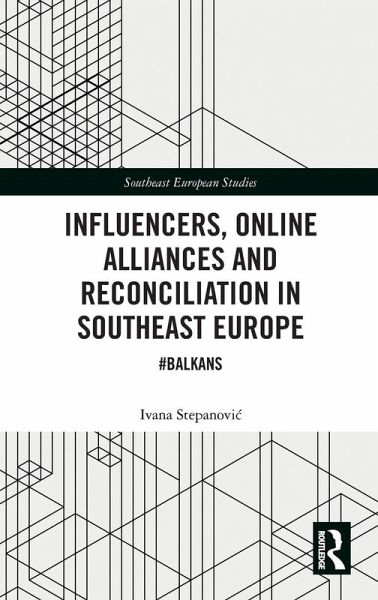
This book explores the transformative role of social media in fostering reconciliation in the former Yugoslavia, a region still grappling with unresolved conflicts and ethnic divides. Focusing on platforms like YouTube and TikTok, it highlights how Balkan influencers blend personal storytelling with commercial outreach to promote interethnic understanding. The study employs digital ethnography and narrative analysis to reveal the intricate dynamics between human actors and algorithms, uncovering how social media facilitate grassroots reconciliation initiatives.
The author critiques traditional reconciliation efforts driven by political elites and emphasises the potential of bottom-up approaches enabled by social media. It presents the concept of "algorithmic reconciliation", where social media algorithms inadvertently foster interethnic collaborations and create transnational online communities. By examining the economic and cultural practices of influencers, the book illustrates how digital platforms can serve as modern arenas for peacebuilding.
This book is primarily aimed at undergraduates and postgraduates in social history, digital media studies, and peace studies, but will also be relevant to academics, policymakers, and anyone interested in the intersection of technology and social change.
The author critiques traditional reconciliation efforts driven by political elites and emphasises the potential of bottom-up approaches enabled by social media. It presents the concept of "algorithmic reconciliation", where social media algorithms inadvertently foster interethnic collaborations and create transnational online communities. By examining the economic and cultural practices of influencers, the book illustrates how digital platforms can serve as modern arenas for peacebuilding.
This book is primarily aimed at undergraduates and postgraduates in social history, digital media studies, and peace studies, but will also be relevant to academics, policymakers, and anyone interested in the intersection of technology and social change.
"This is an original and innovative book. It explores how influencers, through their online activism and new technologies, potentially promote reconciliation in the Balkans. By referring to a still unusual amount of sources, the author broadens the public sphere analysis to an "algorithmic citizenship", targeting platform communities and paving the way for further investigations about suggested, stimulating strategies of new networks of tools and narratives." - Stefano Bianchini, University of Bologna, Italy