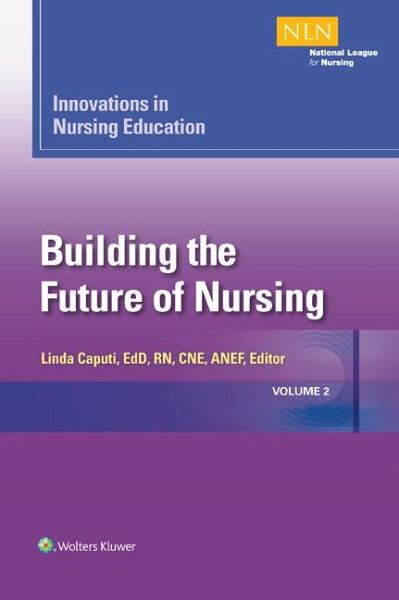
"Innovations in Nursing Education will expand the nurse educator’s repertoire with innovative methods for transforming curricula to influence how our students think about and practice nursing." Marsha Howell Adams, PhD, RN, CNE, ANEF President, National League for Nursing (2013-2015) Dean of Nursing University of Alabama in Huntsville, College of Nursing Published by the National League for Nursing, Innovations in Nursing Education: Building the Future of Nursing, Volume 2 encourages innovation and excellence in nursing education through alignment with the 2011 IOM Future of Nursing…mehr
"Innovations in Nursing Education will expand the nurse educator’s repertoire with innovative methods for transforming curricula to influence how our students think about and practice nursing." Marsha Howell Adams, PhD, RN, CNE, ANEF President, National League for Nursing (2013-2015) Dean of Nursing University of Alabama in Huntsville, College of Nursing Published by the National League for Nursing, Innovations in Nursing Education: Building the Future of Nursing, Volume 2 encourages innovation and excellence in nursing education through alignment with the 2011 IOM Future of Nursing recommendations. With the IOM model throughout, this resource provides helpful suggestions to elevate the learning and teaching experience including: · Communicating effectively · Using evidence-based content to support teaching · Improving critical reasoning · Leveraging technology to find, manage, and apply information · Finding comfort in complex or uncertain situations · Managing change and conflict
Chapter 1 Telecommuting Faculty: Application within a School of Nursing 3 Chapter 2 Strategies to Lighten Faculty Workload: Rubrics and Apps 13 Chapter 3 Learning Circles: Faculty as Learners 17 SECTION II The Nursing Education Curriculum 23 Chapter 4 Nursing Student Retention Strategy: An Integrated Study Skills Elective 25 Chapter 5 Creating a Culture of Accommodation Acceptance: Case by Case 31 Chapter 6 Addressing Response Shift Bias: A Cultural Competence Evaluation Example 39 Chapter 7 Developing a Population-Focused Clinical Placement: A School of Nursing–Federal Prison Partnership 45 Chapter 8 Innovation: Improving Outcomes of Collaborative Teaching 49 Chapter 9 Minimizing the Gap between Expected and Actualized Learning Outcomes: A Curricular Approach 57 Chapter 10 Our Journey to Implementing the New NLN Outcomes and Competencies for Graduates of an Associate Degree Program 63 SECTION III Teaching Strategies 69 Chapter 11 Using a “Flipped Classroom” Model to Engage Learners 71 Chapter 12 A Return to Our Senses: Making a Case for Embodied Learning in Nursing Education 77 Chapter 13 Geropsychiatric Teaching and Learning Strategies: Cognitive Assessment During a Seasonal Flu Clinic 85 Chapter 14 Postconference Nursing Rounds: An Integrative Approach to Promoting Salience in Clinical Education 91 Chapter 15 Geography and Nursing: Putting the Pieces Together to Improve Health 97 Chapter 16 Building Capability and Capacity in Tomorrow’s Nursing Leaders: The Role of Cultural Competency in Policy Advocacy 101 Chapter 17 Innovative Method to Engage Baccalaureate-Prepared Nursing Students in Evidence-Based Practice 107 Chapter 18 Preparing Prelicensure Students for Evidence Based Practice: Innovative Approaches to Teaching Statistics 115 Chapter 19 Relational Aggression: Addressing the Elephant in the Room 123 Chapter 20 Finding Congruence in Personal and Organizational Philosophies: An Educational Strategy to Enhance Novice Nurse Retention 127 SECTION IV Technology 137 Chapter 21 Using the Media to Help Students Find Their Professional Voice: Application of Kolb’s Theory 139 Chapter 22 A Simulated Public Health Experience 143 Chapter 23 Using an Original App to Teach Evidence Based Nursing 153 Chapter 24 Transferring Simulation into Clinical Practice: A Psychosocial Nursing Exemplar 159 Chapter 25 The Journey of Transitioning to a Simulation Nurse Leader in Ohio 165
Chapter 1 Telecommuting Faculty: Application within a School of Nursing 3 Chapter 2 Strategies to Lighten Faculty Workload: Rubrics and Apps 13 Chapter 3 Learning Circles: Faculty as Learners 17 SECTION II The Nursing Education Curriculum 23 Chapter 4 Nursing Student Retention Strategy: An Integrated Study Skills Elective 25 Chapter 5 Creating a Culture of Accommodation Acceptance: Case by Case 31 Chapter 6 Addressing Response Shift Bias: A Cultural Competence Evaluation Example 39 Chapter 7 Developing a Population-Focused Clinical Placement: A School of Nursing–Federal Prison Partnership 45 Chapter 8 Innovation: Improving Outcomes of Collaborative Teaching 49 Chapter 9 Minimizing the Gap between Expected and Actualized Learning Outcomes: A Curricular Approach 57 Chapter 10 Our Journey to Implementing the New NLN Outcomes and Competencies for Graduates of an Associate Degree Program 63 SECTION III Teaching Strategies 69 Chapter 11 Using a “Flipped Classroom” Model to Engage Learners 71 Chapter 12 A Return to Our Senses: Making a Case for Embodied Learning in Nursing Education 77 Chapter 13 Geropsychiatric Teaching and Learning Strategies: Cognitive Assessment During a Seasonal Flu Clinic 85 Chapter 14 Postconference Nursing Rounds: An Integrative Approach to Promoting Salience in Clinical Education 91 Chapter 15 Geography and Nursing: Putting the Pieces Together to Improve Health 97 Chapter 16 Building Capability and Capacity in Tomorrow’s Nursing Leaders: The Role of Cultural Competency in Policy Advocacy 101 Chapter 17 Innovative Method to Engage Baccalaureate-Prepared Nursing Students in Evidence-Based Practice 107 Chapter 18 Preparing Prelicensure Students for Evidence Based Practice: Innovative Approaches to Teaching Statistics 115 Chapter 19 Relational Aggression: Addressing the Elephant in the Room 123 Chapter 20 Finding Congruence in Personal and Organizational Philosophies: An Educational Strategy to Enhance Novice Nurse Retention 127 SECTION IV Technology 137 Chapter 21 Using the Media to Help Students Find Their Professional Voice: Application of Kolb’s Theory 139 Chapter 22 A Simulated Public Health Experience 143 Chapter 23 Using an Original App to Teach Evidence Based Nursing 153 Chapter 24 Transferring Simulation into Clinical Practice: A Psychosocial Nursing Exemplar 159 Chapter 25 The Journey of Transitioning to a Simulation Nurse Leader in Ohio 165
Es gelten unsere Allgemeinen Geschäftsbedingungen: www.buecher.de/agb
Impressum
www.buecher.de ist ein Internetauftritt der buecher.de internetstores GmbH
Geschäftsführung: Monica Sawhney | Roland Kölbl | Günter Hilger
Sitz der Gesellschaft: Batheyer Straße 115 - 117, 58099 Hagen
Postanschrift: Bürgermeister-Wegele-Str. 12, 86167 Augsburg
Amtsgericht Hagen HRB 13257
Steuernummer: 321/5800/1497
USt-IdNr: DE450055826