
Andere Kunden interessierten sich auch für
 Ecology of Aphidophagous Insects153,99 €
 Insects - Plants153,99 €
 Survey of the World's Aphids229,99 €
 Fauna of British India Including Ceylon and Burma. Arachnida153,99 €
 Ecology and Biogeography of High Altitude Insects153,99 €
 of Economic Importance") Agromyzidae (Diptera) of Economic Importance151,99 €
Agromyzidae (Diptera) of Economic Importance151,99 € Die Orthopteren Europas / The Orthoptera of Europe229,99 €
Produktdetails
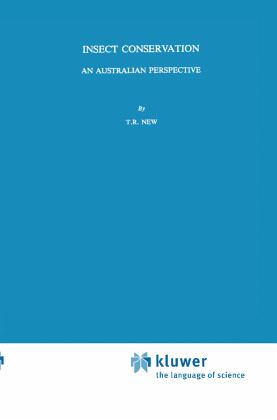
- Series Entomologica 32
- Verlag: Springer / Springer Netherlands
- Artikelnr. des Verlages: 978-90-6193-507-0
- 1984.
- Seitenzahl: 202
- Erscheinungstermin: 31. Oktober 1984
- Englisch
- Abmessung: 241mm x 160mm x 16mm
- Gewicht: 420g
- ISBN-13: 9789061935070
- ISBN-10: 9061935075
- Artikelnr.: 21013015
- Herstellerkennzeichnung
- Springer-Verlag KG
- Sachsenplatz 4-6
- 1201 Wien, AT
- ProductSafety@springernature.com
`This book tackles a timely and contentious topic and succeeds to the extent that it will remain a resource book on the problem of insect conservation in Australia for years to come. ...coverage of informatin is excellent and a comprehensive list of 266 references gives access to a truly international literature on insect conservation.'
Journal of the Australian Entomological Society, 24 (1985)
`...New's thoughtful work not only points the way ahead for Australians, but provides a very valuable summary for conservationists in the northern hemisphere too.'
Oryx, 20 (1986)
Journal of the Australian Entomological Society, 24 (1985)
`...New's thoughtful work not only points the way ahead for Australians, but provides a very valuable summary for conservationists in the northern hemisphere too.'
Oryx, 20 (1986)
`This book tackles a timely and contentious topic and succeeds to the extent that it will remain a resource book on the problem of insect conservation in Australia for years to come. ...coverage of informatin is excellent and a comprehensive list of 266 references gives access to a truly international literature on insect conservation.'
Journal of the Australian Entomological Society, 24 (1985)
`...New's thoughtful work not only points the way ahead for Australians, but provides a very valuable summary for conservationists in the northern hemisphere too.'
Oryx, 20 (1986)
Journal of the Australian Entomological Society, 24 (1985)
`...New's thoughtful work not only points the way ahead for Australians, but provides a very valuable summary for conservationists in the northern hemisphere too.'
Oryx, 20 (1986)