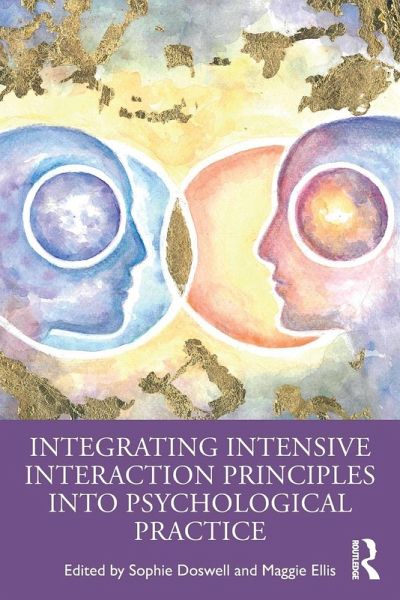
Integrating Intensive Interaction Principles into Psychological Practice
Herausgeber: Sophie Doswell; Maggie Ellis
Integrating Intensive Interaction Principles into Psychological Practice
Herausgeber: Sophie Doswell; Maggie Ellis
- Broschiertes Buch
- Merkliste
- Auf die Merkliste
- Bewerten Bewerten
- Teilen
- Produkt teilen
- Produkterinnerung
- Produkterinnerung
This book details how to use Intensive Interaction as a psychologically informed practice when working with â seldom-heardâ clients.
Andere Kunden interessierten sich auch für
Amandine MouriereIntegrating Intensive Interaction43,99 €
Jo-Ann Blaymore BierDevelopmental and Behavioral Complexities in Children29,99 €
Shoshana Levin FoxAn Autism Casebook for Parents and Practitioners44,99 €
Robin Tipple (Goldsmiths College, University of London, UK)Art Therapy in a Learning Disability Setting47,99 €
Cognitive Behaviour Therapy for Acute Inpatient Mental Health Units56,99 €
Anna BranaganLanguage for Behaviour and Emotions73,99 €
Val Cumine (UK Education Consultant)Autism in the Early Years42,99 €-
-
-
This book details how to use Intensive Interaction as a psychologically informed practice when working with â seldom-heardâ clients.
Produktdetails
- Produktdetails
- Verlag: Taylor & Francis Ltd
- Seitenzahl: 188
- Erscheinungstermin: 21. Oktober 2025
- Englisch
- Abmessung: 234mm x 156mm x 10mm
- Gewicht: 294g
- ISBN-13: 9781032982892
- ISBN-10: 1032982896
- Artikelnr.: 74062830
- Herstellerkennzeichnung
- Libri GmbH
- Europaallee 1
- 36244 Bad Hersfeld
- gpsr@libri.de
- Verlag: Taylor & Francis Ltd
- Seitenzahl: 188
- Erscheinungstermin: 21. Oktober 2025
- Englisch
- Abmessung: 234mm x 156mm x 10mm
- Gewicht: 294g
- ISBN-13: 9781032982892
- ISBN-10: 1032982896
- Artikelnr.: 74062830
- Herstellerkennzeichnung
- Libri GmbH
- Europaallee 1
- 36244 Bad Hersfeld
- gpsr@libri.de
Sophie Doswell is a Consultant Clinical Psychologist who has worked in the NHS with individuals with intellectual disabilities and autistic individuals for over 25 years. She was introduced to Intensive Interaction early in her career and is passionate about its use within services as a way of connecting with individuals, alleviating distress and helping supporters. Maggie Ellis, MBE, is a psychologist based at the University of St Andrews. She has worked with people living with dementia as a volunteer and researcher for 24 years, with a particular focus on facilitating communication between people with very advanced dementia and their carers.
1. The History and Development of Intensive Interaction: What is it? ...
and where did it come from? 2.An introduction to Intensive Interaction as a
psychological intervention 3.Intensive Interaction, suffering and healing -
from diagnosing and prescribing to connecting and engaging 4.Intensive
Interaction and Positive Psychology: Theoretical Convergence 5.Intensive
Interaction in Psychological Practice for people who present with
'behaviours of concern' 6.Helping Families to Use the Principles of
Intensive Interaction with People Living with Advanced Dementia 7.A
parental and family view on using Intensive Interaction 8.Exploring the
barriers to implementing Intensive and Adaptive Interaction in practice and
Psychological Services 9.Training in Intensive Interaction and Adaptive
Interaction for trainee and qualified psychological practitioners
10.Intensive Interaction within Psychological Service Structures
11.Development of a psychological model and recommendations for measuring
Intensive/Adaptive Interaction when used as a psychological intervention
and where did it come from? 2.An introduction to Intensive Interaction as a
psychological intervention 3.Intensive Interaction, suffering and healing -
from diagnosing and prescribing to connecting and engaging 4.Intensive
Interaction and Positive Psychology: Theoretical Convergence 5.Intensive
Interaction in Psychological Practice for people who present with
'behaviours of concern' 6.Helping Families to Use the Principles of
Intensive Interaction with People Living with Advanced Dementia 7.A
parental and family view on using Intensive Interaction 8.Exploring the
barriers to implementing Intensive and Adaptive Interaction in practice and
Psychological Services 9.Training in Intensive Interaction and Adaptive
Interaction for trainee and qualified psychological practitioners
10.Intensive Interaction within Psychological Service Structures
11.Development of a psychological model and recommendations for measuring
Intensive/Adaptive Interaction when used as a psychological intervention
1. The History and Development of Intensive Interaction: What is it? ...
and where did it come from? 2.An introduction to Intensive Interaction as a
psychological intervention 3.Intensive Interaction, suffering and healing -
from diagnosing and prescribing to connecting and engaging 4.Intensive
Interaction and Positive Psychology: Theoretical Convergence 5.Intensive
Interaction in Psychological Practice for people who present with
'behaviours of concern' 6.Helping Families to Use the Principles of
Intensive Interaction with People Living with Advanced Dementia 7.A
parental and family view on using Intensive Interaction 8.Exploring the
barriers to implementing Intensive and Adaptive Interaction in practice and
Psychological Services 9.Training in Intensive Interaction and Adaptive
Interaction for trainee and qualified psychological practitioners
10.Intensive Interaction within Psychological Service Structures
11.Development of a psychological model and recommendations for measuring
Intensive/Adaptive Interaction when used as a psychological intervention
and where did it come from? 2.An introduction to Intensive Interaction as a
psychological intervention 3.Intensive Interaction, suffering and healing -
from diagnosing and prescribing to connecting and engaging 4.Intensive
Interaction and Positive Psychology: Theoretical Convergence 5.Intensive
Interaction in Psychological Practice for people who present with
'behaviours of concern' 6.Helping Families to Use the Principles of
Intensive Interaction with People Living with Advanced Dementia 7.A
parental and family view on using Intensive Interaction 8.Exploring the
barriers to implementing Intensive and Adaptive Interaction in practice and
Psychological Services 9.Training in Intensive Interaction and Adaptive
Interaction for trainee and qualified psychological practitioners
10.Intensive Interaction within Psychological Service Structures
11.Development of a psychological model and recommendations for measuring
Intensive/Adaptive Interaction when used as a psychological intervention