Andere Kunden interessierten sich auch für
 Intentions21,99 €
 Deadly Intentions17,99 €
 Intentions34,90 €
 Intentions21,99 €
 Raw Intentions20,99 €
 Our Best Intentions16,99 €
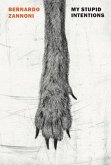
 My Stupid Intentions14,99 €



IntentionsOscar Wilde Cyril (coming in through the open window from the terrace): My dear Vivian, don't coop yourself up all day in the library. It is a perfectly lovely afternoon. The air is exquisite. There is a mist upon the woods, like the purple bloom upon a plum. Let us go and lie on the grass and smoke cigarettes and enjoy Nature. Vivian: Enjoy Nature! I am glad to say that I have entirely lost that faculty. People tell us that Art makes us love Nature more than we loved her before that it reveals her secrets to us and that after a careful study of Corot and Constable we see things in her that had escaped our observation. My own experience is that the more we study Art, the less we care for Nature. What Art really reveals to us is Nature's lack of design, her curious crudities, her extraordinary monotony, her absolutely unfinished condition. Nature has good intentions, of course, but, as Aristotle once said, she cannot carry them out. When I look at a landscape I cannot help seeing all its defects. It is fortunate for us, however, that Nature is so imperfect, as otherwise we should have no art at all. Art is our spirited protest, our gallant attempt to teach Nature her proper place. As for the infinite variety of Nature, that is a pure myth. It is not to be found in Nature herself. It resides in the imagination, or fancy, or cultivated blindness of the man who looks at her. Cyril: Well, you need not look at the landscape. You can lie on the grass and smoke and talk. Vivian: But Nature is so uncomfortable. Grass is hard and lumpy and damp, and full of dreadful black insects. Why, even Morris's poorest workman could make you a more comfortable seat than the whole of Nature can. Nature pales before the furniture of 'the street which from Oxford has borrowed its name,' as the poet you love so much once vilely phrased it. I don't complain. If Nature had been comfortable, mankind would never have invented architecture, and I prefer houses to the open air. In a house we all feel of the proper proportions. Everything is subordinated to us, fashioned for our use and our pleasure. Egotism itself, which is so necessary to a proper sense of human dignity, is entirely the result of indoor life. Out of doors one becomes abstract and impersonal. One's individuality absolutely leaves one. And then Nature is so indifferent, so unappreciative.
A Critic in Pall MallBy Oscar WildeAs one enters Rome from the Via Ostiensis by the Porta San Paolo, the first object that meets the eye is a marble pyramid which stands close at hand on the left. There are many Egyptian obelisks in Rome-tall, snakelike spires of red sandstone, mottled with strange writings, which remind us of the pillars of flame which led the children of Israel through the desert away from the land of the Pharaohs but more wonderful than these to look upon is this gaunt, wedge-shaped pyramid standing here in this Italian city, unshattered amid the ruins and wrecks of time, looking older than the Eternal City itself, like terrible impassiveness turned to stone. And so in the Middle Ages men supposed this to be the sepulchre of Remus, who was slain by his own brother at the founding of the city, so ancient and mysterious it appears but we have now, perhaps unfortunately, more accurate information about it, and know that it is the tomb of one Caius Cestius, a Roman gentleman of small note, who died about 30 b.c. Yet though we cannot care much for the dead man who lies in lonely state beneath it, and who is only known to the world through his sepulchre, still this pyramid will be ever dear to the eyes of all English-speaking people, because at evening its shadows fall on the tomb of one who walks with Spenser, and Shakespeare, and Byron, and Shelley, and Elizabeth Barrett Browning in the great procession of the sweet singers of England. And the name of the young English poet is John Keats. Lord Houghton calls this cemetery 'one of the most beautiful spots on which the eye and heart of man can rest,' and Shelley speaks of it as making one 'in love with death, to think that one should be buried in so sweet a place' and indeed when I saw the violets and the daisies and the poppies that overgrow the tomb, I remembered how the dead poet had once told his friend that he thought the 'intensest pleasure he had received in life was in watching the growth of flowers,' and how another time, after lying a while quite still, he murmured in some strange prescience of early death, 'I feel the flowers growing over me.'