International Judicial Practice on the Environment
Herausgeber: Voigt, Christina
International Judicial Practice on the Environment
Herausgeber: Voigt, Christina
- Gebundenes Buch
- Merkliste
- Auf die Merkliste
- Bewerten Bewerten
- Teilen
- Produkt teilen
- Produkterinnerung
- Produkterinnerung
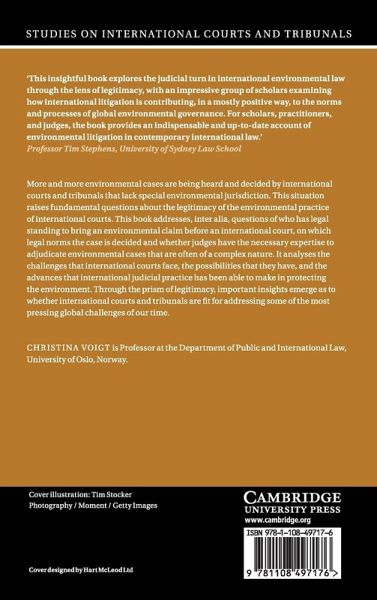
Evaluates the fundamental legitimacy of judicial practice in the growing number of environmental cases heard before international courts.
Andere Kunden interessierten sich auch für
Farhana YaminThe International Climate Change Regime236,99 €
International Environmental Law and the Global South155,99 €
Caroline E. FosterScience and the Precautionary Principle in International Courts and Tribunals94,99 €
Rosemary LysterEnergy Law and the Environment84,99 €
Beatriz GarciaThe Amazon from an International Law Perspective76,99 €
Caroline E. FosterScience and the Precautionary Principle in International Courts and Tribunals47,99 €
International Environmental Law and the Global South62,99 €-
-
-
Evaluates the fundamental legitimacy of judicial practice in the growing number of environmental cases heard before international courts.
Produktdetails
- Produktdetails
- Verlag: Cambridge University Press
- Seitenzahl: 506
- Erscheinungstermin: 18. April 2019
- Englisch
- Abmessung: 235mm x 157mm x 32mm
- Gewicht: 876g
- ISBN-13: 9781108497176
- ISBN-10: 1108497179
- Artikelnr.: 53489721
- Herstellerkennzeichnung
- Libri GmbH
- Europaallee 1
- 36244 Bad Hersfeld
- gpsr@libri.de
- Verlag: Cambridge University Press
- Seitenzahl: 506
- Erscheinungstermin: 18. April 2019
- Englisch
- Abmessung: 235mm x 157mm x 32mm
- Gewicht: 876g
- ISBN-13: 9781108497176
- ISBN-10: 1108497179
- Artikelnr.: 53489721
- Herstellerkennzeichnung
- Libri GmbH
- Europaallee 1
- 36244 Bad Hersfeld
- gpsr@libri.de
Introduction: international courts and the environment: the quest for
legitimacy Christina Voigt; Part I. Procedural Legitimacy of Judicial
Environmental Practice: Access to Justice: 1. The environment before the
European Court of Justice Ludwig Krämer; 2. The EU Aarhus Regulation and EU
administrative acts based on the Aarhus regulation - the withdrawal of the
CJEU from the Aarhus Convention Katja Rath; 3. Access to justice before EU
courts in environmental cases against the backdrop of the Aarhus
Convention: balancing between pathological stubbornness and cognitive
dissonance? Hendrik Schoukens; Part II. Legitimacy and Scientific Certainty
- Environmental Adjudication, Use of Experts and the Limits of Science: 4.
Scientific uncertainties: a nightmare for environmental adjudicators Tracey
Kanhanga; 5. Ignorance, uncertainty and biodiversity: decision making by
the court of justice of the European Union Volker Mauerhofer; Part III.
Judges as Law-Makers: Legitimate Development of Environmental Law: 6.
Sustainable development before international courts and tribunals: duty to
cooperate and states¿ good faith Kazuki Hagiwara; 7. New legal avenues to
support a transboundary harm claim on the basis of climate change Kurt
Winter; 8. The Court of Justice of the European Union and the high level of
environmental protection - transforming a policy objective into a concept
amenable to judicial review Delphine Misonne; Part IV. Legitimacy of
Outcomes: Performance, Effects (and Side-effects): 9. When environmental
protection and human rights collide: four heuristics of conflict resolution
Marie-Catherine Petersmann; 10. Silent implications of US-Tuna II: greening
market behaviour through the WTO Cristiane Derani and Arthur Rodrigues
Dalmarco; 11. Adjudication of environmental impact assessment claims before
international courts and tribunals Andrew B. Loewenstein; 12. Litigation as
a climate regulatory tool Jacqueline Peel and Hari Osofsky; Part V. The
Legitimacy of Non-Compliance Procedures: 13. Administrative procedures and
rule of law values in the Montreal compliance system Anna Huggins; 14.
Legitimacy questions of non-compliance procedures: examples from the Kyoto
and Montreal Protocol Zerin Saväan; Part VI. The Limits of Environmental
Justice through Courts: Balancing Legitimacy with the Need for Creativity:
15. Environmental Ombudsman: its role in the system of accountability
mechanisms for administrative environmental decision making Mahito Shindo;
16. The role of NGOs in monitoring compliance under the World Heritage
Convention: options for an improved tripartite regime Evan Hamman; 17.
Beyond litigation: the need for creativity in working to realize
environmental rights Lisa Chamberlain.
legitimacy Christina Voigt; Part I. Procedural Legitimacy of Judicial
Environmental Practice: Access to Justice: 1. The environment before the
European Court of Justice Ludwig Krämer; 2. The EU Aarhus Regulation and EU
administrative acts based on the Aarhus regulation - the withdrawal of the
CJEU from the Aarhus Convention Katja Rath; 3. Access to justice before EU
courts in environmental cases against the backdrop of the Aarhus
Convention: balancing between pathological stubbornness and cognitive
dissonance? Hendrik Schoukens; Part II. Legitimacy and Scientific Certainty
- Environmental Adjudication, Use of Experts and the Limits of Science: 4.
Scientific uncertainties: a nightmare for environmental adjudicators Tracey
Kanhanga; 5. Ignorance, uncertainty and biodiversity: decision making by
the court of justice of the European Union Volker Mauerhofer; Part III.
Judges as Law-Makers: Legitimate Development of Environmental Law: 6.
Sustainable development before international courts and tribunals: duty to
cooperate and states¿ good faith Kazuki Hagiwara; 7. New legal avenues to
support a transboundary harm claim on the basis of climate change Kurt
Winter; 8. The Court of Justice of the European Union and the high level of
environmental protection - transforming a policy objective into a concept
amenable to judicial review Delphine Misonne; Part IV. Legitimacy of
Outcomes: Performance, Effects (and Side-effects): 9. When environmental
protection and human rights collide: four heuristics of conflict resolution
Marie-Catherine Petersmann; 10. Silent implications of US-Tuna II: greening
market behaviour through the WTO Cristiane Derani and Arthur Rodrigues
Dalmarco; 11. Adjudication of environmental impact assessment claims before
international courts and tribunals Andrew B. Loewenstein; 12. Litigation as
a climate regulatory tool Jacqueline Peel and Hari Osofsky; Part V. The
Legitimacy of Non-Compliance Procedures: 13. Administrative procedures and
rule of law values in the Montreal compliance system Anna Huggins; 14.
Legitimacy questions of non-compliance procedures: examples from the Kyoto
and Montreal Protocol Zerin Saväan; Part VI. The Limits of Environmental
Justice through Courts: Balancing Legitimacy with the Need for Creativity:
15. Environmental Ombudsman: its role in the system of accountability
mechanisms for administrative environmental decision making Mahito Shindo;
16. The role of NGOs in monitoring compliance under the World Heritage
Convention: options for an improved tripartite regime Evan Hamman; 17.
Beyond litigation: the need for creativity in working to realize
environmental rights Lisa Chamberlain.
Introduction: international courts and the environment: the quest for
legitimacy Christina Voigt; Part I. Procedural Legitimacy of Judicial
Environmental Practice: Access to Justice: 1. The environment before the
European Court of Justice Ludwig Krämer; 2. The EU Aarhus Regulation and EU
administrative acts based on the Aarhus regulation - the withdrawal of the
CJEU from the Aarhus Convention Katja Rath; 3. Access to justice before EU
courts in environmental cases against the backdrop of the Aarhus
Convention: balancing between pathological stubbornness and cognitive
dissonance? Hendrik Schoukens; Part II. Legitimacy and Scientific Certainty
- Environmental Adjudication, Use of Experts and the Limits of Science: 4.
Scientific uncertainties: a nightmare for environmental adjudicators Tracey
Kanhanga; 5. Ignorance, uncertainty and biodiversity: decision making by
the court of justice of the European Union Volker Mauerhofer; Part III.
Judges as Law-Makers: Legitimate Development of Environmental Law: 6.
Sustainable development before international courts and tribunals: duty to
cooperate and states¿ good faith Kazuki Hagiwara; 7. New legal avenues to
support a transboundary harm claim on the basis of climate change Kurt
Winter; 8. The Court of Justice of the European Union and the high level of
environmental protection - transforming a policy objective into a concept
amenable to judicial review Delphine Misonne; Part IV. Legitimacy of
Outcomes: Performance, Effects (and Side-effects): 9. When environmental
protection and human rights collide: four heuristics of conflict resolution
Marie-Catherine Petersmann; 10. Silent implications of US-Tuna II: greening
market behaviour through the WTO Cristiane Derani and Arthur Rodrigues
Dalmarco; 11. Adjudication of environmental impact assessment claims before
international courts and tribunals Andrew B. Loewenstein; 12. Litigation as
a climate regulatory tool Jacqueline Peel and Hari Osofsky; Part V. The
Legitimacy of Non-Compliance Procedures: 13. Administrative procedures and
rule of law values in the Montreal compliance system Anna Huggins; 14.
Legitimacy questions of non-compliance procedures: examples from the Kyoto
and Montreal Protocol Zerin Saväan; Part VI. The Limits of Environmental
Justice through Courts: Balancing Legitimacy with the Need for Creativity:
15. Environmental Ombudsman: its role in the system of accountability
mechanisms for administrative environmental decision making Mahito Shindo;
16. The role of NGOs in monitoring compliance under the World Heritage
Convention: options for an improved tripartite regime Evan Hamman; 17.
Beyond litigation: the need for creativity in working to realize
environmental rights Lisa Chamberlain.
legitimacy Christina Voigt; Part I. Procedural Legitimacy of Judicial
Environmental Practice: Access to Justice: 1. The environment before the
European Court of Justice Ludwig Krämer; 2. The EU Aarhus Regulation and EU
administrative acts based on the Aarhus regulation - the withdrawal of the
CJEU from the Aarhus Convention Katja Rath; 3. Access to justice before EU
courts in environmental cases against the backdrop of the Aarhus
Convention: balancing between pathological stubbornness and cognitive
dissonance? Hendrik Schoukens; Part II. Legitimacy and Scientific Certainty
- Environmental Adjudication, Use of Experts and the Limits of Science: 4.
Scientific uncertainties: a nightmare for environmental adjudicators Tracey
Kanhanga; 5. Ignorance, uncertainty and biodiversity: decision making by
the court of justice of the European Union Volker Mauerhofer; Part III.
Judges as Law-Makers: Legitimate Development of Environmental Law: 6.
Sustainable development before international courts and tribunals: duty to
cooperate and states¿ good faith Kazuki Hagiwara; 7. New legal avenues to
support a transboundary harm claim on the basis of climate change Kurt
Winter; 8. The Court of Justice of the European Union and the high level of
environmental protection - transforming a policy objective into a concept
amenable to judicial review Delphine Misonne; Part IV. Legitimacy of
Outcomes: Performance, Effects (and Side-effects): 9. When environmental
protection and human rights collide: four heuristics of conflict resolution
Marie-Catherine Petersmann; 10. Silent implications of US-Tuna II: greening
market behaviour through the WTO Cristiane Derani and Arthur Rodrigues
Dalmarco; 11. Adjudication of environmental impact assessment claims before
international courts and tribunals Andrew B. Loewenstein; 12. Litigation as
a climate regulatory tool Jacqueline Peel and Hari Osofsky; Part V. The
Legitimacy of Non-Compliance Procedures: 13. Administrative procedures and
rule of law values in the Montreal compliance system Anna Huggins; 14.
Legitimacy questions of non-compliance procedures: examples from the Kyoto
and Montreal Protocol Zerin Saväan; Part VI. The Limits of Environmental
Justice through Courts: Balancing Legitimacy with the Need for Creativity:
15. Environmental Ombudsman: its role in the system of accountability
mechanisms for administrative environmental decision making Mahito Shindo;
16. The role of NGOs in monitoring compliance under the World Heritage
Convention: options for an improved tripartite regime Evan Hamman; 17.
Beyond litigation: the need for creativity in working to realize
environmental rights Lisa Chamberlain.