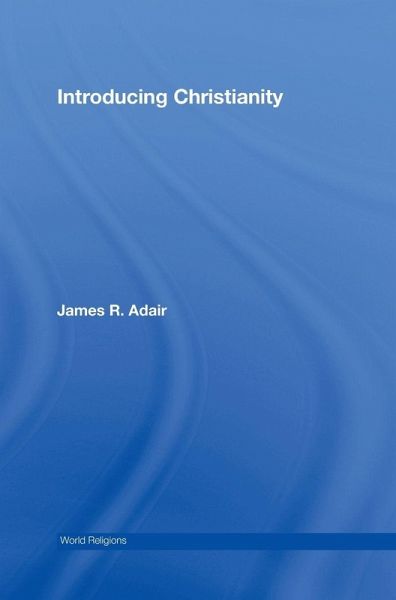
James R. Adair
Introducing Christianity
James R. Adair
Introducing Christianity
- Gebundenes Buch
- Merkliste
- Auf die Merkliste
- Bewerten Bewerten
- Teilen
- Produkt teilen
- Produkterinnerung
- Produkterinnerung
An essential introduction to one of the world's great religious traditions, written in a vivid, lively style by an experienced teacher.
Andere Kunden interessierten sich auch für
Livia KohnIntroducing Daoism170,99 €
Victoria KennickIntroducing World Religions179,99 €
Scott RaeThe Introducing Christian Ethics17,99 €
Rabbi Peretz RivkinIntroducing Zeroa, Lechayayim and Keva Hardcover33,99 €
Paul S. JeonIntroducing Romans27,99 €
Paul S. JeonIntroducing Romans13,99 €
John DraneIntroducing the New Testament37,99 €-
-
-
An essential introduction to one of the world's great religious traditions, written in a vivid, lively style by an experienced teacher.
Produktdetails
- Produktdetails
- Verlag: Routledge
- Seitenzahl: 514
- Erscheinungstermin: 19. Dezember 2007
- Englisch
- Abmessung: 250mm x 175mm x 32mm
- Gewicht: 1057g
- ISBN-13: 9780415772112
- ISBN-10: 0415772117
- Artikelnr.: 23820207
- Herstellerkennzeichnung
- Libri GmbH
- Europaallee 1
- 36244 Bad Hersfeld
- gpsr@libri.de
- Verlag: Routledge
- Seitenzahl: 514
- Erscheinungstermin: 19. Dezember 2007
- Englisch
- Abmessung: 250mm x 175mm x 32mm
- Gewicht: 1057g
- ISBN-13: 9780415772112
- ISBN-10: 0415772117
- Artikelnr.: 23820207
- Herstellerkennzeichnung
- Libri GmbH
- Europaallee 1
- 36244 Bad Hersfeld
- gpsr@libri.de
James R. Adair is Assistant Professor at Baptist University of the Américas in San Antonio, Texas. He was the editor of the Society of Biblical Literature Text-Critical monograph series from 1997-2004 and is the general editor of TC: A Journal of Biblical Textual Criticism.
Part 1: Introduction to Christianity 1. Basic Questions 2. Christianity and
the Divine Part 2: Historical Overview of Christianity 3. The Historical
and Intellectual Context of Christianity 4. The Founder and Foundational
Documents 5. Defining Christianity 6. Conflict and Persecution 7. The
Triumph of Christianity 8. Power Shift 9. Christendom at its Height 10.
Winds of Change 11. Upheaval in the Church 12. Orthodoxy 13. Old World and
New World 14. Diversification and Expansion 15. The Church and the Modern
World Part 3: The Varieties of Christianity 16. A
Denominational/Traditional Perspective 17. A Geographical Perspective 18. A
Doctrinal Perspective 19. A Liturgical Perspective Part 4: Christianity's
Interaction with the World 20. Christianity and Science 21. Christianity
and the Arts 22. Christian Ethics and Politics 23. Christianity and Other
Religions 24. Conclusion. Abbreviations. Glossary. Bibliography
the Divine Part 2: Historical Overview of Christianity 3. The Historical
and Intellectual Context of Christianity 4. The Founder and Foundational
Documents 5. Defining Christianity 6. Conflict and Persecution 7. The
Triumph of Christianity 8. Power Shift 9. Christendom at its Height 10.
Winds of Change 11. Upheaval in the Church 12. Orthodoxy 13. Old World and
New World 14. Diversification and Expansion 15. The Church and the Modern
World Part 3: The Varieties of Christianity 16. A
Denominational/Traditional Perspective 17. A Geographical Perspective 18. A
Doctrinal Perspective 19. A Liturgical Perspective Part 4: Christianity's
Interaction with the World 20. Christianity and Science 21. Christianity
and the Arts 22. Christian Ethics and Politics 23. Christianity and Other
Religions 24. Conclusion. Abbreviations. Glossary. Bibliography
Part 1: Introduction to Christianity 1. Basic Questions 2. Christianity and
the Divine Part 2: Historical Overview of Christianity 3. The Historical
and Intellectual Context of Christianity 4. The Founder and Foundational
Documents 5. Defining Christianity 6. Conflict and Persecution 7. The
Triumph of Christianity 8. Power Shift 9. Christendom at its Height 10.
Winds of Change 11. Upheaval in the Church 12. Orthodoxy 13. Old World and
New World 14. Diversification and Expansion 15. The Church and the Modern
World Part 3: The Varieties of Christianity 16. A
Denominational/Traditional Perspective 17. A Geographical Perspective 18. A
Doctrinal Perspective 19. A Liturgical Perspective Part 4: Christianity's
Interaction with the World 20. Christianity and Science 21. Christianity
and the Arts 22. Christian Ethics and Politics 23. Christianity and Other
Religions 24. Conclusion. Abbreviations. Glossary. Bibliography
the Divine Part 2: Historical Overview of Christianity 3. The Historical
and Intellectual Context of Christianity 4. The Founder and Foundational
Documents 5. Defining Christianity 6. Conflict and Persecution 7. The
Triumph of Christianity 8. Power Shift 9. Christendom at its Height 10.
Winds of Change 11. Upheaval in the Church 12. Orthodoxy 13. Old World and
New World 14. Diversification and Expansion 15. The Church and the Modern
World Part 3: The Varieties of Christianity 16. A
Denominational/Traditional Perspective 17. A Geographical Perspective 18. A
Doctrinal Perspective 19. A Liturgical Perspective Part 4: Christianity's
Interaction with the World 20. Christianity and Science 21. Christianity
and the Arts 22. Christian Ethics and Politics 23. Christianity and Other
Religions 24. Conclusion. Abbreviations. Glossary. Bibliography