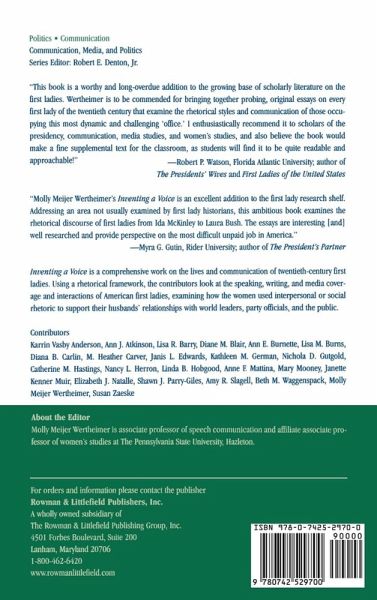
Inventing a Voice is a comprehensive work on the lives and communication of twentieth-century first ladies. Using a rhetorical framework, the contributors look at the speaking, writing, media coverage and interactions, and visual rhetoric of American first ladies from Ida Saxton McKinley to Laura Bush.
Inventing a Voice is a comprehensive work on the lives and communication of twentieth-century first ladies. Using a rhetorical framework, the contributors look at the speaking, writing, media coverage and interactions, and visual rhetoric of American first ladies from Ida Saxton McKinley to Laura Bush.
Molly Meijer Wertheimer is professor of speech communications and affiliate associate professor of women's studies at Pennsylvania State University, Hazelton.
Inhaltsangabe
Chapter 1 Editor's Introduction: First Ladies' Fundamental Rhetorical Choices: When to Speak? What to Say? When to Remain Silent? Chapter 2 1 The First Lady: A Site of "American Womanhood" Chapter 3 2 Ida Saxton McKinley: Indomitable Spirit or Autocrat of the Sick Bed Chapter 4 3 Edith Kermit Roosevelt: First Lady, First Mommy Chapter 5 4 Helen Herron Taft: Opportunity and Ambition Chapter 6 5 Ellen Axson Wilson: A Rhetorical Reassessment of a Forgotten First Lady Chapter 7 6 Edith Bolling Galt Wilson: Actions Speak Louder than Words Chapter 8 7 Florence Kling Harding: Bridging Traditional and Modern Rhetorical Roles Chapter 9 8 Grace Goodhue Coolidge: Articulating Virtue Chapter 10 9 Lou Henry Hoover: Mining the Possibilities as Leader and First Lady Chapter 11 10 Eleanor Roosevelt: A Rhetorical Reconstruction of First Ladydom Chapter 12 11 Bess Wallace Truman: "The Boss" from Independence Chapter 13 12 Mamie Geneva Doud Eisenhower: Reflecting the Mood of the Nation Chapter 14 13 Jacqueline Kennedy: The Rhetorical Construction of Camelot Chapter 15 14 Lady Bird Johnson: The Making of a Public First Lady with Private Influence Chapter 16 15 Pat Nixon: Wisdom to Know the Difference Chapter 17 16 Betty Ford: A Certain Comfort From a Candid First Lady Chapter 18 17 Rosalynn Carter: Crafting a Presidential Partnership Rhetorically Chapter 19 18 Nancy Reagan: Leading Lady, Supporting Actress, or Bit Player Chapter 20 19 Barbara Bush: Her Rhetorical Development and Appeal Chapter 21 20 Hillary Rodham Clinton: Using Her Vital Voice Chapter 22 Epilogue: Laura Bush: Using the "Magic of Words" to Educate and Advocate
Chapter 1 Editor's Introduction: First Ladies' Fundamental Rhetorical Choices: When to Speak? What to Say? When to Remain Silent? Chapter 2 1 The First Lady: A Site of "American Womanhood" Chapter 3 2 Ida Saxton McKinley: Indomitable Spirit or Autocrat of the Sick Bed Chapter 4 3 Edith Kermit Roosevelt: First Lady, First Mommy Chapter 5 4 Helen Herron Taft: Opportunity and Ambition Chapter 6 5 Ellen Axson Wilson: A Rhetorical Reassessment of a Forgotten First Lady Chapter 7 6 Edith Bolling Galt Wilson: Actions Speak Louder than Words Chapter 8 7 Florence Kling Harding: Bridging Traditional and Modern Rhetorical Roles Chapter 9 8 Grace Goodhue Coolidge: Articulating Virtue Chapter 10 9 Lou Henry Hoover: Mining the Possibilities as Leader and First Lady Chapter 11 10 Eleanor Roosevelt: A Rhetorical Reconstruction of First Ladydom Chapter 12 11 Bess Wallace Truman: "The Boss" from Independence Chapter 13 12 Mamie Geneva Doud Eisenhower: Reflecting the Mood of the Nation Chapter 14 13 Jacqueline Kennedy: The Rhetorical Construction of Camelot Chapter 15 14 Lady Bird Johnson: The Making of a Public First Lady with Private Influence Chapter 16 15 Pat Nixon: Wisdom to Know the Difference Chapter 17 16 Betty Ford: A Certain Comfort From a Candid First Lady Chapter 18 17 Rosalynn Carter: Crafting a Presidential Partnership Rhetorically Chapter 19 18 Nancy Reagan: Leading Lady, Supporting Actress, or Bit Player Chapter 20 19 Barbara Bush: Her Rhetorical Development and Appeal Chapter 21 20 Hillary Rodham Clinton: Using Her Vital Voice Chapter 22 Epilogue: Laura Bush: Using the "Magic of Words" to Educate and Advocate
Es gelten unsere Allgemeinen Geschäftsbedingungen: www.buecher.de/agb
Impressum
www.buecher.de ist ein Internetauftritt der buecher.de internetstores GmbH
Geschäftsführung: Monica Sawhney | Roland Kölbl | Günter Hilger
Sitz der Gesellschaft: Batheyer Straße 115 - 117, 58099 Hagen
Postanschrift: Bürgermeister-Wegele-Str. 12, 86167 Augsburg
Amtsgericht Hagen HRB 13257
Steuernummer: 321/5800/1497
USt-IdNr: DE450055826