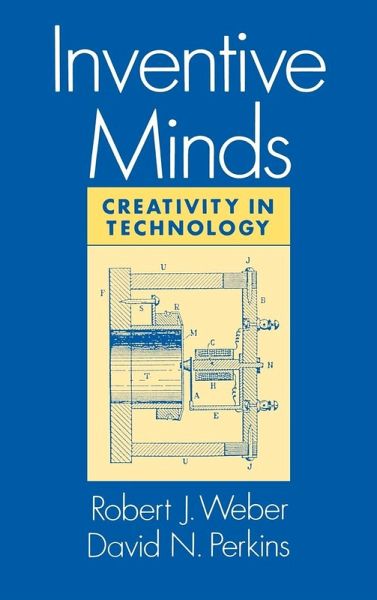
book yields a wealth of information that will make absorbing reading for cognitive and social psychologists, social historians, and many working scientists and general readers who are interested in the psychology of personality and the roots of ingenuity. This unique book explores the process of invention and what settings, conditions, and strategies appear to foster inventive activity. Historical examples include Thomas Edison, the Wright brothers, and more.
book yields a wealth of information that will make absorbing reading for cognitive and social psychologists, social historians, and many working scientists and general readers who are interested in the psychology of personality and the roots of ingenuity.This unique book explores the process of invention and what settings, conditions, and strategies appear to foster inventive activity. Historical examples include Thomas Edison, the Wright brothers, and more.
Introduction: The Unphilosopher's stone; Part I: Setting the Stage: Robert Friedel: Perspiration in perspective: Changing perceptions of genius and expertise in American invention; Part II: Classic Inventors: Ryan D. Tweney: Inventing the Field: Michael Faraday and the creative "engineering" of electromagnetic field theory; W. Bernard Coulson & Michael E. Gorman: A cognitive framework to understand technological creativity: Bell, Edison, and the telephone; Tom D. Crouch: Why Wilbur and Orville? Some thoughts on the Wright brothers and the process of invention; Part III: Contemporary Inventors: James Hillier: Electron microscopy and microprobe analysis: Recalling the ambience of some inventions; John J. Wild: The origin of soft tissue ultrasonic echoing and early instrumental application to clinical medicine; James A. Teeri: The soil biotron: An underground research laboratory; Robert H. Wentorf: The synthesis of diamonds; Edward Rosinski: The origin and development of the first zeolite catalyst for petroleum cracking; Paul W. Morgan: Discovery and invention in polymer chemistry; William C. Campbell: The genesis of the antiparasitic drug Ivermectin; Part IV: The Logic of Invention: Robert J. Weber: Stone Age knife to Swiss army knife: An invention prototype; David N. Perkins: The topography of invention; Jacob Helfman: The analytic inventive thinking model; Part V: The Social Context of Inventions: David A. Hounshell: Invention in the Industrial Research Laboratory: Individual act or collective process? The case of the Pioneering Research Laboratory, Du Pont Fibers Department, 1928-1968; George Wise: Inventors and corporations in the maturing electrical industry; Donald J. Quigg: Technology on the move; Robert J. Weber & David N. Perkins: Effable invention; Conclusion; Biographical sketches; Index.
Introduction: The Unphilosopher's stone; Part I: Setting the Stage: Robert Friedel: Perspiration in perspective: Changing perceptions of genius and expertise in American invention; Part II: Classic Inventors: Ryan D. Tweney: Inventing the Field: Michael Faraday and the creative "engineering" of electromagnetic field theory; W. Bernard Coulson & Michael E. Gorman: A cognitive framework to understand technological creativity: Bell, Edison, and the telephone; Tom D. Crouch: Why Wilbur and Orville? Some thoughts on the Wright brothers and the process of invention; Part III: Contemporary Inventors: James Hillier: Electron microscopy and microprobe analysis: Recalling the ambience of some inventions; John J. Wild: The origin of soft tissue ultrasonic echoing and early instrumental application to clinical medicine; James A. Teeri: The soil biotron: An underground research laboratory; Robert H. Wentorf: The synthesis of diamonds; Edward Rosinski: The origin and development of the first zeolite catalyst for petroleum cracking; Paul W. Morgan: Discovery and invention in polymer chemistry; William C. Campbell: The genesis of the antiparasitic drug Ivermectin; Part IV: The Logic of Invention: Robert J. Weber: Stone Age knife to Swiss army knife: An invention prototype; David N. Perkins: The topography of invention; Jacob Helfman: The analytic inventive thinking model; Part V: The Social Context of Inventions: David A. Hounshell: Invention in the Industrial Research Laboratory: Individual act or collective process? The case of the Pioneering Research Laboratory, Du Pont Fibers Department, 1928-1968; George Wise: Inventors and corporations in the maturing electrical industry; Donald J. Quigg: Technology on the move; Robert J. Weber & David N. Perkins: Effable invention; Conclusion; Biographical sketches; Index.
Es gelten unsere Allgemeinen Geschäftsbedingungen: www.buecher.de/agb
Impressum
www.buecher.de ist ein Internetauftritt der buecher.de internetstores GmbH
Geschäftsführung: Monica Sawhney | Roland Kölbl | Günter Hilger
Sitz der Gesellschaft: Batheyer Straße 115 - 117, 58099 Hagen
Postanschrift: Bürgermeister-Wegele-Str. 12, 86167 Augsburg
Amtsgericht Hagen HRB 13257
Steuernummer: 321/5800/1497
USt-IdNr: DE450055826