
Andere Kunden interessierten sich auch für
 New York. Portrait of a City60,00 €
 Peter Arnell. City Visions: Urban Photography and Iconic New York Cityscapes from a Design Visionary68,00 €
 Humans of New York25,99 €
 New York58,00 €
 Store Front NYC40,00 €
 Vivian Maier: Self-Portrait38,99 €
 Stadt für Alle26,00 €



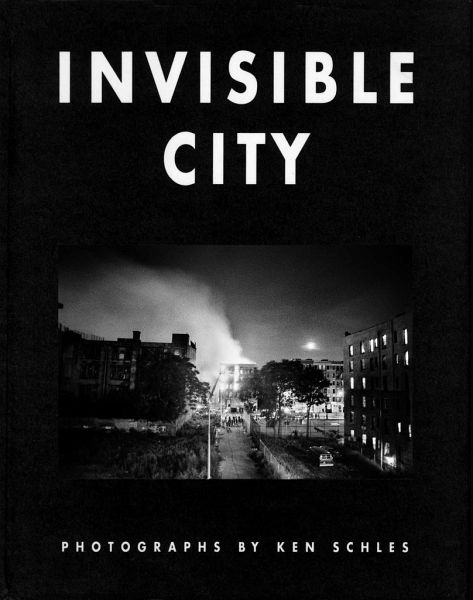
For a decade, Ken Schles watched the passing of time from his Lower East Side neighbourhood. His camera fixed the instances of his observations, and these moments became the foundation of his invisible city. Friends and architecture come under the scrutiny of his lens and, when sorted and viewed in the pages of this book, a remarkable achievement of personal vision emerges.Twenty-five years later, Invisible City still has the ability to transfix the viewer. A penetrating and intimate portrayal of a world few had entrance to - or means of egress from -, Invisible City stands alongside Brassai's Paris de Nuit and van der Elsken's Love On The Left Bank as one of the 20th century's great depictions of nocturnal bohemian experience. Documenting his life in New York City's East Village during its heyday in the tumultuous 1980s, Schles captured its look and attitude in delirious and dark verité. Long out of print, this "missing link" in the history of the photographic book is now once again made available. Using scans from the original negatives and Steidl's five plate technique to bring out nuance and detail never seen before in print, this masterful edition transcends the original, bringing this underground cult classic into the 21st century for a new generation to discover.
Perlentaucher-Notiz zur Süddeutsche Zeitung-Rezension
Andrian Kreye trifft eine unbesiegbaren Ort der Erinnerung wieder in den Fotografien von Ken Schles, in der Neuauflage von dessen legendärem Bildband "Invisible City" über Alphabet City in den 80er Jahren und dem vitaleren Nachfolger "Nightwalk". Schles als Chronist findet er nicht nostalgisch, wenn er die Energie in den Clubs und Galerien oder den Dreck und den Schutt der alten Häuser abbildet. Ein bisschen melancholisch wird Kreye selbst aber schon beim Blättern.
© Perlentaucher Medien GmbH
© Perlentaucher Medien GmbH