Andere Kunden interessierten sich auch für
 Iphigeneia at Aulis17,99 €
 Adventures with Iphigenia in Tauris121,99 €
 Iphigenia at Tauris16,99 €
") The Iphigenia In Tauris Of Euripides (1915)21,99 €
The Iphigenia In Tauris Of Euripides (1915)21,99 € Iphigenia in Tauris13,99 €
 The Iphigenia in Tauris of Euripides29,90 €
") The Iphigeneia Among The Tauri Of Euripides (1884)24,99 €
The Iphigeneia Among The Tauri Of Euripides (1884)24,99 €







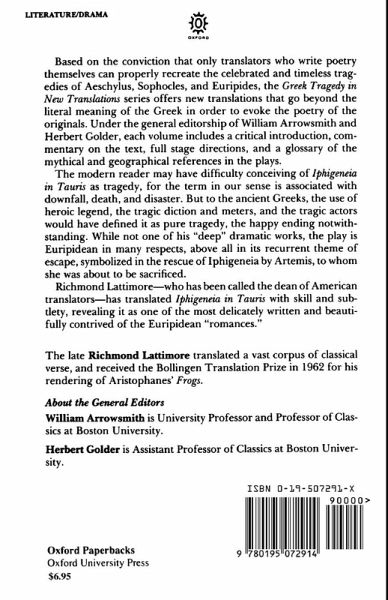
The modern reader may have difficulty conceiving of Iphigeneia in Tauris as tragedy, for the term in our sense is associated with downfall, death, and disaster. But to the ancient Greeks, the use of heroic legend, the tragic diction and meters, and the tragic actors would have defined it as pure tragedy, the happy ending notwithstanding. While not one of his "deep" dramatic works, the play is Euripidean in many respects, above all in its recurrent theme of escape, symbolized in the rescue of Iphigeneia by Artemis, to whom she was about to be sacrificed. Richmond Lattimore--who has been called the dean of American translators--has translated Iphigeneia in Tauris with skill and subtlety, revealing it as one of the most delicately written and beautifully contrived of the Euripidean "romances."
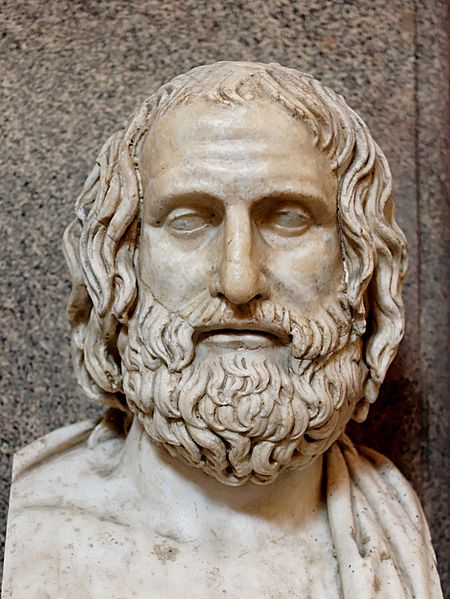
One of the greatest and most influential of the Greek tragedians, Euripides, is said to have produced 92 plays, the first of which appeared in 455BC.