
Andere Kunden interessierten sich auch für
 Irish Nuns and Education in the Anglophone World91,99 €
 Ascendancy Women and Elementary Education in Ireland76,99 €
 Educational Ambitions in History68,95 €
 The Historical Disruption of English Higher Education106,99 €
 Intersectionality, Transnationalism, and the History of Education121,99 €
 What's at Stake in the K-12 Standards Wars36,95 €
 Islamic Education in Secular Societies71,80 €



Winner of the Triennial Conference of the History of Women Religious Distinguished Book Award 2025
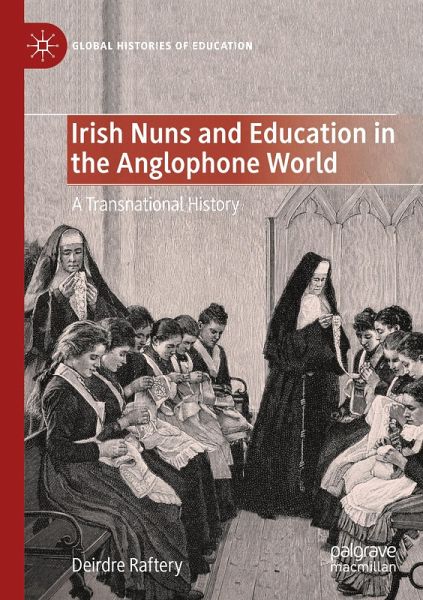
This book charts the history of how Irish-born nuns became involved in education in the Anglophone world. It presents a heretofore undocumented study of how these women left Ireland to establish convent schools and colleges for women around the globe. It challenges the dominant narrative that suggests that Irish teaching Sisters, also commonly called nuns, were part of the colonial project, and shows how they developed their own powerful transnational networks. Though they played a role in the education of the daughters of the Empire , they retained strong bonds with Ireland, reproducing their own Irish education in many parts of the Anglophone world.
This book charts the history of how Irish-born nuns became involved in education in the Anglophone world. It presents a heretofore undocumented study of how these women left Ireland to establish convent schools and colleges for women around the globe. It challenges the dominant narrative that suggests that Irish teaching Sisters, also commonly called nuns, were part of the colonial project, and shows how they developed their own powerful transnational networks. Though they played a role in the education of the daughters of the Empire , they retained strong bonds with Ireland, reproducing their own Irish education in many parts of the Anglophone world.
Raftery s latest book, equally ground-breaking, is about the geographical and social mobility of up to 20,000 adventurous Irish women who journeyed over land and sea to set up or populate convents in North America, Australia and India from the early nineteenth to the early twentieth centuries. This book wears its thorough research lightly the appendices alone are a key database and it reads like a story. (Caitríona Clear, Irish Historical Studies, September 19, 2025)