
Andere Kunden interessierten sich auch für
 Driving the Fake Out of Public Administration20,99 €
 An Introduction to Public Administration56,99 €
 Statesmen and Mischief Makers31,99 €
 E-Government in Kazakhstan29,99 €
 Digital Technologies and Transformations in Public Administration, Engineering, and Sustainable Business180,99 €
 Indian Political System56,99 €
 Irregular Migration from the Former Soviet Union to the United States58,99 €







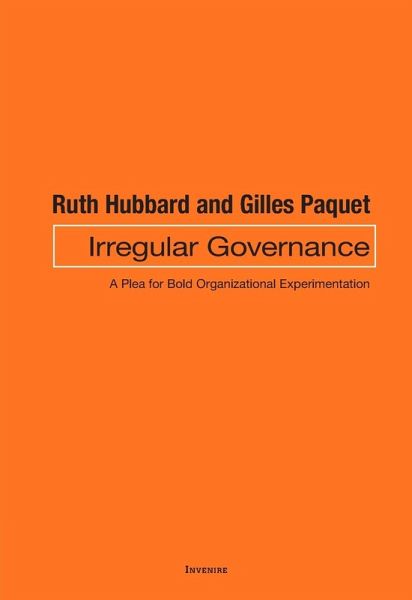
Irregular governance pertains to the exploration and design of unusual or, at least, less habitual forms of governance in order to deal more effectively with emerging forms of turbulence and complexity. This capacity to transform depends on the constant arrival on the scene of the right sort of new actors, new structures and new social technologies. Yet our democratic systems are rooted in administrative conservatorship: too many public administrators conceive their role less as serving their political masters than as preserving institutions in a manner consistent with traditions that supposedly need to be maintained. This elusive, self-granted mandate is quite empowering for public administrators, since they argue that they, and their academic colleagues, are the sole group authorized to define what is to be preserved and why. This book is a challenge to administrative conservatorship. It highlights promising initiatives and perilous ones. It makes the case for ombudspersons and against super-bureaucrats, for public-private partnerships and against single-purpose agencies, and for innovation and against the reluctance to adopt effective management tools. A case is made for irreverence vis-à-vis traditional arrangements, and for experimentation and prototyping of new governing arrangements to be actively pursued. It is argued that organizations and socio-economies need to be progressive (in the new sense of having a greater capacity to transform) and antifragile (becoming ever more creative in dealing with avalanches as they get exposed to nastier shocks).