
Andere Kunden interessierten sich auch für
 Is the Bible the Inerrant Word of God18,99 €
 How Can a Rational God Allow Irrational Numbers?19,99 €
 Encountering God through the Church20,99 €
 The Inspired Word28,99 €
 Saving Faith: as Laid Down in the Word of God and Maintained in Confessions of the Reformed Churches22,99 €
 Christianity at the Cross-Roads27,99 €
 Knowledge of the Self-Revealing God in the Thought of Thomas Forsyth Torrance34,99 €

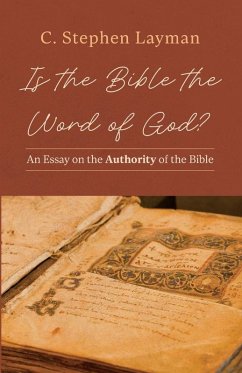
Are there any good reasons to regard the Bible as authoritative, as divinely inspired, and/or as a revelation from God? This book provides a thoughtful discussion of the difficulties in establishing that the Bible is a divinely authorized collection of writings. Recent philosophical contributions by Alvin Plantinga, Richard Swinburne, William Abraham, and Edwin Curley receive special attention. Do problematic moral passages in the Bible undermine any attempt to show that it is a revelation from God? For example, what about the divine command to exterminate the Canaanites? Or the divine command that Abraham sacrifice his son Isaac? In addition, what about apparent factual errors in the Bible? Can the Bible be divinely authorized if it contains errors? A case for the authority of the Bible is proposed and defended, while well-known difficulties are tackled head-on.