100,00 €
inkl. MwSt.
Versandkostenfrei*Erscheint vorauss. 19. Januar 2026
Melden Sie sich
hier
hier
für den Produktalarm an, um über die Verfügbarkeit des Produkts informiert zu werden.
oder sofort lesen als eBook

0 °P sammeln
Andere Kunden interessierten sich auch für
 Prepare the Way of the Lord168,99 €
 Reflections on Religious Individuality131,99 €
 Wages of Cross-Bearing and Debt of Sin15,99 €
 The Wisdom Instructions in the Book of Tobit138,99 €
 Wages of Cross-Bearing and Debt of Sin89,99 €
 Before the God in this Place for Good Remembrance102,99 €
") Johann Reuchlin (1455-1522)139,95 €
Johann Reuchlin (1455-1522)139,95 €
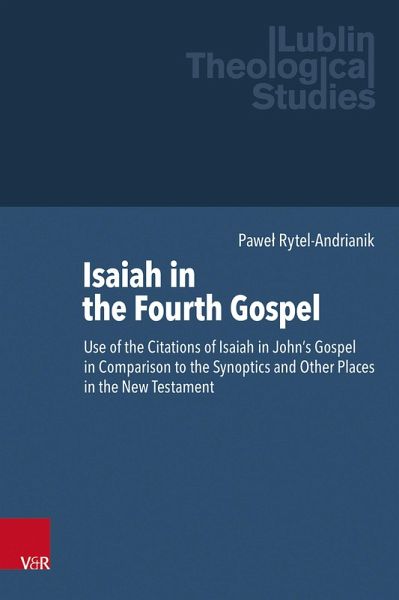
In this study Pawel Rytel-Andrianik focuses on the meaning and function of Isaianic citations in both their original and new contexts. He offers a linguistic analyses of each of the citations in order to identify the source of the citation and understand the editorial approach of a New Testament writer. The author then examines how the original text acquires new meaning and function in its New Testament setting. Among other issues, it challenges the assumption that according to the Jewish sources Elijah had to come to prepare the way for the Messiah. It also proposes a new solution to the problem of why in the Synoptic Gospels John the Baptist is called Elijah, while in John he is not.Throughout this book it is argued that the very same citation from the Old Testament can be used in two different places in the New Testament with two distinct meanings.