

Andere Kunden interessierten sich auch für
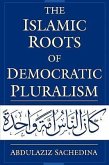
 The Islamic Roots of Democratic Pluralism65,99 €
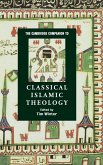
 The Cambridge Companion to Classical Islamic Theology123,99 €
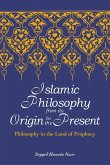
 Islamic Philosophy from Its Origin to the Present35,99 €
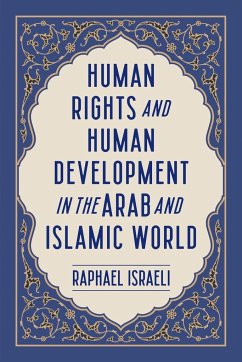
 Human Rights and Human Development in the Arab and Islamic World18,99 €
 The Islamic Afterlife14,99 €
 The Islamic approach to Reason and Philosophy15,99 €
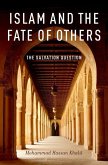
 Islam and the Fate of Others106,99 €

Larry Poston explores the reality of da'wah - Islamic evangelism, or the 'call' to Islam - as it has been interpreted and practised by Muslims in the West. Beginning with a brief examination of the expansion of Islam during its early centuries, Poston looks at the concept of da'wah as understood by the earliest followers of Muhammad. He shows how this early paradigm has been adapted to the demands of the Western context, and goes on to discuss the institutionalization of the new missionary strategy in North America.
Early expansion of Islam was predicated upon an "external-institutional" missionary approach which involved the political conquest of nations followed by the establishment of Muslim institutions. Conversion occurred as the masses became enculturated to the new environment. This external-institutional approach proved impracticable in the modern West, however, and Islam effected a transformation in its method of outreach. Poston here explores the concept of dawah--Islamic missionary activity--as it has evolved in contemporary Western societies. As a response to the demands of the Western social context, he shows, Muslims in the West have adopted an "internal-personal" approach, which aims at the conversion of individuals and seeks to influence society from the bottom upwards. Beginning with the teachings of Hasan al-Banna' and Abul A'la Mawdudi, this adaptation has led to the establishment in America and Europe of "para-mosque" organizations. Poston documents the institutionalization of the new missionary strategy in North America, profiling various organizations and institutions established for the propagation of the Muslim faith, and analyzing their missionary philosophies, strategies, and techniques. Turning his attention to those who heed the "call", Poston creates a profile of the "typical" convert to Islam. Examining the experiences of numerous converts, he compares them to a psychological profile of the "typical" religious convert. The results of a questionnaire-survey are combined with an analysis of published testimonies to identify significant traits that distinguish converts to Islam.
Early expansion of Islam was predicated upon an "external-institutional" missionary approach which involved the political conquest of nations followed by the establishment of Muslim institutions. Conversion occurred as the masses became enculturated to the new environment. This external-institutional approach proved impracticable in the modern West, however, and Islam effected a transformation in its method of outreach. Poston here explores the concept of dawah--Islamic missionary activity--as it has evolved in contemporary Western societies. As a response to the demands of the Western social context, he shows, Muslims in the West have adopted an "internal-personal" approach, which aims at the conversion of individuals and seeks to influence society from the bottom upwards. Beginning with the teachings of Hasan al-Banna' and Abul A'la Mawdudi, this adaptation has led to the establishment in America and Europe of "para-mosque" organizations. Poston documents the institutionalization of the new missionary strategy in North America, profiling various organizations and institutions established for the propagation of the Muslim faith, and analyzing their missionary philosophies, strategies, and techniques. Turning his attention to those who heed the "call", Poston creates a profile of the "typical" convert to Islam. Examining the experiences of numerous converts, he compares them to a psychological profile of the "typical" religious convert. The results of a questionnaire-survey are combined with an analysis of published testimonies to identify significant traits that distinguish converts to Islam.