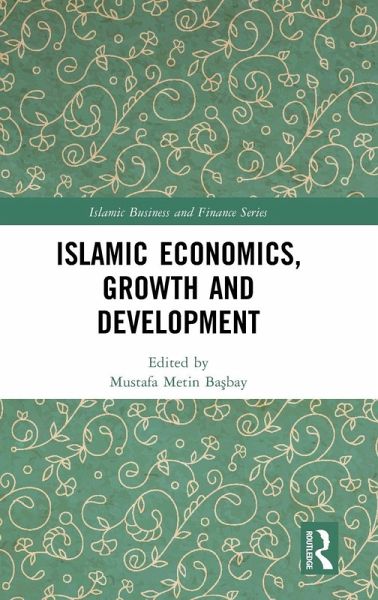
This book presents a distinctive ethical and philosophical framework, one that is grounded in Islamic principles and the established literature of Islamic economics and finance, to analyze and interpret the concept of economic development, as well as to propose policy solutions to real-world development problems and challenges.
This book presents a distinctive ethical and philosophical framework, one that is grounded in Islamic principles and the established literature of Islamic economics and finance, to analyze and interpret the concept of economic development, as well as to propose policy solutions to real-world development problems and challenges.
Mustafa Metin Bäbay, Ph.D., is an Assistant Professor in the Department of Economics, Bo¿aziçi University, Istanbul, Turkey.
Inhaltsangabe
List of Figures. List of Tables. List of Contributors. Preface. Acknowledgements. PART I Institutions and Theoretical Framework. 1 Islamic Economics and Economic Development: A Reflection. 2 Rethinking Global Development Policies: An Islamic Economics Approach. 3 Islamic Universal Politico-Economic Institutional Transmission Mechanisms for Global Sustainable Development. 4 Achieving Economic Development through Institutionalisation of Zakat and Waqf in Contemporary Economies. PART II Policies and Governance Mechanisms. 5 Intergenerational Poverty in Developing Countries: A Critical Review Followed by a Two-Stage Firoza Model. 6 Financial Innovation, Economic Development, and Islamic Principles. 7 After the COVID-19 Outbreak, Is Islamic Finance a Cure for Global Economic Disruptions? 8 Between Esham and Cash Waqf Linked Sukuk to Fiscal and Development Sustainability: Comparative Analysis. 9 The Role of Infaq Institution on Income Inequality: A Model Proposal for Turkey to Alleviate Income Inequality. PART III Empirical Work. 10 State, Conflict, and Development: An Institutional Perspective on the Developmental Experience of Muslim Majority Kashmir. 11 An Empirical Work on the Relationship between Zakat and Development. 12 Determinants of Inclusive Growth in Islamic Countries: An Empirical Approach. 13 Islamic Social Finance and Sustainable Finance: A Survey on Literacy among Scholars and Students. Index.
List of Figures. List of Tables. List of Contributors. Preface. Acknowledgements. PART I Institutions and Theoretical Framework. 1 Islamic Economics and Economic Development: A Reflection. 2 Rethinking Global Development Policies: An Islamic Economics Approach. 3 Islamic Universal Politico-Economic Institutional Transmission Mechanisms for Global Sustainable Development. 4 Achieving Economic Development through Institutionalisation of Zakat and Waqf in Contemporary Economies. PART II Policies and Governance Mechanisms. 5 Intergenerational Poverty in Developing Countries: A Critical Review Followed by a Two-Stage Firoza Model. 6 Financial Innovation, Economic Development, and Islamic Principles. 7 After the COVID-19 Outbreak, Is Islamic Finance a Cure for Global Economic Disruptions? 8 Between Esham and Cash Waqf Linked Sukuk to Fiscal and Development Sustainability: Comparative Analysis. 9 The Role of Infaq Institution on Income Inequality: A Model Proposal for Turkey to Alleviate Income Inequality. PART III Empirical Work. 10 State, Conflict, and Development: An Institutional Perspective on the Developmental Experience of Muslim Majority Kashmir. 11 An Empirical Work on the Relationship between Zakat and Development. 12 Determinants of Inclusive Growth in Islamic Countries: An Empirical Approach. 13 Islamic Social Finance and Sustainable Finance: A Survey on Literacy among Scholars and Students. Index.
Es gelten unsere Allgemeinen Geschäftsbedingungen: www.buecher.de/agb
Impressum
www.buecher.de ist ein Internetauftritt der buecher.de internetstores GmbH
Geschäftsführung: Monica Sawhney | Roland Kölbl | Günter Hilger
Sitz der Gesellschaft: Batheyer Straße 115 - 117, 58099 Hagen
Postanschrift: Bürgermeister-Wegele-Str. 12, 86167 Augsburg
Amtsgericht Hagen HRB 13257
Steuernummer: 321/5800/1497
USt-IdNr: DE450055826