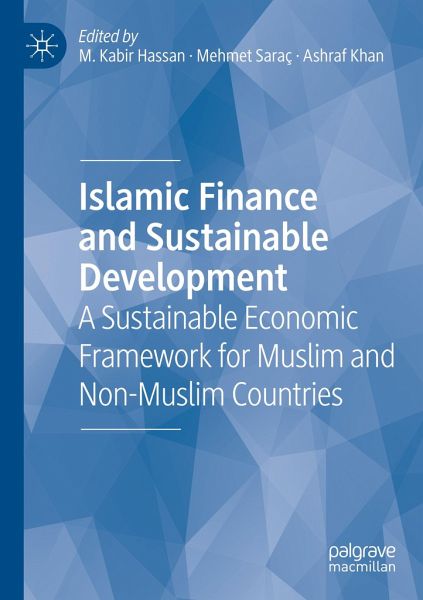
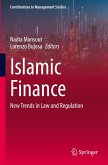
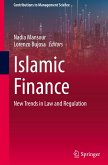
Provides a comprehensive understanding of Islamic finance in relation to SDGs Includes discussion and analysis of the SDGs in the light of Islamic finance and proposed Islamic financial instruments and models Incorporates empirical and data-driven studies in the context of some of the key/major Islamic economies¿
Provides a comprehensive understanding of Islamic finance in relation to SDGs Includes discussion and analysis of the SDGs in the light of Islamic finance and proposed Islamic financial instruments and models Incorporates empirical and data-driven studies in the context of some of the key/major Islamic economies¿
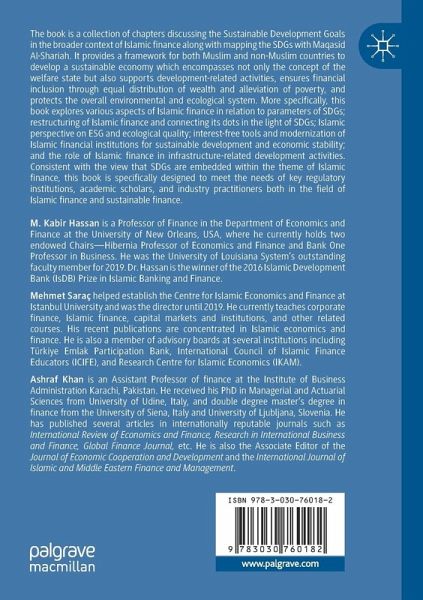
M. Kabir Hassan is a Professor of Finance in the Department of Economics and Finance at the University of New Orleans, USA, where he currently holds two endowed Chairs-Hibernia Professor of Economics and Finance and Bank One Professor in Business. He was the University of Louisiana System's outstanding faculty member for 2019. Dr. Hassan is the winner of the 2016 Islamic Development Bank (IsDB) Prize in Islamic Banking and Finance. Mehmet Saraç helped establish the Centre for Islamic Economics and Finance at Istanbul University and was the director until 2019. He currently teaches corporate finance, Islamic finance, capital markets and institutions, and other related courses. His recent publications are concentrated in Islamic economics and finance. He is also a member of advisory boards at several institutions including Türkiye Emlak Participation Bank, International Council of Islamic Finance Educators (ICIFE), and Research Centre for Islamic Economics (IKAM). Ashraf Khan is an Assistant Professor of finance at the Institute of Business Administration Karachi, Pakistan. He received his PhD in Managerial and Actuarial Sciences from University of Udine, Italy, and double degree master's degree in finance from the University of Siena, Italy and University of Ljubljana, Slovenia. He has published several articles in internationally reputable journals such as International Review of Economics and Finance, Research in International Business and Finance, Global Finance Journal, etc. He is also the Associate Editor of the Journal of Economic Cooperation and Development and the International Journal of Islamic and Middle Eastern Finance and Management.
Inhaltsangabe
Chapter 1: Introduction.- Chapter 2: Need to Redefine Islamic Finance in The Light of Maqasid Al-Shariah.- Chapter 3: Pandemic Crisis, Digitalization and Social Responsibility: An Emerging Role of Islamic Economics and Finance.- Chapter 4: Sustainable Finance And A Shari' Analysis Of The Environmental, Social And Governance Criteria.- Chapter 5: Finance as a Source of Ecological Quality: Islamic Ethics of Environment and Empirical Evidence.- Chapter 6: Islamic Finance and SDGs: Connecting Dots.- Chapter 7: Qard Hasan (Interest-free Loan) as a Tool for Sustainable Development.- Chapter 8: Contribution of Islamic Banks on Financial and Economic Stability: An Empirical Comparison between Conventional and Islamic Banks.- Chapter 9: The Role of Islamic Finance in Achieving Sustainable Development Goals.- Chapter 10: Proposing New Islamic Microfinance Model for Sustainable Islamic Microfinance Institution.- Chapter 11: Islamic finance and sustainable economy: a new model of Islamic financial ecosystem.- Chapter 12: Islamic Finance and SDG 10: A Mirage?.- Chapter 13: The Role of Islamic Financial System in Building Sustainable Infrastructure.- Chapter 14: Islamic Finance System as a Catalyst for Sustainability in the Economy¿.
Chapter 1: Introduction.- Chapter 2: Need to Redefine Islamic Finance in The Light of Maqasid Al-Shariah.- Chapter 3: Pandemic Crisis, Digitalization and Social Responsibility: An Emerging Role of Islamic Economics and Finance.- Chapter 4: Sustainable Finance And A Shari' Analysis Of The Environmental, Social And Governance Criteria.- Chapter 5: Finance as a Source of Ecological Quality: Islamic Ethics of Environment and Empirical Evidence.- Chapter 6: Islamic Finance and SDGs: Connecting Dots.- Chapter 7: Qard Hasan (Interest-free Loan) as a Tool for Sustainable Development.- Chapter 8: Contribution of Islamic Banks on Financial and Economic Stability: An Empirical Comparison between Conventional and Islamic Banks.- Chapter 9: The Role of Islamic Finance in Achieving Sustainable Development Goals.- Chapter 10: Proposing New Islamic Microfinance Model for Sustainable Islamic Microfinance Institution.- Chapter 11: Islamic finance and sustainable economy: a new model of Islamic financial ecosystem.- Chapter 12: Islamic Finance and SDG 10: A Mirage?.- Chapter 13: The Role of Islamic Financial System in Building Sustainable Infrastructure.- Chapter 14: Islamic Finance System as a Catalyst for Sustainability in the Economy¿.
Es gelten unsere Allgemeinen Geschäftsbedingungen: www.buecher.de/agb
Impressum
www.buecher.de ist ein Internetauftritt der buecher.de internetstores GmbH
Geschäftsführung: Monica Sawhney | Roland Kölbl | Günter Hilger
Sitz der Gesellschaft: Batheyer Straße 115 - 117, 58099 Hagen
Postanschrift: Bürgermeister-Wegele-Str. 12, 86167 Augsburg
Amtsgericht Hagen HRB 13257
Steuernummer: 321/5800/1497
USt-IdNr: DE450055826