
Andere Kunden interessierten sich auch für
 Diasporas of the Modern Middle East137,99 €
 Conspiracy in Modern Egyptian Literature146,99 €
 The Popularisation of Sufism in Ayyubid and Mamluk Egypt, 1173-1325127,99 €
 Muslim Cosmopolitanism146,99 €
 Muslims of Central Asia136,99 €
 Anthropomorphism in Islam146,99 €
 The Abbasid Caliphate of Cairo, 1261-1517141,99 €
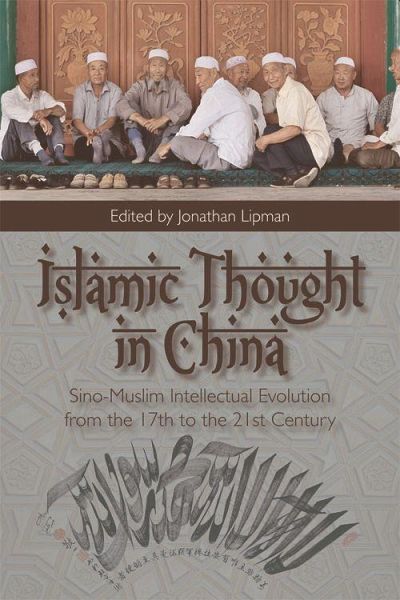
Tells the stories of Chinese Muslims trying to create coherent lives at the intersection of two potentially conflicting cultures How can people belong simultaneously to two cultures, originating in two different places and expressed in two different languages, without alienating themselves from either? Muslims have lived in the Chinese culture area for 1400 years, and the intellectuals among them have long wrestled with this problem. Unlike Persian, Turkish, Urdu, or Malay, the Chinese language never adopted vocabulary from Arabic to enable a precise understanding of Islam's religious and philosophical foundations. Islam thus had to be translated into Chinese, which lacks words and arguments to justify monotheism, exclusivity, and other features of this Middle Eastern religion. Even in the 21st century, Muslims who are culturally Chinese must still justify their devotion to a single God, avoidance of pork, and their communities' distinctiveness, among other things, to sceptical non-Muslim neighbours and an increasingly intrusive state. The essays in this collection narrate the continuing translations and adaptations of Islam and Muslims in Chinese culture and society through the writings of Sino-Muslim intellectuals. Progressing chronologically and interlocking thematically, they help the reader develop a coherent understanding of the intellectual issues at stake. Key Features * Deals with the evolution of the Han kitab texts: their theology, genres, scope and bicultural simultaneity * Explores how from the late 19th century Chinese Muslims developed complex and innovative intellectual relationships with Chinese nationalism and the processes that created a modern nation-state * Shows how Sino-Muslims adapted to 20th-century modernity, including nationalism, liberalism and socialism Contributors * Leila Chérif-Chebbi, École des hautes études en sciences sociales, Paris * Wlodzimierz Cieciura, University of Warsaw * James D. Frankel, University of Hawai'i at Manoa and the Chinese University of Hong Kong * Jonathan Lipman, Mount Holyoke College * Yufeng Mao, Widener University * Masumi Matsumoto, Muroran Institute of Technology, Hokkaido, Japan * Kristian Petersen, University of Nebraska Omaha * Roberta Tontini, University of Heidelberg