
Andere Kunden interessierten sich auch für
 Work climate and its relationship with resistance to change47,99 €
 Certification ISO 14001 : entre résistances et adhésions à la nouvelle culture36,99 €
 ISO 14001-Zertifizierung: zwischen Widerstand und Akzeptanz der neuen Kultur54,90 €
 Employee Reactions to Organizational Change. How Change Agents can Overcome Resistance to Change18,95 €
 Diagnóstico ambiental preliminar com base na ISO 14001/200426,99 €
 Bericht über die Einführung eines Umweltmanagementsystems nach DIN ISO 14001 in einem Lebensmittelbetrieb38,00 €
 Possibilites to reduce the resistance to change in organisations18,95 €




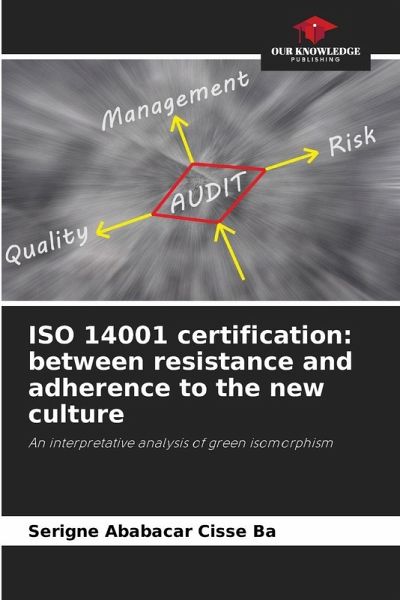
This book contributes to studies on how managers should deal with resistance to change in certification implementation processes. Green isomorphism as a mechanism of institutional coercion leads organizations to adopt positions that are not always of their own volition, and they must therefore assume the consequences. Through a concrete case study, this book provides insights that can help managers deal with various types of resistance to change, especially when it comes to the profound behavioral changes required by certification body audits. It consists of fluid writing that allows the reader to access a dense theoretical construct, covering the beginnings of certification in Brazil and worldwide, environmental management, organizational culture, institutional theory, and elements of discourse analysis of all actors in organizations (managers, supervisors, and workers). It is an innovative approach that aims to help students and managers understand and address the problems of cultural change caused by the implementation of new management methods often imposed by the market.