- Gebundenes Buch
- Merkliste
- Auf die Merkliste
- Bewerten Bewerten
- Teilen
- Produkt teilen
- Produkterinnerung
- Produkterinnerung
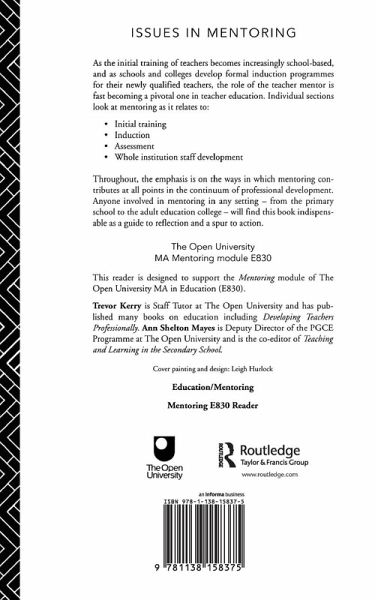
Designed to accompany the Open University MA module in mentoring, this guide offers access to the latest research in this area.
Andere Kunden interessierten sich auch für
Fairness Issues in Educational Assessment195,99 €
Johnnie Johnson HafernikEthical Issues for Esl Faculty166,99 €
Chris Philpott / Charles Plummeridge (eds.)Issues in Music Teaching212,99 €
Multicultural Issues in Literacy Research and Practice172,99 €
Peer-Group Mentoring for Teacher Development185,99 €
Mentoring Children and Young People for Social Inclusion166,99 €
Classroom Issues267,99 €-
-
-
Designed to accompany the Open University MA module in mentoring, this guide offers access to the latest research in this area.
Produktdetails
- Produktdetails
- Verlag: Routledge
- Seitenzahl: 290
- Erscheinungstermin: 14. Dezember 2016
- Englisch
- Abmessung: 240mm x 161mm x 20mm
- Gewicht: 602g
- ISBN-13: 9781138158375
- ISBN-10: 1138158372
- Artikelnr.: 71707386
- Herstellerkennzeichnung
- Libri GmbH
- Europaallee 1
- 36244 Bad Hersfeld
- gpsr@libri.de
- Verlag: Routledge
- Seitenzahl: 290
- Erscheinungstermin: 14. Dezember 2016
- Englisch
- Abmessung: 240mm x 161mm x 20mm
- Gewicht: 602g
- ISBN-13: 9781138158375
- ISBN-10: 1138158372
- Artikelnr.: 71707386
- Herstellerkennzeichnung
- Libri GmbH
- Europaallee 1
- 36244 Bad Hersfeld
- gpsr@libri.de
Trevor Kerry, Ann Shelton Mayes
Part A: Concepts of Mentoring Introduction 1. Learning to teach and models
of mentoring Trisha Maynard and John Furlong, 2. Toward a conception of
mentoring Eugene Anderson and Anne Shannon, 3. Mentoring for teacher
development: possibilities and caveats Bob Elliott and James Calderhead,
Part B: Mentoring in initial teacher training Introduction 4. School-based
teacher education David Bridges, 5. School-led teacher training Toni
Beardon, Martin Booth, David Hargreaves and Michael Reiss, 6. The
effectiveness and role of the mentor in school: the students view Martin
Booth 7. The role of the subject mentor in further education Maurice
Rothera, Stephanie Hawkins and James Hendry 8.Mentoring in initial teacher
education Kate Jacques 9. Mentoring beginner teachers - issues for schools
to anticipate and manage Chris Watkins and Caroline Whalley, 10. A
neglected source for reflection in the supervision of student teachers
Peter Lucas, 11. The mentor connection Murray Reich Part C: Mentoring in
induction training Introduction 12. The role of mentors and teacher tutors
in school-based teacher education and induction Mike Turner, 13. Mirror,
mirror on the wall, what is the fairest scheme of all? Reflections on the
induction needs of newly qualified teachers Anne Waterhouse, 14. Key issues
emerging from an NFER study of NQT's: models of induction support Kay
Kinder and Peter Earley, 15. Initiation rights: Beginning teachers'
professional development and the objectives of induction training Peter
Earlery Part D: Mentoring and assessment Introduction 16. Standards and
quality in education Richard Pring, 17. Quality control in teacher
education Geoff Whitty, 18. Competence-based teacher education: approaches
and issues Geoff Whitty and Elizabeth Willmott, 19. Experience and
competence in further and adult education Terry Hyland, 20. The limits of
competence: a cautionary note on Circular 9/92 John Furlong, 21.
Integrating values into the assessment of teachers in initial education and
training Bob Moon and Ann Shelton Mayes,N 22. Surrey New Teacher Competency
Project Sue Gifford, Part E Mentoring: professional development and
institutional aspects Introduction 23. Mentoring as a staff development
activity Mike Kelly, Tony Beck and John Thomas, 24. Mentoring Rowie Shaw,
of mentoring Trisha Maynard and John Furlong, 2. Toward a conception of
mentoring Eugene Anderson and Anne Shannon, 3. Mentoring for teacher
development: possibilities and caveats Bob Elliott and James Calderhead,
Part B: Mentoring in initial teacher training Introduction 4. School-based
teacher education David Bridges, 5. School-led teacher training Toni
Beardon, Martin Booth, David Hargreaves and Michael Reiss, 6. The
effectiveness and role of the mentor in school: the students view Martin
Booth 7. The role of the subject mentor in further education Maurice
Rothera, Stephanie Hawkins and James Hendry 8.Mentoring in initial teacher
education Kate Jacques 9. Mentoring beginner teachers - issues for schools
to anticipate and manage Chris Watkins and Caroline Whalley, 10. A
neglected source for reflection in the supervision of student teachers
Peter Lucas, 11. The mentor connection Murray Reich Part C: Mentoring in
induction training Introduction 12. The role of mentors and teacher tutors
in school-based teacher education and induction Mike Turner, 13. Mirror,
mirror on the wall, what is the fairest scheme of all? Reflections on the
induction needs of newly qualified teachers Anne Waterhouse, 14. Key issues
emerging from an NFER study of NQT's: models of induction support Kay
Kinder and Peter Earley, 15. Initiation rights: Beginning teachers'
professional development and the objectives of induction training Peter
Earlery Part D: Mentoring and assessment Introduction 16. Standards and
quality in education Richard Pring, 17. Quality control in teacher
education Geoff Whitty, 18. Competence-based teacher education: approaches
and issues Geoff Whitty and Elizabeth Willmott, 19. Experience and
competence in further and adult education Terry Hyland, 20. The limits of
competence: a cautionary note on Circular 9/92 John Furlong, 21.
Integrating values into the assessment of teachers in initial education and
training Bob Moon and Ann Shelton Mayes,N 22. Surrey New Teacher Competency
Project Sue Gifford, Part E Mentoring: professional development and
institutional aspects Introduction 23. Mentoring as a staff development
activity Mike Kelly, Tony Beck and John Thomas, 24. Mentoring Rowie Shaw,
Part A: Concepts of Mentoring Introduction 1. Learning to teach and models
of mentoring Trisha Maynard and John Furlong, 2. Toward a conception of
mentoring Eugene Anderson and Anne Shannon, 3. Mentoring for teacher
development: possibilities and caveats Bob Elliott and James Calderhead,
Part B: Mentoring in initial teacher training Introduction 4. School-based
teacher education David Bridges, 5. School-led teacher training Toni
Beardon, Martin Booth, David Hargreaves and Michael Reiss, 6. The
effectiveness and role of the mentor in school: the students view Martin
Booth 7. The role of the subject mentor in further education Maurice
Rothera, Stephanie Hawkins and James Hendry 8.Mentoring in initial teacher
education Kate Jacques 9. Mentoring beginner teachers - issues for schools
to anticipate and manage Chris Watkins and Caroline Whalley, 10. A
neglected source for reflection in the supervision of student teachers
Peter Lucas, 11. The mentor connection Murray Reich Part C: Mentoring in
induction training Introduction 12. The role of mentors and teacher tutors
in school-based teacher education and induction Mike Turner, 13. Mirror,
mirror on the wall, what is the fairest scheme of all? Reflections on the
induction needs of newly qualified teachers Anne Waterhouse, 14. Key issues
emerging from an NFER study of NQT's: models of induction support Kay
Kinder and Peter Earley, 15. Initiation rights: Beginning teachers'
professional development and the objectives of induction training Peter
Earlery Part D: Mentoring and assessment Introduction 16. Standards and
quality in education Richard Pring, 17. Quality control in teacher
education Geoff Whitty, 18. Competence-based teacher education: approaches
and issues Geoff Whitty and Elizabeth Willmott, 19. Experience and
competence in further and adult education Terry Hyland, 20. The limits of
competence: a cautionary note on Circular 9/92 John Furlong, 21.
Integrating values into the assessment of teachers in initial education and
training Bob Moon and Ann Shelton Mayes,N 22. Surrey New Teacher Competency
Project Sue Gifford, Part E Mentoring: professional development and
institutional aspects Introduction 23. Mentoring as a staff development
activity Mike Kelly, Tony Beck and John Thomas, 24. Mentoring Rowie Shaw,
of mentoring Trisha Maynard and John Furlong, 2. Toward a conception of
mentoring Eugene Anderson and Anne Shannon, 3. Mentoring for teacher
development: possibilities and caveats Bob Elliott and James Calderhead,
Part B: Mentoring in initial teacher training Introduction 4. School-based
teacher education David Bridges, 5. School-led teacher training Toni
Beardon, Martin Booth, David Hargreaves and Michael Reiss, 6. The
effectiveness and role of the mentor in school: the students view Martin
Booth 7. The role of the subject mentor in further education Maurice
Rothera, Stephanie Hawkins and James Hendry 8.Mentoring in initial teacher
education Kate Jacques 9. Mentoring beginner teachers - issues for schools
to anticipate and manage Chris Watkins and Caroline Whalley, 10. A
neglected source for reflection in the supervision of student teachers
Peter Lucas, 11. The mentor connection Murray Reich Part C: Mentoring in
induction training Introduction 12. The role of mentors and teacher tutors
in school-based teacher education and induction Mike Turner, 13. Mirror,
mirror on the wall, what is the fairest scheme of all? Reflections on the
induction needs of newly qualified teachers Anne Waterhouse, 14. Key issues
emerging from an NFER study of NQT's: models of induction support Kay
Kinder and Peter Earley, 15. Initiation rights: Beginning teachers'
professional development and the objectives of induction training Peter
Earlery Part D: Mentoring and assessment Introduction 16. Standards and
quality in education Richard Pring, 17. Quality control in teacher
education Geoff Whitty, 18. Competence-based teacher education: approaches
and issues Geoff Whitty and Elizabeth Willmott, 19. Experience and
competence in further and adult education Terry Hyland, 20. The limits of
competence: a cautionary note on Circular 9/92 John Furlong, 21.
Integrating values into the assessment of teachers in initial education and
training Bob Moon and Ann Shelton Mayes,N 22. Surrey New Teacher Competency
Project Sue Gifford, Part E Mentoring: professional development and
institutional aspects Introduction 23. Mentoring as a staff development
activity Mike Kelly, Tony Beck and John Thomas, 24. Mentoring Rowie Shaw,