
Andere Kunden interessierten sich auch für
 Italy in the American Imagination91,99 €
 The Rise and Fall of Imperial Chemical Industries34,99 €
 Food Culture and Literary Imagination in Early Modern Italy151,99 €
 Cuba in the American Imagination46,99 €
 Cuba in the American Imagination40,99 €
 Fantastische Welten28,00 €
 Liberalism, Imperialism, and the Historical Imagination61,99 €







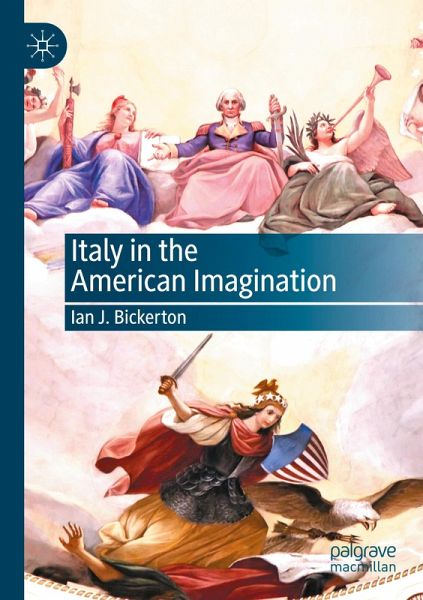
It is almost impossible to imagine the United States without making reference to Italy. There is scarcely any aspect of American culture untouched by Italy-its history, art, architecture, fashion, film, music, the mafia, or even more viscerally its food. Italy occupies a space of near mythical proportion in the American imagination. When many Americans think of, or dream about and imagine, the good life, how and where they would like to live, they think most often of Italy; the beauty, the life-style, the romance, the excitement and sense of adventure that Italy offers.
By looking at the fluid and multi-dimensional imaginative interactions Americans have with Italian culture and society, this comprehensive and robust volume offers a new and novel way of exploring the influence of Italy upon the United States. University of New South Wales historian Ian James Bickerton argues that if we wish to understand the United States, and how Americans define themselves and their nation,it is vital to examine how they imagine themselves, and he demonstrates that throughout U.S. history one of the most powerful stimulants shaping the imaginary world of Americans has been Italy.
By looking at the fluid and multi-dimensional imaginative interactions Americans have with Italian culture and society, this comprehensive and robust volume offers a new and novel way of exploring the influence of Italy upon the United States. University of New South Wales historian Ian James Bickerton argues that if we wish to understand the United States, and how Americans define themselves and their nation,it is vital to examine how they imagine themselves, and he demonstrates that throughout U.S. history one of the most powerful stimulants shaping the imaginary world of Americans has been Italy.
Ian J. Bickerton reconstructs in Italy in the American Imagination, namely how Italian culture has played a leading role in shaping various aspects of American society. More precisely, this long and detailed book explains how various aspects of American culture have been shaped by a mosaic constructed by picking up here and there characterizing elements of Italian history, from Roman classicism to the Renaissance and the long twentieth century. (Marco Moschetti, Journal of American Ethnic History, Vol. 44 (3), 2025)