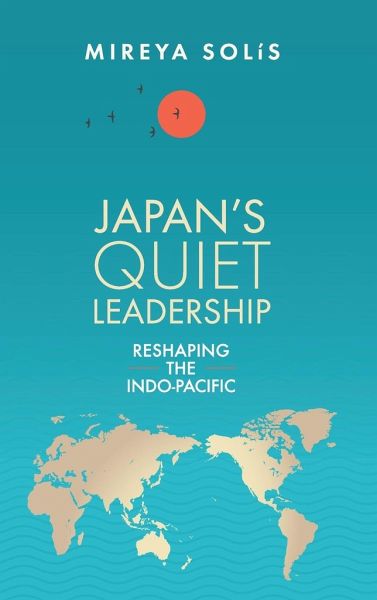
Japan’s Quiet Leadership provides a sweeping look at Japan’s domestic economic and political evolution, its economic statecraft, and the array of geopolitical challenges that have triggered a gradual but substantial shift in the country’s security profile.
Japan’s Quiet Leadership provides a sweeping look at Japan’s domestic economic and political evolution, its economic statecraft, and the array of geopolitical challenges that have triggered a gradual but substantial shift in the country’s security profile.
Mireya Solís is Director of the Center for Policy Studies and Knight Chair in Japan Studies at the Brookings Institution, where she specializes in Japanese foreign economic policy, regional integration in East Asia and U.S. economic strategy in Asia.
Inhaltsangabe
Introduction: Moving Past the Narrative of Stagnation Section 1. Globalization Chapter 1: Stability amid Economic Globalization Chapter 2: Foreign Workers: Breaking Taboos, Closing Borders Section 2. Economics Chapter 3: What Went Wrong (and Right) in the Lost Decades? Chapter 4: Enter Abenomics Chapter 5: The Quest for Revitalization: How Fares the Middle-Class Society? Section 3. Politics Chapter 6: Change and Continuity in Japanese Politics Chapter 7: Japan's Democracy in the Populist Era Section 4. Geoeconomics Chapter 8: Champion of Connectivity in a Rules-Based Order Chapter 9: The Hard Edge of Japanese Economic Statecraft Section 5. Geopolitics Chapter 10: Growing Pains of a Nascent Security Role Chapter 11: A More Capable Japan: Assessing Abe's Legacy Chapter 12: Taming a Hobbesian World? Japan's sharper security choices Conclusion: A Network Power in a Divided World
Introduction: Moving Past the Narrative of Stagnation Section 1. Globalization Chapter 1: Stability amid Economic Globalization Chapter 2: Foreign Workers: Breaking Taboos, Closing Borders Section 2. Economics Chapter 3: What Went Wrong (and Right) in the Lost Decades? Chapter 4: Enter Abenomics Chapter 5: The Quest for Revitalization: How Fares the Middle-Class Society? Section 3. Politics Chapter 6: Change and Continuity in Japanese Politics Chapter 7: Japan's Democracy in the Populist Era Section 4. Geoeconomics Chapter 8: Champion of Connectivity in a Rules-Based Order Chapter 9: The Hard Edge of Japanese Economic Statecraft Section 5. Geopolitics Chapter 10: Growing Pains of a Nascent Security Role Chapter 11: A More Capable Japan: Assessing Abe's Legacy Chapter 12: Taming a Hobbesian World? Japan's sharper security choices Conclusion: A Network Power in a Divided World
Es gelten unsere Allgemeinen Geschäftsbedingungen: www.buecher.de/agb
Impressum
www.buecher.de ist ein Internetauftritt der buecher.de internetstores GmbH
Geschäftsführung: Monica Sawhney | Roland Kölbl | Günter Hilger
Sitz der Gesellschaft: Batheyer Straße 115 - 117, 58099 Hagen
Postanschrift: Bürgermeister-Wegele-Str. 12, 86167 Augsburg
Amtsgericht Hagen HRB 13257
Steuernummer: 321/5800/1497
USt-IdNr: DE450055826