
Andere Kunden interessierten sich auch für
 The concept of self-discernment in Abraham Joshua Heschel27,99 €
 Philosophy15,99 €
 Philosophical Concepts12,99 €
 What is Enlightenment?6,99 €
 Wisdom Beyond Distractions14,99 €
 ... Kind Of A Third World War ...") Cal Caleido's Curiosities (Vol. 13) ... Kind Of A Third World War ...169,00 €
Cal Caleido's Curiosities (Vol. 13) ... Kind Of A Third World War ...169,00 € Culture and Catastrophe43,99 €


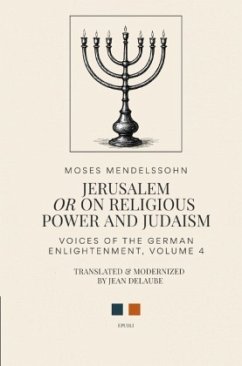
"Love truth, love peace!" With this rallying cry, Moses Mendelssohn delivers a systematic critique of religious and state power over human conscience in this landmark work of German Enlightenment philosophy. Written in 1783 as a response to a conversion challenge from Zurich theologian Lavater, Jerusalem develops into a fundamental theory of freedom of conscience. Mendelssohn's core thesis: Neither secular nor spiritual authority has the right to coerce matters of inner conviction. True religion springs from reason and free insight, not external pressure. The philosopher argues for strict separation between action and belief-while the state may regulate conduct, thoughts and convictions remain beyond the reach of both governmental and ecclesiastical influence. This groundbreaking argument laid crucial groundwork for modern concepts of religious tolerance and the separation of church and state.This accessible edition makes Mendelssohn's philosophical masterpiece available to contemporary readers without compromising the original's intellectual rigor or argumentative precision. Overly complex 18th-century sentence structures have been rendered into clear, modern language while historical terminology has been thoughtfully updated.A key text of the German Enlightenment that remains essential reading for both philosophy of religion and political theory of tolerance. Volume 4 in the Voices of the German Enlightenment series, following Wieland's "The Secret of the Order of Cosmopolitans," Herder's "Ideas for a Philosophy of the History of Mankind," and Schiller's "What is Universal History."