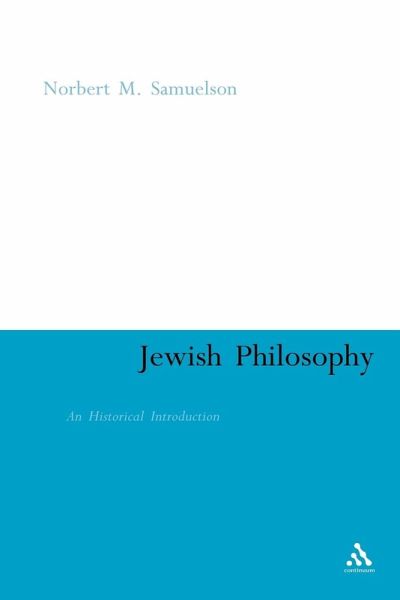
Jewish Philosophy: An Historical Introduction surveys the history of Jewish philosophy, from the formation of the Hebrew Scriptures to the present time. The author discusses the nature of God, the origin and end of the universe, and the moral value of humanity, all from the distinct perspective of Jewish intellectual history. The book is intended as a text for courses in Jewish philosophy, as well as for more general courses in religious thought, Judaism, and philosophy, but presupposes no prior background in these subjects. Each chapter concludes with sets of key terms and questions, as well as recommendations for further reading.…mehr
Jewish Philosophy: An Historical Introduction surveys the history of Jewish philosophy, from the formation of the Hebrew Scriptures to the present time. The author discusses the nature of God, the origin and end of the universe, and the moral value of humanity, all from the distinct perspective of Jewish intellectual history. The book is intended as a text for courses in Jewish philosophy, as well as for more general courses in religious thought, Judaism, and philosophy, but presupposes no prior background in these subjects. Each chapter concludes with sets of key terms and questions, as well as recommendations for further reading.
1. Introduction I. The Origins The Hebrew Scriptures 2. Biblical history: the story of the Hebrew Scriptures 3. What is the Bible and how was it created? 4. The God of the Bible 5. The biblical conception of Torah 6. The conception of Israel as the Chosen People 7. The biblical view of God Early Rabbinic Literature 8. Rabbinic history: from Alexander the Great to Muhammad 9. Major texts of rabbinic Judaism 10. The God of the early rabbis 11. The Torah of the early rabbis 12. The Jewish people of the early rabbis 13. The rabbinic view of ethics II. Classical Jewish Philosophy Jewish Philosophy before Maimonides 14. Medieval history: from the rise of Islam to the expulsion from Christian Spain 15. Major texts and themes of Jewish philosophy The Philosophy of Maimonides 16. The composition of The Guide of the Perplexed 17. God and the Bible 18. Creation and revelation 19. Divine providence 20. The reason for the Commandments Jewish Philosophy after Maimonides 21. The rationalism of Gersonides 22. The non-rationalism of Crescas III. Modern Jewish Philosophy Jewish Philosophy before Rozenzweig 23. Modern history: from Christian Spain to secular Israel 24. The turning point - Baruch Spinoza 25. Cohen and Jewish idealism 26. Buber and Jewish existentialism The Philosophy of Rosenzweig 27. The elements: God, world, and the human 28. The course: creation, revelation, and redemption 29. The configuration: Jewish people, Christian way, and the Kingdom of God Conclusion 30. Jewish philosophy after Rosenzweig
1. Introduction I. The Origins The Hebrew Scriptures 2. Biblical history: the story of the Hebrew Scriptures 3. What is the Bible and how was it created? 4. The God of the Bible 5. The biblical conception of Torah 6. The conception of Israel as the Chosen People 7. The biblical view of God Early Rabbinic Literature 8. Rabbinic history: from Alexander the Great to Muhammad 9. Major texts of rabbinic Judaism 10. The God of the early rabbis 11. The Torah of the early rabbis 12. The Jewish people of the early rabbis 13. The rabbinic view of ethics II. Classical Jewish Philosophy Jewish Philosophy before Maimonides 14. Medieval history: from the rise of Islam to the expulsion from Christian Spain 15. Major texts and themes of Jewish philosophy The Philosophy of Maimonides 16. The composition of The Guide of the Perplexed 17. God and the Bible 18. Creation and revelation 19. Divine providence 20. The reason for the Commandments Jewish Philosophy after Maimonides 21. The rationalism of Gersonides 22. The non-rationalism of Crescas III. Modern Jewish Philosophy Jewish Philosophy before Rozenzweig 23. Modern history: from Christian Spain to secular Israel 24. The turning point - Baruch Spinoza 25. Cohen and Jewish idealism 26. Buber and Jewish existentialism The Philosophy of Rosenzweig 27. The elements: God, world, and the human 28. The course: creation, revelation, and redemption 29. The configuration: Jewish people, Christian way, and the Kingdom of God Conclusion 30. Jewish philosophy after Rosenzweig
Es gelten unsere Allgemeinen Geschäftsbedingungen: www.buecher.de/agb
Impressum
www.buecher.de ist ein Internetauftritt der buecher.de internetstores GmbH
Geschäftsführung: Monica Sawhney | Roland Kölbl | Günter Hilger
Sitz der Gesellschaft: Batheyer Straße 115 - 117, 58099 Hagen
Postanschrift: Bürgermeister-Wegele-Str. 12, 86167 Augsburg
Amtsgericht Hagen HRB 13257
Steuernummer: 321/5800/1497
USt-IdNr: DE450055826