
Andere Kunden interessierten sich auch für
 The Manual of Musical Instrument Conservation152,99 €
 The Orchestral Revolution109,99 €
 C.P.E. Bach Studies109,99 €
 Schumann's Late Style109,99 €
 The Cambridge Companion to Percussion92,99 €
 Harmony in Beethoven120,99 €
 The Cambridge Companion to Electronic Music95,99 €

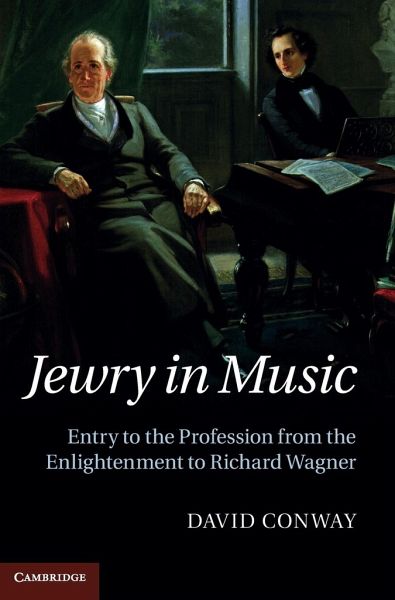
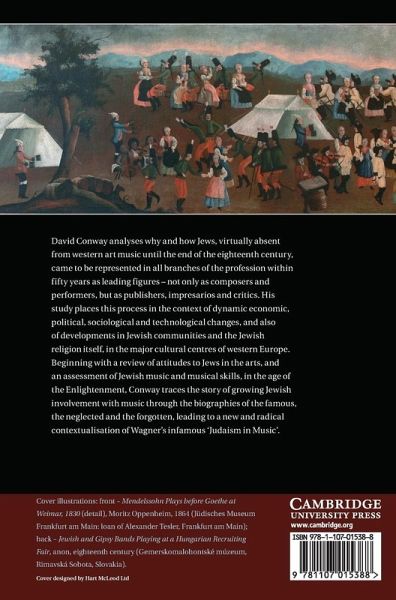
David Conway analyses why and how Jews, virtually absent from Western art music until the end of the eighteenth century, came to be represented in all branches of the profession within fifty years as leading figures - not only as composers and performers, but as publishers, impresarios and critics. His study places this process in the context of dynamic economic, political, sociological and technological changes and also of developments in Jewish communities and the Jewish religion itself, in the major cultural centres of Western Europe. Beginning with a review of attitudes to Jews in the arts and an assessment of Jewish music and musical skills, in the age of the Enlightenment, Conway traces the story of growing Jewish involvement with music through the biographies of the famous, the neglected and the forgotten, leading to a radical contextualisation of Wagner's infamous 'Judaism in Music'.