111,99 €
inkl. MwSt.
Versandkostenfrei*Erscheint vorauss. 23. April 2026
Melden Sie sich
hier
hier
für den Produktalarm an, um über die Verfügbarkeit des Produkts informiert zu werden.

56 °P sammeln
Andere Kunden interessierten sich auch für
 Athens and Wittenberg134,99 €
 Justifying Language38,99 €
 Theopoetics of the Word38,99 €
 Theopoetics of the Word38,99 €
 The Catholic Church and Unruly Women Writers38,99 €
 Politics, Religion and the Song of Songs in Seventeenth-Century England38,99 €
 Divine Participation: A Reconstruction of St Cyril of Alexandria's and Fr Matta Al-Miskīn's Commentaries on the Gospel of St John140,99 €

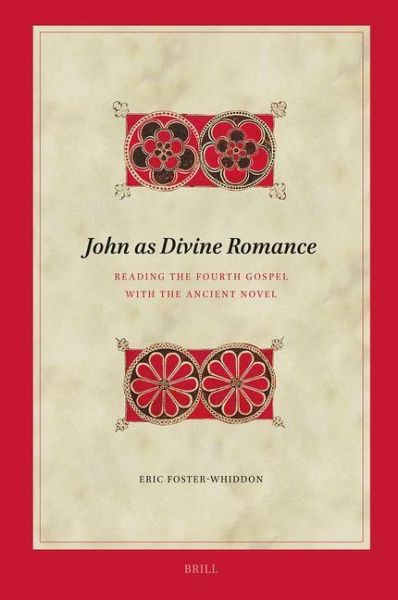
Why does the Gospel of John tell its story of Jesus the way that it does? Informed by semiotic theory, Eric Foster-Whiddon reads the Fourth Gospel in comparison with the Greek novel Callirhoe, observing how recognition, beauty, travel, and love function in both narratives as intertextual frames that pressure the reader to infer meaning. Analysis of these intertextual frames informs a hypothetical recovery of the cultural encyclopedia from which authors and (more importantly for this study) readers in first-century western Asia Minor would draw when composing or interpreting a story like the Gospel of John or Callirhoe.