
Andere Kunden interessierten sich auch für
 John Brown in Canada14,99 €
 The Logan Emancipation Cabinet of Letters and Relics of John Brown and Abraham Lincoln: Being an Article Prepared Specially for the Chicago Tribune14,99 €
 John Brown24,99 €
 John Brown20,99 €
 The Raid of John Brown at Harper's Ferry as I saw It14,99 €
 in the House of Delegates of Virginia, in Committee of the Whole, on the State of the Relations Betwee") Speech of John Thompson Brown (of Petersburg, ) in the House of Delegates of Virginia, in Committee of the Whole, on the State of the Relations Betwee15,99 €
Speech of John Thompson Brown (of Petersburg, ) in the House of Delegates of Virginia, in Committee of the Whole, on the State of the Relations Betwee15,99 € The Life and Letters of Captain John Brown25,99 €


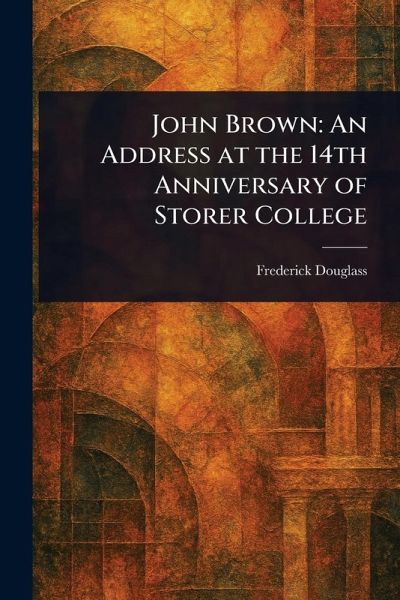
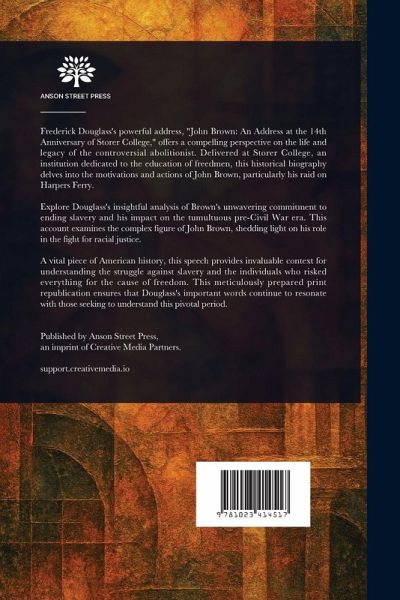
Frederick Douglass's powerful address, "John Brown: An Address at the 14th Anniversary of Storer College," offers a compelling perspective on the life and legacy of the controversial abolitionist. Delivered at Storer College, an institution dedicated to the education of freedmen, this historical biography delves into the motivations and actions of John Brown, particularly his raid on Harpers Ferry. Explore Douglass's insightful analysis of Brown's unwavering commitment to ending slavery and his impact on the tumultuous pre-Civil War era. This account examines the complex figure of John Brown, shedding light on his role in the fight for racial justice. A vital piece of American history, this speech provides invaluable context for understanding the struggle against slavery and the individuals who risked everything for the cause of freedom. This meticulously prepared print republication ensures that Douglass's important words continue to resonate with those seeking to understand this pivotal period. This work has been selected by scholars as being culturally important, and is part of the knowledge base of civilization as we know it. This work is in the public domain in the United States of America, and possibly other nations. Within the United States, you may freely copy and distribute this work, as no entity (individual or corporate) has a copyright on the body of the work. Scholars believe, and we concur, that this work is important enough to be preserved, reproduced, and made generally available to the public. We appreciate your support of the preservation process, and thank you for being an important part of keeping this knowledge alive and relevant.