
Andere Kunden interessierten sich auch für
 Britten Experienced59,99 €
 Listening28,99 €
 The Music of Pavel Haas46,99 €
 Evening in the Palace of Reason19,99 €
 Saturday Night at the Movies: The Extraordinary Partnerships Behind Cinema's Greatest Scores21,99 €
 Composing for Silent Film58,99 €
 Bizet in Italy64,99 €

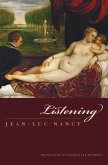


This book is the first study of John Zorn's 'file card' works, with special focus made on the pieces Godard (1985), Spillane (1986), Interzone (2010), and Liber Novus (2010). It explains the unique creative process behind these compositions, contextualizing them in relation to the history of file cards, the 'open work' concept, cinematic listening, and uncreative aesthetics. Semiotic, hermeneutic, and ekphrastic analyses draw hypertextual links between the four file card compositions and the worlds of their respective dedicatees: author Mickey Spillane, filmmaker Jean-Luc Godard, novelist William S. Burroughs and painter Brion Gysin, and psychiatrist C. G. Jung.
This book will appeal not only to those interested in Zorn's music, but also to scholars of music semiotics and hermeneutics, intermedia studies, and avant-garde music.
This book will appeal not only to those interested in Zorn's music, but also to scholars of music semiotics and hermeneutics, intermedia studies, and avant-garde music.
"A meticulously researched study of John Zorn's file-card compositions, an aspect of Zorn's output which has previously not been explored in this way. The history of Zorn's engagement with file card composition in its various stages is explored and his musical materials and processes are explained with great clarity. It will be of interest to readers interested in Zorn's music, contemporary jazz, classical composition, experimental music, recording studio processes and techniques as well as those interested in music theory, the philosophy of music, musical ontology, hermeneutics and semiotics. It's also an enjoyable and informative read."
Edward Campbell, Professor of Music, School of Language, Literature, Music and Visual Culture. King's College, University of Aberdeen, UK
"Deeply researched and profoundly theorized, Maurice Windleburn widens the lens of John Zorn's musical context to place his output within the larger contexts of literature, media theory, philosophy, linguistics, computing, filmmaking, psychoanalysis, and visual art. Through a meticulous and micro-focused examination of one specific body of Zorn's vast and prodigious output, this book charts a path forward for a much needed field of Zorn studies."
Kenneth Goldsmith, University of Pennsylvania, USA
"John Zorn's File Card Works is a masterful study, one which clearly shows the author's love for the subject material and commitment to inventive modes of analysis...For readers with an interest in experimental music, intermedial art, and new possibilities for music analysis, John Zorn's File Card Works is an essential and generous guide to this occasionally opaque body of work."
Alex Tripp, University of Chicago, in Notes, September 2025
Edward Campbell, Professor of Music, School of Language, Literature, Music and Visual Culture. King's College, University of Aberdeen, UK
"Deeply researched and profoundly theorized, Maurice Windleburn widens the lens of John Zorn's musical context to place his output within the larger contexts of literature, media theory, philosophy, linguistics, computing, filmmaking, psychoanalysis, and visual art. Through a meticulous and micro-focused examination of one specific body of Zorn's vast and prodigious output, this book charts a path forward for a much needed field of Zorn studies."
Kenneth Goldsmith, University of Pennsylvania, USA
"John Zorn's File Card Works is a masterful study, one which clearly shows the author's love for the subject material and commitment to inventive modes of analysis...For readers with an interest in experimental music, intermedial art, and new possibilities for music analysis, John Zorn's File Card Works is an essential and generous guide to this occasionally opaque body of work."
Alex Tripp, University of Chicago, in Notes, September 2025