Judicial Dialogue and Human Rights
Herausgeber: Müller, Amrei; Kjos, Hege Elizabeth
Judicial Dialogue and Human Rights
Herausgeber: Müller, Amrei; Kjos, Hege Elizabeth
- Gebundenes Buch
- Merkliste
- Auf die Merkliste
- Bewerten Bewerten
- Teilen
- Produkt teilen
- Produkterinnerung
- Produkterinnerung
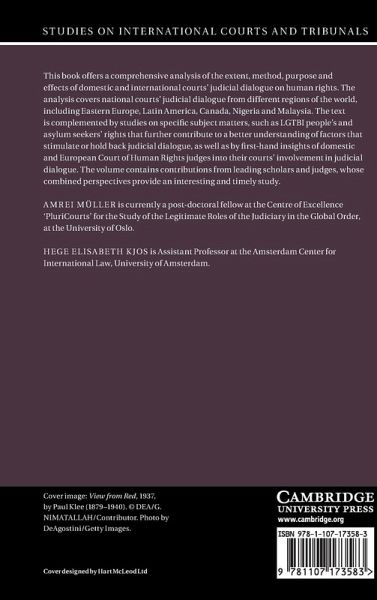
A comprehensive analysis of the extent, method, purpose and effects of domestic and international courts' judicial dialogue on human rights.
Andere Kunden interessierten sich auch für
Shai Dothan (University of Copenhagen)International Judicial Review41,99 €
Elena Abrusci (Brunel University)Judicial Convergence and Fragmentation in International Human Rights Law104,99 €
Critical Debates on Counter-Terrorism Judicial Review47,99 €
Nihal JayawickramaThe Judicial Application of Human Rights Law248,99 €
Katalin SulyokScience and Judicial Reasoning41,99 €
Establishing Judicial Authority in International Economic Law118,99 €
Shai Dothan (Tel-Aviv University)Reputation and Judicial Tactics46,99 €-
-
-
A comprehensive analysis of the extent, method, purpose and effects of domestic and international courts' judicial dialogue on human rights.
Produktdetails
- Produktdetails
- Studies on International Courts and Tribunals
- Verlag: Cambridge University Press
- Seitenzahl: 640
- Erscheinungstermin: 6. März 2017
- Englisch
- Abmessung: 235mm x 157mm x 39mm
- Gewicht: 1058g
- ISBN-13: 9781107173583
- ISBN-10: 1107173582
- Artikelnr.: 46985226
- Herstellerkennzeichnung
- Libri GmbH
- Europaallee 1
- 36244 Bad Hersfeld
- gpsr@libri.de
- Studies on International Courts and Tribunals
- Verlag: Cambridge University Press
- Seitenzahl: 640
- Erscheinungstermin: 6. März 2017
- Englisch
- Abmessung: 235mm x 157mm x 39mm
- Gewicht: 1058g
- ISBN-13: 9781107173583
- ISBN-10: 1107173582
- Artikelnr.: 46985226
- Herstellerkennzeichnung
- Libri GmbH
- Europaallee 1
- 36244 Bad Hersfeld
- gpsr@libri.de
1. Introduction. Judicial dialogue and human rights Amrei Müller and Hege
Elisabeth Kjos; 2. Judicial dialogue on international human rights law in
Poland and Eastern Europe Izabela Skomerska Muchowska; 3. Horizontal
judicial dialogue on human rights: the practice of constitutional courts in
South America Michael Freitas Mohallem; 4. The Supreme Court of Canada's
Transnational Judicial Communication on Human Rights (1982-2014): an
empirical assessment Gianluca Gentili and Elaine Mak; 5. Ideological
barriers to judicial dialogue: a study of the laws establishing Shar¿'ah
courts in Malaysia and Nigeria Azizat O. Amoloye-Adebayo; 6. Complementary
protection and domestic courts: the extent, method, purpose and effects of
judicial dialogue Naomi Hart; 7. The construction of same-sex families in
Western Europe through legislative and judicial dialogues: the role of
national legislatures and supranational courts Daniele Gallo and Matteo M.
Winkler; Part I. Reports on Practice: Domestic Judges: 8. Engaging in
judicial dialogue: some reflections from the United Kingdom Supreme Court
The Right Hon. Lord Carnwath of Notting Hill; 9. Engaging in judicial
dialogue: the practice of the German Federal Constitutional Court Andreas
Paulus; 10. Judicial dialogue: the experience of Italy Raffaele Sabato; 11.
The ECtHR's engagement with German and Russian courts' decisions:
encouraging effective cooperation to secure ECHR rights Amrei Müller; 12.
Encouraging judicial dialogue: the contribution of human rights NGOs'
briefs to the European Court of Human Rights Laura Van Den Eynde; Part II.
Reports on Practice: ECtHR Judges: 13. Dialogues between the Strasbourg
Court and national courts: a note Luis López Guerra; 14. The ECtHR's use of
decisions of domestic courts from states not involved in the case and of
other Council of Europe bodies Erik Møse; 15. The ECtHR' use of decisions
of international courts and quasi-judicial bodies Angelika Nußberger;
16. From judicial dialogue to cosmopolitan norms: enhancing democracy in
globalised states Clara Marsan-Raventós; 17. Dialogue or interaction? A
non-cosmopolitan reading of transjudicial communication Luca Pasquet; 18
Conclusion Amrei Müller.
Elisabeth Kjos; 2. Judicial dialogue on international human rights law in
Poland and Eastern Europe Izabela Skomerska Muchowska; 3. Horizontal
judicial dialogue on human rights: the practice of constitutional courts in
South America Michael Freitas Mohallem; 4. The Supreme Court of Canada's
Transnational Judicial Communication on Human Rights (1982-2014): an
empirical assessment Gianluca Gentili and Elaine Mak; 5. Ideological
barriers to judicial dialogue: a study of the laws establishing Shar¿'ah
courts in Malaysia and Nigeria Azizat O. Amoloye-Adebayo; 6. Complementary
protection and domestic courts: the extent, method, purpose and effects of
judicial dialogue Naomi Hart; 7. The construction of same-sex families in
Western Europe through legislative and judicial dialogues: the role of
national legislatures and supranational courts Daniele Gallo and Matteo M.
Winkler; Part I. Reports on Practice: Domestic Judges: 8. Engaging in
judicial dialogue: some reflections from the United Kingdom Supreme Court
The Right Hon. Lord Carnwath of Notting Hill; 9. Engaging in judicial
dialogue: the practice of the German Federal Constitutional Court Andreas
Paulus; 10. Judicial dialogue: the experience of Italy Raffaele Sabato; 11.
The ECtHR's engagement with German and Russian courts' decisions:
encouraging effective cooperation to secure ECHR rights Amrei Müller; 12.
Encouraging judicial dialogue: the contribution of human rights NGOs'
briefs to the European Court of Human Rights Laura Van Den Eynde; Part II.
Reports on Practice: ECtHR Judges: 13. Dialogues between the Strasbourg
Court and national courts: a note Luis López Guerra; 14. The ECtHR's use of
decisions of domestic courts from states not involved in the case and of
other Council of Europe bodies Erik Møse; 15. The ECtHR' use of decisions
of international courts and quasi-judicial bodies Angelika Nußberger;
16. From judicial dialogue to cosmopolitan norms: enhancing democracy in
globalised states Clara Marsan-Raventós; 17. Dialogue or interaction? A
non-cosmopolitan reading of transjudicial communication Luca Pasquet; 18
Conclusion Amrei Müller.
1. Introduction. Judicial dialogue and human rights Amrei Müller and Hege
Elisabeth Kjos; 2. Judicial dialogue on international human rights law in
Poland and Eastern Europe Izabela Skomerska Muchowska; 3. Horizontal
judicial dialogue on human rights: the practice of constitutional courts in
South America Michael Freitas Mohallem; 4. The Supreme Court of Canada's
Transnational Judicial Communication on Human Rights (1982-2014): an
empirical assessment Gianluca Gentili and Elaine Mak; 5. Ideological
barriers to judicial dialogue: a study of the laws establishing Shar¿'ah
courts in Malaysia and Nigeria Azizat O. Amoloye-Adebayo; 6. Complementary
protection and domestic courts: the extent, method, purpose and effects of
judicial dialogue Naomi Hart; 7. The construction of same-sex families in
Western Europe through legislative and judicial dialogues: the role of
national legislatures and supranational courts Daniele Gallo and Matteo M.
Winkler; Part I. Reports on Practice: Domestic Judges: 8. Engaging in
judicial dialogue: some reflections from the United Kingdom Supreme Court
The Right Hon. Lord Carnwath of Notting Hill; 9. Engaging in judicial
dialogue: the practice of the German Federal Constitutional Court Andreas
Paulus; 10. Judicial dialogue: the experience of Italy Raffaele Sabato; 11.
The ECtHR's engagement with German and Russian courts' decisions:
encouraging effective cooperation to secure ECHR rights Amrei Müller; 12.
Encouraging judicial dialogue: the contribution of human rights NGOs'
briefs to the European Court of Human Rights Laura Van Den Eynde; Part II.
Reports on Practice: ECtHR Judges: 13. Dialogues between the Strasbourg
Court and national courts: a note Luis López Guerra; 14. The ECtHR's use of
decisions of domestic courts from states not involved in the case and of
other Council of Europe bodies Erik Møse; 15. The ECtHR' use of decisions
of international courts and quasi-judicial bodies Angelika Nußberger;
16. From judicial dialogue to cosmopolitan norms: enhancing democracy in
globalised states Clara Marsan-Raventós; 17. Dialogue or interaction? A
non-cosmopolitan reading of transjudicial communication Luca Pasquet; 18
Conclusion Amrei Müller.
Elisabeth Kjos; 2. Judicial dialogue on international human rights law in
Poland and Eastern Europe Izabela Skomerska Muchowska; 3. Horizontal
judicial dialogue on human rights: the practice of constitutional courts in
South America Michael Freitas Mohallem; 4. The Supreme Court of Canada's
Transnational Judicial Communication on Human Rights (1982-2014): an
empirical assessment Gianluca Gentili and Elaine Mak; 5. Ideological
barriers to judicial dialogue: a study of the laws establishing Shar¿'ah
courts in Malaysia and Nigeria Azizat O. Amoloye-Adebayo; 6. Complementary
protection and domestic courts: the extent, method, purpose and effects of
judicial dialogue Naomi Hart; 7. The construction of same-sex families in
Western Europe through legislative and judicial dialogues: the role of
national legislatures and supranational courts Daniele Gallo and Matteo M.
Winkler; Part I. Reports on Practice: Domestic Judges: 8. Engaging in
judicial dialogue: some reflections from the United Kingdom Supreme Court
The Right Hon. Lord Carnwath of Notting Hill; 9. Engaging in judicial
dialogue: the practice of the German Federal Constitutional Court Andreas
Paulus; 10. Judicial dialogue: the experience of Italy Raffaele Sabato; 11.
The ECtHR's engagement with German and Russian courts' decisions:
encouraging effective cooperation to secure ECHR rights Amrei Müller; 12.
Encouraging judicial dialogue: the contribution of human rights NGOs'
briefs to the European Court of Human Rights Laura Van Den Eynde; Part II.
Reports on Practice: ECtHR Judges: 13. Dialogues between the Strasbourg
Court and national courts: a note Luis López Guerra; 14. The ECtHR's use of
decisions of domestic courts from states not involved in the case and of
other Council of Europe bodies Erik Møse; 15. The ECtHR' use of decisions
of international courts and quasi-judicial bodies Angelika Nußberger;
16. From judicial dialogue to cosmopolitan norms: enhancing democracy in
globalised states Clara Marsan-Raventós; 17. Dialogue or interaction? A
non-cosmopolitan reading of transjudicial communication Luca Pasquet; 18
Conclusion Amrei Müller.