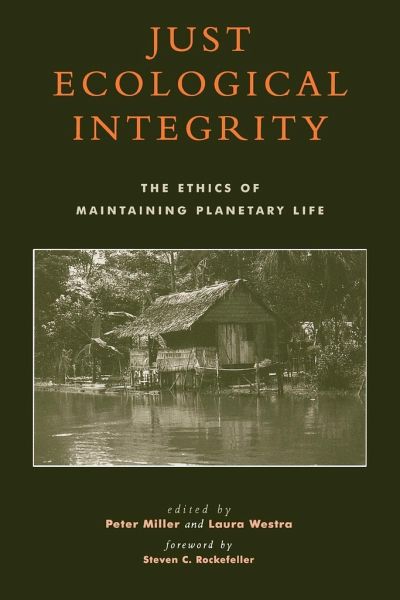
Just Ecological Integrity presents a collection of revised and expanded essays originating from the international conference 'Connecting Environmental Ethics, Ecological Integrity, and Health in the New Millennium' held in San Jose, Costa Rica in June 2000. It is a cooperative venture of the Global Ecological Integrity Project and the Earth Charter Initiative.
Just Ecological Integrity presents a collection of revised and expanded essays originating from the international conference 'Connecting Environmental Ethics, Ecological Integrity, and Health in the New Millennium' held in San Jose, Costa Rica in June 2000. It is a cooperative venture of the Global Ecological Integrity Project and the Earth Charter Initiative.
Peter Miller is professor of philosophy at the Centre for Forest Interdisciplinary Research at the University of Winnipeg and publishes in environmental ethics, forest policy, and public values. He is active on the Manitoba Round Table on Sustainable Development and several ENGOs, and is a former president of the Canadian Society for the Study of Practical Ethics. Laura Westra is professor emerita of philosophy at the University of Windsor and the author or editor of numerous books, including An Environmental Proposal for Ethics (Rowman & Littlefield, 1994), Faces of Environmental Racism (Rowman & Littlefield, 1995), Perspectives on Ecological Integrity (Kluwer), The Greeks and the Environment (Rowman & Littlefield, 1997) and Technology and Values (Rowman & Littlefield, 1998).
Inhaltsangabe
Part 1 Part 1: Valuing the Earth Part 2 A New Global Covenant Chapter 3 The Earth Charter Chapter 4 The Earth Charter: An Ethical Framework for Sustainable Living Chapter 5 The Earth Charter Principles: Source for an Ethics of Universal Responsibility Chapter 6 The Earth Charter as a New Covenant for Democracy Chapter 7 Ecofeminism, Integrity, and the Earth Charter: A Critical Analysis Part 8 Humanistic Values and the Earth Charter Chapter 9 A Pragmatic Focus on Humans Chapter 10 Human Values as a Source for Sustaining the Environment Chapter 11 The Earth Charter, Servant-Leadership, and Philosophy: Valuing the Earth by Implementing Ideals Part 12 Measuring Progress and Decline Chapter 13 Genuine Progress Indicator (GPI) Accounting: Relating Ecological Integrity to Human Health and Well-Being Chapter 14 Understanding the Consequences of Human Actions: Indicators from GNP to IBI Part 15 People in Ecosystems: Reciprocal Impacts and Human Responsibilities Part 16 Sustainable Agriculture and the Human Prospect Chapter 17 The Future of Human Populations: Energy, Food and Water Availability in the Twenty-First Century Chapter 18 Impacts of Milk and Meat on People and the Planet Chapter 19 Integrity and Sustainability of Natural and Man-made Ecosystems Part 20 Addressing the Destruction in Production Chapter 21 Gold, Cyanide, and Fish in the River of Life and Death Chapter 22 The Planetary Life Crisis: Its Systemic Cause and Ground of Resolution Chapter 23 Global Consumption in the New Millennium Chapter 24 What Practical Difference Would the Adoption of the Earth Charter Mean to the Resolution of Global Warming Issues? Part 25 Justice, Conflict, and the Preservation of Nature Part 26 What Is Environmental Justice? Chapter 27 Socially Just Eco-Integirity: Getting Clear on the Concept Chapter 28 The Fair Distribution of Environmental Goods Chapter 29 A Stakeholder-Based Approach to Environmental Justice Using Geographical Information Systems Part 30 Case Studies: Conflict, Risk, and the Preservation of Nature Chapter 31 Violence and the Environment in Colombia: Questions Regarding Environmental Ethics Chapter 32 Ethics and Risks in Building a Cyclotron Chapter 33 The Tactics of Forest Preservation: Autheniticity and Rhetoric in Poland's Bialwieza Forest Preserve Chapter 34 Can Corcovado National Park in Costa Rica Be Saved? How to Apply the Principles of the Earth Charter Chapter 35 Gendered Resistance to Corporate Environmentalism and Debt-for-Nature Swaps in Costa Rica
Part 1 Part 1: Valuing the Earth Part 2 A New Global Covenant Chapter 3 The Earth Charter Chapter 4 The Earth Charter: An Ethical Framework for Sustainable Living Chapter 5 The Earth Charter Principles: Source for an Ethics of Universal Responsibility Chapter 6 The Earth Charter as a New Covenant for Democracy Chapter 7 Ecofeminism, Integrity, and the Earth Charter: A Critical Analysis Part 8 Humanistic Values and the Earth Charter Chapter 9 A Pragmatic Focus on Humans Chapter 10 Human Values as a Source for Sustaining the Environment Chapter 11 The Earth Charter, Servant-Leadership, and Philosophy: Valuing the Earth by Implementing Ideals Part 12 Measuring Progress and Decline Chapter 13 Genuine Progress Indicator (GPI) Accounting: Relating Ecological Integrity to Human Health and Well-Being Chapter 14 Understanding the Consequences of Human Actions: Indicators from GNP to IBI Part 15 People in Ecosystems: Reciprocal Impacts and Human Responsibilities Part 16 Sustainable Agriculture and the Human Prospect Chapter 17 The Future of Human Populations: Energy, Food and Water Availability in the Twenty-First Century Chapter 18 Impacts of Milk and Meat on People and the Planet Chapter 19 Integrity and Sustainability of Natural and Man-made Ecosystems Part 20 Addressing the Destruction in Production Chapter 21 Gold, Cyanide, and Fish in the River of Life and Death Chapter 22 The Planetary Life Crisis: Its Systemic Cause and Ground of Resolution Chapter 23 Global Consumption in the New Millennium Chapter 24 What Practical Difference Would the Adoption of the Earth Charter Mean to the Resolution of Global Warming Issues? Part 25 Justice, Conflict, and the Preservation of Nature Part 26 What Is Environmental Justice? Chapter 27 Socially Just Eco-Integirity: Getting Clear on the Concept Chapter 28 The Fair Distribution of Environmental Goods Chapter 29 A Stakeholder-Based Approach to Environmental Justice Using Geographical Information Systems Part 30 Case Studies: Conflict, Risk, and the Preservation of Nature Chapter 31 Violence and the Environment in Colombia: Questions Regarding Environmental Ethics Chapter 32 Ethics and Risks in Building a Cyclotron Chapter 33 The Tactics of Forest Preservation: Autheniticity and Rhetoric in Poland's Bialwieza Forest Preserve Chapter 34 Can Corcovado National Park in Costa Rica Be Saved? How to Apply the Principles of the Earth Charter Chapter 35 Gendered Resistance to Corporate Environmentalism and Debt-for-Nature Swaps in Costa Rica
Es gelten unsere Allgemeinen Geschäftsbedingungen: www.buecher.de/agb
Impressum
www.buecher.de ist ein Internetauftritt der buecher.de internetstores GmbH
Geschäftsführung: Monica Sawhney | Roland Kölbl | Günter Hilger
Sitz der Gesellschaft: Batheyer Straße 115 - 117, 58099 Hagen
Postanschrift: Bürgermeister-Wegele-Str. 12, 86167 Augsburg
Amtsgericht Hagen HRB 13257
Steuernummer: 321/5800/1497
USt-IdNr: DE450055826