
Andere Kunden interessierten sich auch für
 Optimising Emotions, Incubating Falsehoods91,99 €
 Public Communication and Democracy in Latin America98,99 €
 Deepfakes42,99 €
 Accidental Anchorwoman16,99 €
 Social Media and the Post-Truth World Order49,99 €
 Social Media and the Post-Truth World Order49,99 €
 The Labour Party in Scotland38,99 €





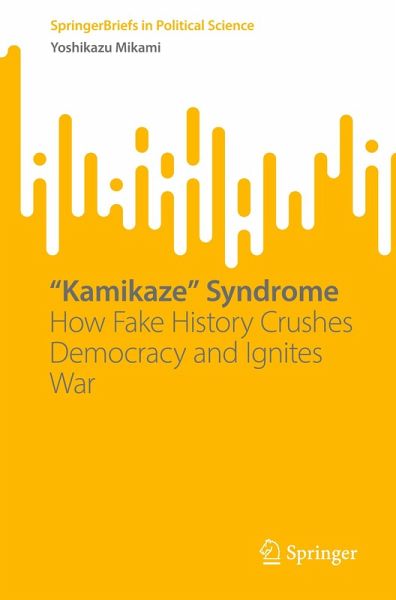
The world was stunned when Putin s Russia invaded Ukraine how could war erupt in Central Europe in the 21st century?
Yet it did. Why?
One key to understanding this atrocity lies in Vladimir Putin s distorted vision of Russian history a glorified past weaponized to justify aggression. This manipulation of historical memory is not unique to Russia. It echoes most vividly in Japan during World War II, when suicide missions were named Kamikaze, invoking a legendary typhoon that repelled Mongol invaders 700 years earlier. This mythologized past was repurposed to inspire desperate wartime sacrifice.
This phenomenon where autocratic regimes selectively glorify history to legitimize violence and suppress democracy is what this book terms the Kamikaze Syndrome. It is visible in China s nationalist narratives, Myanmar s historical revisionism, and even in President Trump s America, where the slogan Make America Great Again evokes a nostalgic, idealized past with striking parallels to the memory politics of Russia and China.
This book offers a compelling comparative analysis of Russia, China, Myanmar, and the United States, revealing how distorted historical narratives can fuel authoritarianism, erode democratic institutions, and ignite conflict. Essential reading for anyone seeking to understand today s turbulent geopolitical landscape, this book exposes the dangerous power of fake history in shaping the future.
Yet it did. Why?
One key to understanding this atrocity lies in Vladimir Putin s distorted vision of Russian history a glorified past weaponized to justify aggression. This manipulation of historical memory is not unique to Russia. It echoes most vividly in Japan during World War II, when suicide missions were named Kamikaze, invoking a legendary typhoon that repelled Mongol invaders 700 years earlier. This mythologized past was repurposed to inspire desperate wartime sacrifice.
This phenomenon where autocratic regimes selectively glorify history to legitimize violence and suppress democracy is what this book terms the Kamikaze Syndrome. It is visible in China s nationalist narratives, Myanmar s historical revisionism, and even in President Trump s America, where the slogan Make America Great Again evokes a nostalgic, idealized past with striking parallels to the memory politics of Russia and China.
This book offers a compelling comparative analysis of Russia, China, Myanmar, and the United States, revealing how distorted historical narratives can fuel authoritarianism, erode democratic institutions, and ignite conflict. Essential reading for anyone seeking to understand today s turbulent geopolitical landscape, this book exposes the dangerous power of fake history in shaping the future.