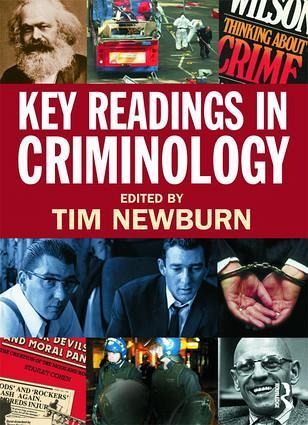
Key Readings in Criminology provides a comprehensive single-volume collection of readings in criminology, providing students with convenient access to a broad range of excerpts from original criminological texts and key articles.
Key Readings in Criminology provides a comprehensive single-volume collection of readings in criminology, providing students with convenient access to a broad range of excerpts from original criminological texts and key articles.
Tim Newburn is Professor of Criminology and Social Policy at the London School of Economics. He is currently President of the British Society of Criminology. Tim is the author or editor of over 30 books, the most recent of which are The Politics of Crime Control (edited with Paul Rock, Oxford University Press 2006); Policy Transfer and Criminal Justice (with Trevor Jones, Open University Press 2007); and the Handbook of Criminal Investigation (co-edited with Tom Williamson and Alan Wright, Willan Publishing 2007).
Inhaltsangabe
1. Understanding Crime and Criminology 2. Crime and Punishment in History 3. Crime Data and Crime Trends 4. Crime and the Media 5. Classicism and Positivism 6. Biological Positivism 7. Psychological Positivism 8. Durkheim, Anomie and Strain 9. The Chicago School: Culture and Subcultures 10. Interactionism and Labelling Theory 11. Control Theories 12. Radical and Critical Criminology 13. Left and Right Realism 14. Contemporary Classicism 15. Feminist Criminology 16. Late Modernity, Governmentality and Risk 17 .Victims, Victimization and Victimology 18. White-Collar and Corporate Crime 19. Organised Crime 20. Violent and Property Crime 21. Drugs and Alcohol 22. Penology and Punishment 23. Understanding Criminal Justice 24. Crime Prevention and Community Safety 25. The Police and Policing 26. Criminal Courts and the Court Process 27. Sentencing and Non-Custodial Penalties 28. Prisons and Imprisonment 29. Youth Crime and Youth Justice 30. Restorative Justice 31. Race, Crime and Justice 32. Gender, Crime and Justice 33. Criminal and Forensic Psychology 34. Globalisation, Terrorism and Human Rights 35. Doing Criminological Research
1. Understanding Crime and Criminology 2. Crime and Punishment in History 3. Crime Data and Crime Trends 4. Crime and the Media 5. Classicism and Positivism 6. Biological Positivism 7. Psychological Positivism 8. Durkheim, Anomie and Strain 9. The Chicago School: Culture and Subcultures 10. Interactionism and Labelling Theory 11. Control Theories 12. Radical and Critical Criminology 13. Left and Right Realism 14. Contemporary Classicism 15. Feminist Criminology 16. Late Modernity, Governmentality and Risk 17 .Victims, Victimization and Victimology 18. White-Collar and Corporate Crime 19. Organised Crime 20. Violent and Property Crime 21. Drugs and Alcohol 22. Penology and Punishment 23. Understanding Criminal Justice 24. Crime Prevention and Community Safety 25. The Police and Policing 26. Criminal Courts and the Court Process 27. Sentencing and Non-Custodial Penalties 28. Prisons and Imprisonment 29. Youth Crime and Youth Justice 30. Restorative Justice 31. Race, Crime and Justice 32. Gender, Crime and Justice 33. Criminal and Forensic Psychology 34. Globalisation, Terrorism and Human Rights 35. Doing Criminological Research
Es gelten unsere Allgemeinen Geschäftsbedingungen: www.buecher.de/agb
Impressum
www.buecher.de ist ein Internetauftritt der buecher.de internetstores GmbH
Geschäftsführung: Monica Sawhney | Roland Kölbl | Günter Hilger
Sitz der Gesellschaft: Batheyer Straße 115 - 117, 58099 Hagen
Postanschrift: Bürgermeister-Wegele-Str. 12, 86167 Augsburg
Amtsgericht Hagen HRB 13257
Steuernummer: 321/5800/1497
USt-IdNr: DE450055826