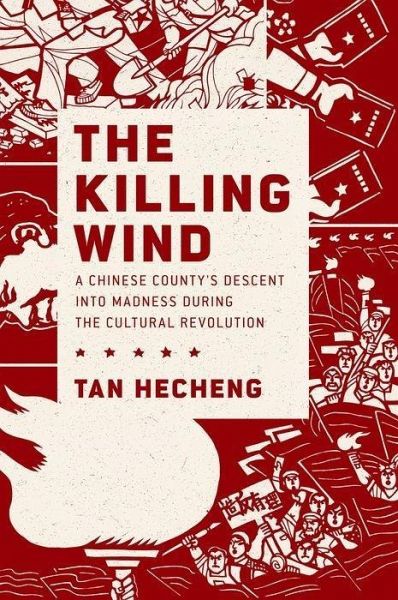
Over the course of 66 days in 1967, more than 4,000 "class enemies"--including young children and the elderly--were murdered in Daoxian, a county in China's Hunan province. The killings spread to surrounding counties, resulting in a combined death toll of more than 9,000. Commonly known as the Daoxian massacre, the killings were one of many acts of so-called mass dictatorship and armed factional conflict that rocked China during the Cultural Revolution. However, in spite of the scope and brutality of the killings, there are few detailed accounts of mass killings in China's countryside during…mehr
Over the course of 66 days in 1967, more than 4,000 "class enemies"--including young children and the elderly--were murdered in Daoxian, a county in China's Hunan province. The killings spread to surrounding counties, resulting in a combined death toll of more than 9,000. Commonly known as the Daoxian massacre, the killings were one of many acts of so-called mass dictatorship and armed factional conflict that rocked China during the Cultural Revolution. However, in spite of the scope and brutality of the killings, there are few detailed accounts of mass killings in China's countryside during the Cultural Revolution's most tumultuous years. Years after the massacre, journalist Tan Hecheng was sent to Daoxian to report on an official investigation into the killings. Tan was prevented from publishing his findings in China, but in 2010, he published the Chinese edition of The Killing Wind in Hong Kong. Tan's first-hand investigation of the atrocities, accumulated over the course of more than 20 years, blends his research with the recollections of survivors to provide a vivid account exploring how and why the massacre took place and describing its aftermath. Dispelling the heroic aura of class struggle, Tan reveals that most of the Daoxian massacre's victims were hard-working, peaceful members of the rural middle class blacklisted as landlords or rich peasants. Tan also describes how political pressure and brainwashing turned ordinary people into heartless killing machines. More than a catalog of horrors, The Killing Wind is also a poignant meditation on memory, moral culpability, and the failure of the Chinese government to come to terms with the crimes of the Maoist era. By painting a detailed portrait of this massacre, Tan makes a broader argument about the long-term consequences of the Cultural Revolution, one of the most violent political movements of the twentieth century. A compelling testament to the victims and survivors of the Daoxian massacre, The Killing Wind is a monument to historical truth: one that fills an immense gap in our understanding of the Mao era, the Cultural Revolution, and the status of truth in contemporary China.
Tan Hecheng is a retired author and editor for the Chinese government.
Inhaltsangabe
* Table of Contents * Map * Blood Awakening * Deconstructing the Mythos of Mao Zedong's Peasant Revolution: * Translator's Note * Chronology of the Cultural Revolution Killings in Daoxian * Introduction * Part One: The Origin of the Massacre * Chapter 1: The River of Death * Chapter 2: My Destiny with Daoxian * Chapter 3: Daoxian on the Eve of the Massacre * The August 5 county seize-and-push meeting * The August 8 gun-snatching incident * Chapter 4: The Random Killings Begin * First blood at the Xiaba production brigade * Xique Zhengjia sparks off the massacre * Part Two: Assembling the Machinery of Slaughter * Chapter 5: The Killing Wind Spreads through Administrative Lines * Chapter 6: Qingtang District and the Rise of the Peasant Supreme Courts * In the hometown of the philosopher * The rise of the peasant supreme courts * A commune Party secretary's story * Chapter 7: The Red Alliance Role in the Killing Wind * Establishment of the Yingjiang Frontline Command Post * The Yingjiang Political and Legal Work Conference * Part Three: Chetou and Shangguan Districts - Murder as Spectacle * Chapter 8: Chetou District's Model Killings * The real story of Chetou District's "landlord and rich peasant insurrection" * Blood-soaked Meihua * An advanced commune encounters a new challenge * Chapter 9: Shangguan District - In the Eye of the Storm * Shangguan Commune's on-the-spot killing rallies * Killing turncoats as well as landlords * Chapter 10: Other Communes in Shangguan District * Dongmen Commune: Graffiti on a cottage wall * The killings at Wanjiazhuang Commune * The unbearable lightness of Futang Commune * Part Four: Gongba District, the County's Top Killer * Chapter 11: A Dubious Honor * One day in Yanhetang * Chapter 12: The Killings at Daoxian's Deadliest Commune * Chapter 13: Some Who Got Away * Chapter 14: Death before Marriage * Part Five: Qingxi District's PAFD Commander * Chapter 15: High-level Participation in Qingxi District * The Great Leap brigade's killing sputnik * Killings approved by the county organization department head * Chapter 16: When the Pebble Rises from the Water * Part Six: Xianglinpu District's Militia Push * Chapter 17: The Shangdu Militia Headquarters * The pressure to stay in the lead * Chapter 18: Even Heaven Wept * Chapter 19: Two Classic Cases * Chapter 20: The Banality of Evil * "The tough job is left to me" * A brigade secretary's story * Part Seven: Deadly Politics * Chapter 21: A Little Education Is a Dangerous Thing * The legend of Widow's Bridge * If you loved the Party, would the Party kill you? * Chapter 22: The Price of Truth * The destruction of two Rightist families * Death of a "little Peng Dehua" * Chapter 23: The Scapegoated Landlord Class * Part Eight: The Killers * Chapter 24: Beyond the Pale * The "big rice pot" * Between humans and beasts * Chapter 25: Brainwashed * The Party secretary who killed a poor peasant association chairman * Duty before family * The Iron Maiden of Daoxian * Part Nine: The Outliers * Chapter 26: The Anomalous Xianzijiao District * Qiaotou Commune's mass killing rally * The last victim * Chapter 27: The Zhenggangtou Phenomenon * Chapter 28: The Miracle of Life * Chapter 29: The Story of an Execution Ground Survivor * Part Ten: The Crackdown * Chapter 30: The 6950 Unit Arrives in Daoxian * The hard task of halting the killing * Chapter 31: No Regrets * An interview with Revolutionary Alliance leader Liu Xiangxi * An interview with Red Alliance leader He Xia * Chapter 32: The Petitioners * Master petitioner Li Niande * A mansion and a family's fate * Rise of a master petitioner * Chapter 33: Change of Plans * A drinking mishap * Chapter 34: Killings in the Counties and Cities Surrounding Daoxian * Part Eleven: The End of the Killing Wind * Chapter 35: Huang Yida and the Fall of the Red Alliance * Midnight run to the provincial capital * Hua Guofeng's directive * The September 23 tragedy * The exposure study sessions * Chapter 36: Reversals * In prison * Heaven's unfathomable will * Afterword: Living for Truth * Appendix I: Basic Statistics on the Victims of the Daoxian Cultural Revolution Killings * Appendix II: Official Culpability in Daoxian's Killing Wind
Es gelten unsere Allgemeinen Geschäftsbedingungen: www.buecher.de/agb
Impressum
www.buecher.de ist ein Internetauftritt der buecher.de internetstores GmbH
Geschäftsführung: Monica Sawhney | Roland Kölbl | Günter Hilger
Sitz der Gesellschaft: Batheyer Straße 115 - 117, 58099 Hagen
Postanschrift: Bürgermeister-Wegele-Str. 12, 86167 Augsburg
Amtsgericht Hagen HRB 13257
Steuernummer: 321/5800/1497
USt-IdNr: DE450055826