Andere Kunden interessierten sich auch für
 Kim18,99 €
 The Writings in Prose and Verse of Rudyard Kipling ...: Kim37,99 €
 Kim13,99 €
 Kim25,99 €
 Kim17,99 €
 Kim21,99 €
 (Case Laminate Hardcover with Jacket)") Kim (Royal Collector's Edition) (Case Laminate Hardcover with Jacket)37,99 €
Kim (Royal Collector's Edition) (Case Laminate Hardcover with Jacket)37,99 €

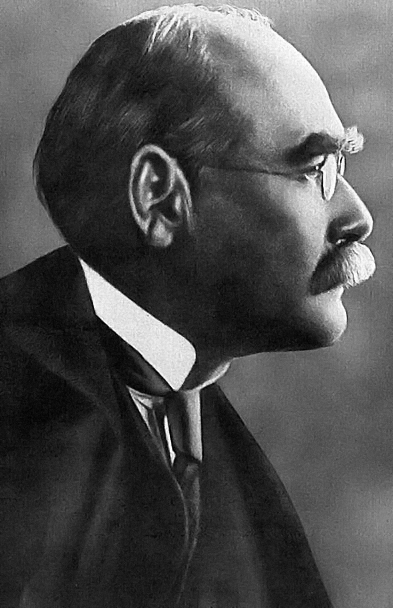
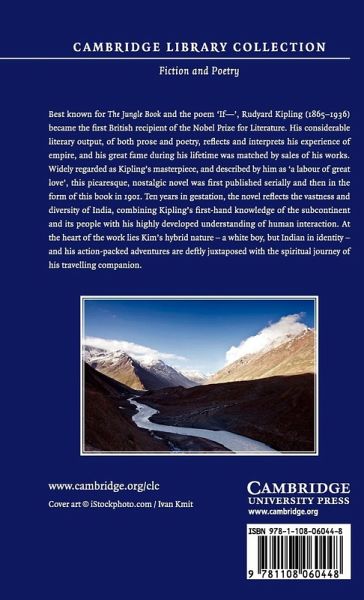
Best known for The Jungle Book and the poem 'If-', Rudyard Kipling (1865-1936) became the first British recipient of the Nobel Prize for Literature. His considerable literary output, of both prose and poetry, reflects and interprets his experience of empire, and his great fame during his lifetime was matched by sales of his works. Widely regarded as Kipling's masterpiece, and described by him as 'a labour of great love', this picaresque, nostalgic novel was first published serially and then in the form of this book in 1901. Ten years in gestation, the novel reflects the vastness and diversity of India, combining Kipling's first-hand knowledge of the subcontinent and its people with his highly developed understanding of human interaction. At the heart of the work lies Kim's hybrid nature - a white boy, but Indian in identity - and his action-packed adventures are deftly juxtaposed with the spiritual journey of his travelling companion.
Joseph Rudyard Kipling (30 December 1865 - 18 January 1936) was an English journalist, short-story writer, poet, and novelist. Kipling's works of fiction include The Jungle Book (1894), Kim (1901), and many short stories, including "The Man Who Would Be King" (1888). He is regarded as a major innovator in the art of the short story; his children's books are classics of children's literature; and one critic described his work as exhibiting "a versatile and luminous narrative gift." Kipling was one of the most popular writers in the United Kingdom, in both prose and verse, in the late 19th and early 20th centuries. Henry James said: "Kipling strikes me personally as the most complete man of genius, as distinct from fine intelligence, that I have ever known." In 1907, at the age of 42, he was awarded the Nobel Prize in Literature, making him the first English-language writer to receive the prize, and its youngest recipient to date. He was also sounded out for the British Poet Laureateship and on several occasions for a knighthood, both of which he declined. Kipling's subsequent reputation has changed according to the political and social climate of the age and the resulting contrasting views about him continued for much of the 20th century. George Orwell called him a "prophet of British imperialism." Literary critic Douglas Kerr wrote: "Kipling is still an author who can inspire passionate disagreement and his place in literary and cultural history is far from settled. But as the age of the European empires recedes, he is recognised as an incomparable, if controversial, interpreter of how empire was experienced. That, and an increasing recognition of his extraordinary narrative gifts, make him a force to be reckoned with."