The status of knowledge management (KM) as a mature science has long been recognized in the academic world. However, in the economic arena, its connection with companies and organizations has been more gradual. Jean-Louis Ermine established a theoretical and practical framework for KM in his book, Knowledge Management: The Creative Loop - issued by the same publishers as this book. In this latest tome, practical examples are illustrated with real case studies. Modeled on the four-step operational approach inspired by �the creative loop�, this book includes four sets of real case studies - each…mehr
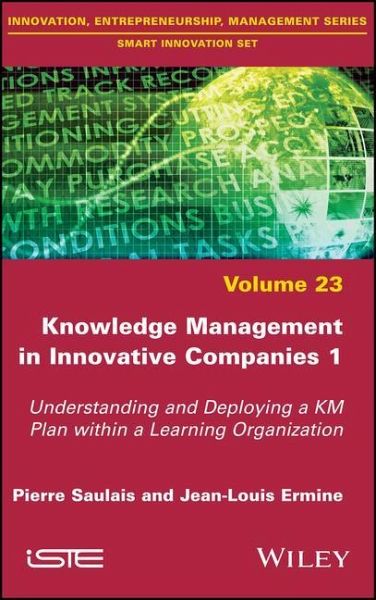
The status of knowledge management (KM) as a mature science has long been recognized in the academic world. However, in the economic arena, its connection with companies and organizations has been more gradual. Jean-Louis Ermine established a theoretical and practical framework for KM in his book, Knowledge Management: The Creative Loop - issued by the same publishers as this book. In this latest tome, practical examples are illustrated with real case studies. Modeled on the four-step operational approach inspired by �the creative loop�, this book includes four sets of real case studies - each one following the basic presentation of the fundamental material per step. Knowledge Management in Innovative Companies 1 is especially useful for practitioners, as there are numerous illustrations based on best practices for each specific KM step and for global project implementation. Indeed, the last chapter is dedicated to the implementation of a global KM corporate project.
Pierre SAULAIS is Associate Researcher at the Institute of Knowledge and Innovation South East Asia (IKI SEA, Bangkok University), Thailand. His research interests focus on knowledge-based innovation, as well as on the generation and extraction of inventive knowledge. Jean-Louis ERMINE is Emeritus Professor of Mines Telecom Institute, Paris-Saclay, France. In addition, Ermine is Honorary President of the Club "Gestion des Connaissances" (Knowledge Management), which he founded in Paris in 1999. He is also Honorary President of "Gestion des Connaissances dans la Société et les Organizations" (Knowledge Management in Society and Organizations), which he founded in 2014.
Inhaltsangabe
Preface ix Chapter 1. The KM Project in an Organization 1 1.1. Articulation of Chapter 1 1 1.2. Knowledge management 2 1.3. A reference framework for a knowledge-based KM 6 1.3.1. Knowledge-based KM 6 1.4. The virtuous cycle of knowledge 10 1.4.1. Step 1: analysis of a knowledge capital and development of a KM plan 10 1.4.2. Step 2: organization of knowledge resources 11 1.4.3. Step 3: implementation of KM processes 12 1.4.4. Step 4: evolution of a knowledge capital 12 1.5. The MASK method 12 1.5.1. MASK II: analysis of a knowledge capital 13 1.5.2. MASK I: capitalization of a knowledge corpus 15 1.5.3. MASK III: sharing the knowledge base 16 1.5.4. MASK IV: evolution of a knowledge capital 19 1.6. The KM process repository 22 1.7. Critical success factors for a global KM project 23 1.7.1. The water lily strategy 24 1.7.2. Key stages of change 27 1.8. Overview 30 Chapter 2. Strategic Analysis of an Organization's Knowledge Capital 33 2.1. Articulation of Chapter 2 33 2.2. Introduction to the strategic analysis of knowledge capital 33 2.2.1. Step 1: analysis of critical capacities 34 2.2.2. Step 2: analysis of critical knowledge 34 2.2.3. Step 3: strategic alignment 35 2.2.4. Step 4: developing the action plan 35 2.2.5. The knowledge criticality analysis grid 36 2.3. Chronopost: observing professions 37 2.3.1. Presentation of the company 38 2.3.2. Project context 38 2.3.3. Objectives 41 2.3.4. Approach adopted 41 2.3.5. Procedure. 43 2.3.6. Strategic alignment 53 2.3.7. Project assessment 55 2.3.8. Lessons learned 56 2.3.9. Conclusion 57 2.4. Hydro-Québec 57 2.4.1. Introduction 57 2.4.2. Presentation of Hydro-Québec 57 2.4.3. Presentation of the study conducted and the principles of the method used 58 2.4.4. Implementation of the method at Hydro-Québec 59 2.4.5. Conclusion 67 2.5. The IPEN's Radiopharmacy Center 68 2.5.1. Presentation of the study 68 2.5.2. The progress of the KM project 72 2.6. Sonatrach 79 2.6.1. Introduction 79 2.6.2. Method used 80 2.6.3. Strategic analysis 81 2.6.4. Analysis of professional knowledge 84 2.6.5. Conclusion 87 2.7. Lessons learned from the four case studies 88 Chapter 3. Capitalizing on the Organization's Knowledge 89 3.1. Articulation of Chapter 3 89 3.2. Introduction to knowledge capitalization 89 3.3. The case of INRS: a consulting approach to improve safety when using woodworking machines 94 3.3.1. Introduction 95 3.3.2. Analysis of a reported incident or accident on a woodworking machine 97 3.3.3. The dangers of woodworking machines 100 3.3.4. Classification of woodworking machines 102 3.3.5. History of INRS' involvement in the safety of woodworking machines 103 3.3.6. Conclusion 105 3.4. The case of code systems: knowledge books for code management and code control 106 3.4.1. Introduction 106 3.4.2. Reference framework for the development and use of codes 107 3.4.3. Two new ways to manage knowledge on codes 109 3.4.4. Example of an Euler buckling code 112 3.4.5. Example of the description of an option in a code 114 3.4.6. Conclusion and perspectives 118 3.5. The IRSN case 118 3.5.1. Introduction 118 3.5.2. Knowledge book process 120 3.5.3. Examples of knowledge books 121 3.5.4. Feedback on the production of knowledge books 137 3.5.5. Problem linked to the dissemination of knowledge books 139 3.5.6. Problem of the evolution of knowledge books 139 3.5.7. Perspectives 140 3.6. Lessons learned from case studies 141 References 143 Index 147
Preface ix Chapter 1. The KM Project in an Organization 1 1.1. Articulation of Chapter 1 1 1.2. Knowledge management 2 1.3. A reference framework for a knowledge-based KM 6 1.3.1. Knowledge-based KM 6 1.4. The virtuous cycle of knowledge 10 1.4.1. Step 1: analysis of a knowledge capital and development of a KM plan 10 1.4.2. Step 2: organization of knowledge resources 11 1.4.3. Step 3: implementation of KM processes 12 1.4.4. Step 4: evolution of a knowledge capital 12 1.5. The MASK method 12 1.5.1. MASK II: analysis of a knowledge capital 13 1.5.2. MASK I: capitalization of a knowledge corpus 15 1.5.3. MASK III: sharing the knowledge base 16 1.5.4. MASK IV: evolution of a knowledge capital 19 1.6. The KM process repository 22 1.7. Critical success factors for a global KM project 23 1.7.1. The water lily strategy 24 1.7.2. Key stages of change 27 1.8. Overview 30 Chapter 2. Strategic Analysis of an Organization's Knowledge Capital 33 2.1. Articulation of Chapter 2 33 2.2. Introduction to the strategic analysis of knowledge capital 33 2.2.1. Step 1: analysis of critical capacities 34 2.2.2. Step 2: analysis of critical knowledge 34 2.2.3. Step 3: strategic alignment 35 2.2.4. Step 4: developing the action plan 35 2.2.5. The knowledge criticality analysis grid 36 2.3. Chronopost: observing professions 37 2.3.1. Presentation of the company 38 2.3.2. Project context 38 2.3.3. Objectives 41 2.3.4. Approach adopted 41 2.3.5. Procedure. 43 2.3.6. Strategic alignment 53 2.3.7. Project assessment 55 2.3.8. Lessons learned 56 2.3.9. Conclusion 57 2.4. Hydro-Québec 57 2.4.1. Introduction 57 2.4.2. Presentation of Hydro-Québec 57 2.4.3. Presentation of the study conducted and the principles of the method used 58 2.4.4. Implementation of the method at Hydro-Québec 59 2.4.5. Conclusion 67 2.5. The IPEN's Radiopharmacy Center 68 2.5.1. Presentation of the study 68 2.5.2. The progress of the KM project 72 2.6. Sonatrach 79 2.6.1. Introduction 79 2.6.2. Method used 80 2.6.3. Strategic analysis 81 2.6.4. Analysis of professional knowledge 84 2.6.5. Conclusion 87 2.7. Lessons learned from the four case studies 88 Chapter 3. Capitalizing on the Organization's Knowledge 89 3.1. Articulation of Chapter 3 89 3.2. Introduction to knowledge capitalization 89 3.3. The case of INRS: a consulting approach to improve safety when using woodworking machines 94 3.3.1. Introduction 95 3.3.2. Analysis of a reported incident or accident on a woodworking machine 97 3.3.3. The dangers of woodworking machines 100 3.3.4. Classification of woodworking machines 102 3.3.5. History of INRS' involvement in the safety of woodworking machines 103 3.3.6. Conclusion 105 3.4. The case of code systems: knowledge books for code management and code control 106 3.4.1. Introduction 106 3.4.2. Reference framework for the development and use of codes 107 3.4.3. Two new ways to manage knowledge on codes 109 3.4.4. Example of an Euler buckling code 112 3.4.5. Example of the description of an option in a code 114 3.4.6. Conclusion and perspectives 118 3.5. The IRSN case 118 3.5.1. Introduction 118 3.5.2. Knowledge book process 120 3.5.3. Examples of knowledge books 121 3.5.4. Feedback on the production of knowledge books 137 3.5.5. Problem linked to the dissemination of knowledge books 139 3.5.6. Problem of the evolution of knowledge books 139 3.5.7. Perspectives 140 3.6. Lessons learned from case studies 141 References 143 Index 147
Es gelten unsere Allgemeinen Geschäftsbedingungen: www.buecher.de/agb
Impressum
www.buecher.de ist ein Internetauftritt der buecher.de internetstores GmbH
Geschäftsführung: Monica Sawhney | Roland Kölbl | Günter Hilger
Sitz der Gesellschaft: Batheyer Straße 115 - 117, 58099 Hagen
Postanschrift: Bürgermeister-Wegele-Str. 12, 86167 Augsburg
Amtsgericht Hagen HRB 13257
Steuernummer: 321/5800/1497
USt-IdNr: DE450055826