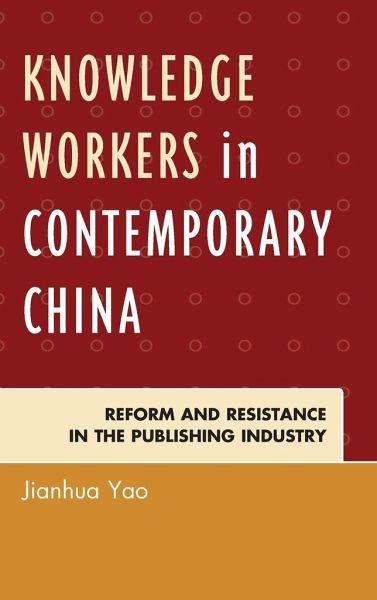
This bookconcentrates on knowledge workers, mainly editors, in the Chinese publishing industry. The book focuses on their changing social, economic, and political roles; their dilemmas, challenges, and opportunities associated with current social reform; and China’s integration into the global political economy.
This bookconcentrates on knowledge workers, mainly editors, in the Chinese publishing industry. The book focuses on their changing social, economic, and political roles; their dilemmas, challenges, and opportunities associated with current social reform; and China’s integration into the global political economy.
Jianhua Yao received his doctoral degree in sociology from Queen's University, Canada, and his research interests include political economy, media and communication, and labor issues.
Inhaltsangabe
Table of Contents Preface and Acknowledgments List of Tables Abbreviation Introduction Knowledge Workers in China's Publishing Industry Class Consciousness of Knowledge Workers Chinese Media Workers and Editors Responses and Unions Research Questions Methods Archival Studies Surveys Semi-structured Interviews What Makes the Two Publishing Houses Special Basic Interview Questions Supplementary Interviews Organization of the Book Chapter 1 Political Economy, Media Reform, and Knowledge Workers Political Economy What Is Political Economy Central Qualities of Political Economy Media Reform The Party Principle and the Propaganda Model Media Commodification Media Democratization Knowledge Workers Labor and Class Analysis Labor and Globalization Labor and Unions Conclusion Chapter 2 The Commodification Process: Publishing Reform in China The Commodification Process China's Media Reform Background of the Chinese Media Reform China's Publishing Industry Reform Administrative Management of China's Publishing Industry Publishing Industry Laws Changes in China's Publishing Industry The Advertising Industry in China Precarious Chinese Editors Basic Information of the Surveys Contingent Employment The Decline of Social Welfare Benefits Intense Work Pressure Conclusion Chapter 3 The Structuration Process: The Five Critical Problems The Five Critical Problems Technological Changes in China Following the Party Principle in the Media Marketization Process The Rise of Market Competition Strict Party Control The Growing Tension within the Propaganda-Commercial Model The Marketization Process in the Social Welfare System Changes in the Pension System Changes in the Health Care System Smashing of the Work-unit System The Inner Division of the Working Class Divisions between Editors and Leader0 Inner Divisions of Editors Conclusion: Social Changes, Class Relations, and Power Dynamics Chapter 4 The Spatialization Process: Globalization, Neoliberalism, and the Global Division of Labor Globalization and the Chinese Publishing Industry Transnational Media Corporations in China Chinese Publishing Exports in the Global Media Sphere Chinese Publishing Conglomerates Neoliberalism and Chinese Editors The Twin Modalities of the Neoliberal Governmentality China's Accession to the World Trade Organization The Global Division of Labor and Chinese Editors The Emergence of the Global Division of Labor The Impact of the Global Division of Labor on Chinese Editors Conclusion Chapter 5 Labor Convergence: Worker Organizations and Trade Unions Labor Convergence Worker Organizations The Publishers Association of China The Publishers Association of Shanghai Trade Unions Trade Unions as "Transmission Belts" The All-China Federation of Trade Unions The Labor Law Rethinking of Worker Organizations and Trade Unions Limitations of Worker Organizations and Trade Unions Labor Unrest Prospects: How to Better Represent Workers' Rights and Interests Technological Developments Changes inside the All-China Federation of Trade Unions The Emergence of Labor Non-governmental Organizations Conclusion Conclusion Summary Contributions Theoretical Significance Methodological Significance Substantive Significance Suggestions for Future Research References Appendix A Original Survey Questions Appendix B Interview Outline Appendix C Interview Questions for Editors and Union Officials Appendix D Interview Participants
Table of Contents Preface and Acknowledgments List of Tables Abbreviation Introduction Knowledge Workers in China's Publishing Industry Class Consciousness of Knowledge Workers Chinese Media Workers and Editors Responses and Unions Research Questions Methods Archival Studies Surveys Semi-structured Interviews What Makes the Two Publishing Houses Special Basic Interview Questions Supplementary Interviews Organization of the Book Chapter 1 Political Economy, Media Reform, and Knowledge Workers Political Economy What Is Political Economy Central Qualities of Political Economy Media Reform The Party Principle and the Propaganda Model Media Commodification Media Democratization Knowledge Workers Labor and Class Analysis Labor and Globalization Labor and Unions Conclusion Chapter 2 The Commodification Process: Publishing Reform in China The Commodification Process China's Media Reform Background of the Chinese Media Reform China's Publishing Industry Reform Administrative Management of China's Publishing Industry Publishing Industry Laws Changes in China's Publishing Industry The Advertising Industry in China Precarious Chinese Editors Basic Information of the Surveys Contingent Employment The Decline of Social Welfare Benefits Intense Work Pressure Conclusion Chapter 3 The Structuration Process: The Five Critical Problems The Five Critical Problems Technological Changes in China Following the Party Principle in the Media Marketization Process The Rise of Market Competition Strict Party Control The Growing Tension within the Propaganda-Commercial Model The Marketization Process in the Social Welfare System Changes in the Pension System Changes in the Health Care System Smashing of the Work-unit System The Inner Division of the Working Class Divisions between Editors and Leader0 Inner Divisions of Editors Conclusion: Social Changes, Class Relations, and Power Dynamics Chapter 4 The Spatialization Process: Globalization, Neoliberalism, and the Global Division of Labor Globalization and the Chinese Publishing Industry Transnational Media Corporations in China Chinese Publishing Exports in the Global Media Sphere Chinese Publishing Conglomerates Neoliberalism and Chinese Editors The Twin Modalities of the Neoliberal Governmentality China's Accession to the World Trade Organization The Global Division of Labor and Chinese Editors The Emergence of the Global Division of Labor The Impact of the Global Division of Labor on Chinese Editors Conclusion Chapter 5 Labor Convergence: Worker Organizations and Trade Unions Labor Convergence Worker Organizations The Publishers Association of China The Publishers Association of Shanghai Trade Unions Trade Unions as "Transmission Belts" The All-China Federation of Trade Unions The Labor Law Rethinking of Worker Organizations and Trade Unions Limitations of Worker Organizations and Trade Unions Labor Unrest Prospects: How to Better Represent Workers' Rights and Interests Technological Developments Changes inside the All-China Federation of Trade Unions The Emergence of Labor Non-governmental Organizations Conclusion Conclusion Summary Contributions Theoretical Significance Methodological Significance Substantive Significance Suggestions for Future Research References Appendix A Original Survey Questions Appendix B Interview Outline Appendix C Interview Questions for Editors and Union Officials Appendix D Interview Participants
Es gelten unsere Allgemeinen Geschäftsbedingungen: www.buecher.de/agb
Impressum
www.buecher.de ist ein Internetauftritt der buecher.de internetstores GmbH
Geschäftsführung: Monica Sawhney | Roland Kölbl | Günter Hilger
Sitz der Gesellschaft: Batheyer Straße 115 - 117, 58099 Hagen
Postanschrift: Bürgermeister-Wegele-Str. 12, 86167 Augsburg
Amtsgericht Hagen HRB 13257
Steuernummer: 321/5800/1497
USt-IdNr: DE450055826