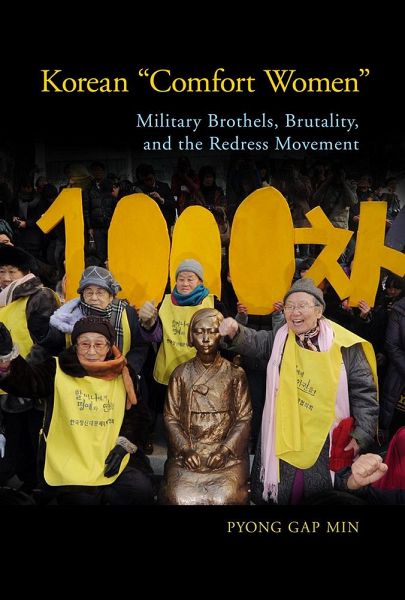
Examines both the â comfort womenâ issue and the redress movement for the victims of Japanese military sexual slavery. The book shows the inadequacies of the claims by Japanese neo-nationalists and some scholars that the â comfort womenâ system was not much different from or had some similarities to commercial prostitution.
Examines both the â comfort womenâ issue and the redress movement for the victims of Japanese military sexual slavery. The book shows the inadequacies of the claims by Japanese neo-nationalists and some scholars that the â comfort womenâ system was not much different from or had some similarities to commercial prostitution.
PYONG GAP MIN is a distinguished professor of sociology at Queens College and the Graduate Center of the City University of New York, as well as the director of the Research Center for Korean Community. He is the author of five books and the editor or co-editor of fourteen books, including the award-winning Caught in the Middle: Korean Communities in New York and Los Angeles and Preserving Ethnicity through Religion in America: Korean Protestants and Indian Hindus across Generations.
Inhaltsangabe
Abbreviations Chronology Introduction: Background Information about Japanese Military Sexual Slavery and the Redress Movement for the Victims 1 Theoretical and Conceptual Frameworks 2 Enough Information, but the Issue Was Buried for Half a Century 3 The Emergence of the "Comfort Women" Issue and Victims' Breaking Silence 4 General Information about the "Comfort Women" System 5 Forced Mobilization of "Comfort Women" 6 Payments of Fees and Affectionate Relationships 7 Sexual Exploitation, Violence, and Threats at "Comfort Stations" 8 The Perils of Korean "Comfort Women's" Homecoming Trips 9 Korean "Comfort Women's" Lives in Korea and China 10 Progress of the Redress Movement in Korea 11 Divided Responses to the Redress Movement in Japan 12 Responses to the Redress Movement in the United States Conclusion Acknowledgments Notes References Index
Abbreviations Chronology Introduction: Background Information about Japanese Military Sexual Slavery and the Redress Movement for the Victims 1 Theoretical and Conceptual Frameworks 2 Enough Information, but the Issue Was Buried for Half a Century 3 The Emergence of the "Comfort Women" Issue and Victims' Breaking Silence 4 General Information about the "Comfort Women" System 5 Forced Mobilization of "Comfort Women" 6 Payments of Fees and Affectionate Relationships 7 Sexual Exploitation, Violence, and Threats at "Comfort Stations" 8 The Perils of Korean "Comfort Women's" Homecoming Trips 9 Korean "Comfort Women's" Lives in Korea and China 10 Progress of the Redress Movement in Korea 11 Divided Responses to the Redress Movement in Japan 12 Responses to the Redress Movement in the United States Conclusion Acknowledgments Notes References Index
Es gelten unsere Allgemeinen Geschäftsbedingungen: www.buecher.de/agb
Impressum
www.buecher.de ist ein Internetauftritt der buecher.de internetstores GmbH
Geschäftsführung: Monica Sawhney | Roland Kölbl | Günter Hilger
Sitz der Gesellschaft: Batheyer Straße 115 - 117, 58099 Hagen
Postanschrift: Bürgermeister-Wegele-Str. 12, 86167 Augsburg
Amtsgericht Hagen HRB 13257
Steuernummer: 321/5800/1497
USt-IdNr: DE450055826