
Language and Social Justice
Global Perspectives
Herausgeber: Riley, Kathleen C; García-Sánchez, Inmaculada M; Perley, Bernard C; Wei, Li
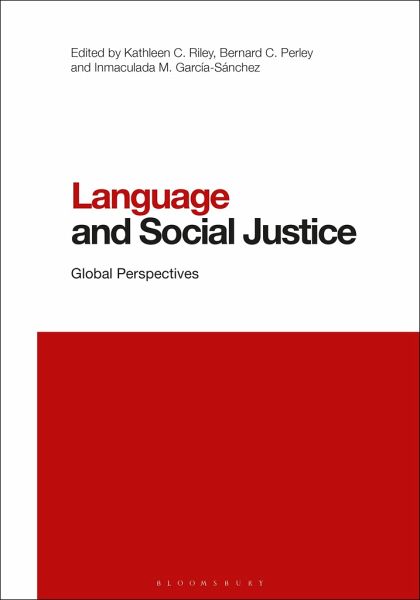
Language and Social Justice
Global Perspectives
Herausgeber: Riley, Kathleen C; García-Sánchez, Inmaculada M; Perley, Bernard C; Wei, Li
- Gebundenes Buch
- Merkliste
- Auf die Merkliste
- Bewerten Bewerten
- Teilen
- Produkt teilen
- Produkterinnerung
- Produkterinnerung
Explores how language both facilitates and undermines social justice in complex ways around the globe, through a broad range of international case studies.
Andere Kunden interessierten sich auch für
 Research Methods in Linguistic Anthropology43,99 €
 Dr Valerie Hobbs (UK University of Sheffield)An Introduction to Religious Language40,99 €
 Erin MooreThat's Not English19,99 €
 Kevin Harvey (UK University of Nottingham)The Literary Lifeline31,99 €
 Pandemic and Crisis Discourse185,99 €
 The Bloomsbury Handbook of Linguistic Landscapes185,99 €
 Bloomsbury World Englishes Volume 1: Paradigms60,99 €
-
-
-



Explores how language both facilitates and undermines social justice in complex ways around the globe, through a broad range of international case studies.
Produktdetails
- Produktdetails
- Contemporary Studies in Linguistics
- Verlag: Bloomsbury Publishing PLC
- Seitenzahl: 520
- Erscheinungstermin: 21. März 2024
- Englisch
- Abmessung: 246mm x 170mm x 33mm
- Gewicht: 1042g
- ISBN-13: 9781350156241
- ISBN-10: 1350156248
- Artikelnr.: 63475724
- Herstellerkennzeichnung
- Libri GmbH
- Europaallee 1
- 36244 Bad Hersfeld
- gpsr@libri.de
- Contemporary Studies in Linguistics
- Verlag: Bloomsbury Publishing PLC
- Seitenzahl: 520
- Erscheinungstermin: 21. März 2024
- Englisch
- Abmessung: 246mm x 170mm x 33mm
- Gewicht: 1042g
- ISBN-13: 9781350156241
- ISBN-10: 1350156248
- Artikelnr.: 63475724
- Herstellerkennzeichnung
- Libri GmbH
- Europaallee 1
- 36244 Bad Hersfeld
- gpsr@libri.de
Kathleen C. Riley is Assistant Teaching Professor of Linguistic Anthropology at Rutgers University, USA. Bernard C. Perley is Associate Professor and Director of the Institute for Critical Indigenous Studies at the University of British Columbia, Canada. Inmaculada M. García-Sánchez isProfessor of Social Research Methodology and Associate Director of the Center for the Study of International Migration at the University of California, Los Angeles, USA.
List of Figures
List of Tables
List of Contributors
Acknowledgements
Introduction: Global Entanglements of Language and Social Justice,
Inmaculada M. García-Sánchez (University of California, USA), Kathleen C.
Riley (Rutgers University, USA) and Bernard C. Perley (University of
British Columbia, Canada)
Part I: Challenging Linguistic Ideologies and Exclusions
1. A Language Socialization Approach to Humanizing Ethnographic Methods in
Latinx Families' Homes, Ariana Mangual Figueroa (City University of New
York, USA) and Sera Hernández (San Diego State University, USA)
2. Language Access and Deaf Activism in Mexico and Nepal,Erika
Hoffmann-Dilloway (Oberlin College, USA) and Anne E. Pfister (University of
North Florida, USA)
3. Multilingual Activism as Acts of Linguistic Citizenship in South Africa,
Quentin Williams (University of the Western Cape, South Africa)
4. Colonialism and Language Politics in Puerto Rico, Sherina
Feliciano-Santos (University of Michigan, USA)
5. Labels, Codes, and Language Sovereignty in the Pacific, Kathleen C.
Riley (Rutgers University, USA) and Christine Jourdan (Concordia
University, Canada)
Commentary, Patricia Baquedano-López (University of California, USA)
Part II: Confronting Hate and Violence
6. The Humpty Dumpty Mistranslation and Misrepresentation Deployed in the
British Colonization of Aotearoa/New Zealand, Margaret Mutu (University of
Auckland, New Zealand)
7. The Linguistic Defense of White Comfort in Rio de Janeiro, Brazil,
Jennifer Roth-Gordon (University of Arizona, USA)
8. (Con)sensual Sexual and Reproductive Justice for Indigenous Women and
Girls through Beadwork and Burlesque, Brittany Johnson (MacEwan University,
Canada)
9. Telling Truths, Keeping Silence in the Aftermath of War in Sarajevo,
Keziah Conrad
10. Arabic and the Discursive Contours of Islamo-Linguistic-Phobia in Spain
and France, Inmaculada M. García-Sánchez (University of California, USA)
and Chantal Tetreault (Michigan State University, USA)
Commentary, Luisa Martín-Rojo (Universidad Autónoma de Madrid, Spain)
Part III: Decoding Globalized Interactions
11. Seafarers' Talk about (In)Justice on the "Good Ship", Johanna Markkula
(Central European University) and Sonia Das (New York University, USA)
12. Barcelona Street Vendors' Voice and the Crossing of Narrative
(B)Orders, Laura Menna (Independent Researcher) and Eva Codó (Universitat
Autònoma de Barcelona, Spain)
13. Interdiscursive Dimensions of Mobility and Precarity for Guatemalan
Indigenous Youth, Jennifer F. Reynolds (University of South Carolina, USA)
14. Regimes of Organization in Danish Legal Interpreting, Martha Karrebæk
(University of Copenhagen, Denmark) and Marta Kirilova (University of
Copenhagen, Denmark)
15. Keywords Decolonized? The Social Lives of Wenhua/Culture and the
Spectre of Symbolic Violence in Chinese-English Dialogues, Louisa Schein (
Rutgers University, USA)and Fan Yang (University of Maryland, USA)
Commentary, Miyako Inoue (Stanford University, USA)
Part IV: Negotiating Resources in the Anthropocene
16. Global Languages and Communicative Inequality in the "Last Place" on
Earth, James Slotta (University of Texas, USA) and Courtney Handman
(University of Texas, USA)
17. Pursuit of Health/Communicative Justice through an Intercultural Health
Model in Gulumapu (Chile), Jennifer Guzmán (SUNY Geneseo, USA)
18. Inscribing Social Justice through Indigenous Place Names, Bernard C.
Perley (University of British Columbia, Canada)
19. Discursive Resistance, Communicative Refusal, and Food Provisioning in
Santiago de Cuba, Hannah Garth (Princeton University, USA)
20. Discursive Constructions of Non-Human Beings and the Contingency of
Moral Consideration for Local Wildlife, Paul B. Garrett (Temple University
, USA) and Rebecca Michelin (Independent Researcher)
Commentary, Barbra Meek (University of Michigan, USA)
Index
List of Tables
List of Contributors
Acknowledgements
Introduction: Global Entanglements of Language and Social Justice,
Inmaculada M. García-Sánchez (University of California, USA), Kathleen C.
Riley (Rutgers University, USA) and Bernard C. Perley (University of
British Columbia, Canada)
Part I: Challenging Linguistic Ideologies and Exclusions
1. A Language Socialization Approach to Humanizing Ethnographic Methods in
Latinx Families' Homes, Ariana Mangual Figueroa (City University of New
York, USA) and Sera Hernández (San Diego State University, USA)
2. Language Access and Deaf Activism in Mexico and Nepal,Erika
Hoffmann-Dilloway (Oberlin College, USA) and Anne E. Pfister (University of
North Florida, USA)
3. Multilingual Activism as Acts of Linguistic Citizenship in South Africa,
Quentin Williams (University of the Western Cape, South Africa)
4. Colonialism and Language Politics in Puerto Rico, Sherina
Feliciano-Santos (University of Michigan, USA)
5. Labels, Codes, and Language Sovereignty in the Pacific, Kathleen C.
Riley (Rutgers University, USA) and Christine Jourdan (Concordia
University, Canada)
Commentary, Patricia Baquedano-López (University of California, USA)
Part II: Confronting Hate and Violence
6. The Humpty Dumpty Mistranslation and Misrepresentation Deployed in the
British Colonization of Aotearoa/New Zealand, Margaret Mutu (University of
Auckland, New Zealand)
7. The Linguistic Defense of White Comfort in Rio de Janeiro, Brazil,
Jennifer Roth-Gordon (University of Arizona, USA)
8. (Con)sensual Sexual and Reproductive Justice for Indigenous Women and
Girls through Beadwork and Burlesque, Brittany Johnson (MacEwan University,
Canada)
9. Telling Truths, Keeping Silence in the Aftermath of War in Sarajevo,
Keziah Conrad
10. Arabic and the Discursive Contours of Islamo-Linguistic-Phobia in Spain
and France, Inmaculada M. García-Sánchez (University of California, USA)
and Chantal Tetreault (Michigan State University, USA)
Commentary, Luisa Martín-Rojo (Universidad Autónoma de Madrid, Spain)
Part III: Decoding Globalized Interactions
11. Seafarers' Talk about (In)Justice on the "Good Ship", Johanna Markkula
(Central European University) and Sonia Das (New York University, USA)
12. Barcelona Street Vendors' Voice and the Crossing of Narrative
(B)Orders, Laura Menna (Independent Researcher) and Eva Codó (Universitat
Autònoma de Barcelona, Spain)
13. Interdiscursive Dimensions of Mobility and Precarity for Guatemalan
Indigenous Youth, Jennifer F. Reynolds (University of South Carolina, USA)
14. Regimes of Organization in Danish Legal Interpreting, Martha Karrebæk
(University of Copenhagen, Denmark) and Marta Kirilova (University of
Copenhagen, Denmark)
15. Keywords Decolonized? The Social Lives of Wenhua/Culture and the
Spectre of Symbolic Violence in Chinese-English Dialogues, Louisa Schein (
Rutgers University, USA)and Fan Yang (University of Maryland, USA)
Commentary, Miyako Inoue (Stanford University, USA)
Part IV: Negotiating Resources in the Anthropocene
16. Global Languages and Communicative Inequality in the "Last Place" on
Earth, James Slotta (University of Texas, USA) and Courtney Handman
(University of Texas, USA)
17. Pursuit of Health/Communicative Justice through an Intercultural Health
Model in Gulumapu (Chile), Jennifer Guzmán (SUNY Geneseo, USA)
18. Inscribing Social Justice through Indigenous Place Names, Bernard C.
Perley (University of British Columbia, Canada)
19. Discursive Resistance, Communicative Refusal, and Food Provisioning in
Santiago de Cuba, Hannah Garth (Princeton University, USA)
20. Discursive Constructions of Non-Human Beings and the Contingency of
Moral Consideration for Local Wildlife, Paul B. Garrett (Temple University
, USA) and Rebecca Michelin (Independent Researcher)
Commentary, Barbra Meek (University of Michigan, USA)
Index
List of Figures
List of Tables
List of Contributors
Acknowledgements
Introduction: Global Entanglements of Language and Social Justice,
Inmaculada M. García-Sánchez (University of California, USA), Kathleen C.
Riley (Rutgers University, USA) and Bernard C. Perley (University of
British Columbia, Canada)
Part I: Challenging Linguistic Ideologies and Exclusions
1. A Language Socialization Approach to Humanizing Ethnographic Methods in
Latinx Families' Homes, Ariana Mangual Figueroa (City University of New
York, USA) and Sera Hernández (San Diego State University, USA)
2. Language Access and Deaf Activism in Mexico and Nepal,Erika
Hoffmann-Dilloway (Oberlin College, USA) and Anne E. Pfister (University of
North Florida, USA)
3. Multilingual Activism as Acts of Linguistic Citizenship in South Africa,
Quentin Williams (University of the Western Cape, South Africa)
4. Colonialism and Language Politics in Puerto Rico, Sherina
Feliciano-Santos (University of Michigan, USA)
5. Labels, Codes, and Language Sovereignty in the Pacific, Kathleen C.
Riley (Rutgers University, USA) and Christine Jourdan (Concordia
University, Canada)
Commentary, Patricia Baquedano-López (University of California, USA)
Part II: Confronting Hate and Violence
6. The Humpty Dumpty Mistranslation and Misrepresentation Deployed in the
British Colonization of Aotearoa/New Zealand, Margaret Mutu (University of
Auckland, New Zealand)
7. The Linguistic Defense of White Comfort in Rio de Janeiro, Brazil,
Jennifer Roth-Gordon (University of Arizona, USA)
8. (Con)sensual Sexual and Reproductive Justice for Indigenous Women and
Girls through Beadwork and Burlesque, Brittany Johnson (MacEwan University,
Canada)
9. Telling Truths, Keeping Silence in the Aftermath of War in Sarajevo,
Keziah Conrad
10. Arabic and the Discursive Contours of Islamo-Linguistic-Phobia in Spain
and France, Inmaculada M. García-Sánchez (University of California, USA)
and Chantal Tetreault (Michigan State University, USA)
Commentary, Luisa Martín-Rojo (Universidad Autónoma de Madrid, Spain)
Part III: Decoding Globalized Interactions
11. Seafarers' Talk about (In)Justice on the "Good Ship", Johanna Markkula
(Central European University) and Sonia Das (New York University, USA)
12. Barcelona Street Vendors' Voice and the Crossing of Narrative
(B)Orders, Laura Menna (Independent Researcher) and Eva Codó (Universitat
Autònoma de Barcelona, Spain)
13. Interdiscursive Dimensions of Mobility and Precarity for Guatemalan
Indigenous Youth, Jennifer F. Reynolds (University of South Carolina, USA)
14. Regimes of Organization in Danish Legal Interpreting, Martha Karrebæk
(University of Copenhagen, Denmark) and Marta Kirilova (University of
Copenhagen, Denmark)
15. Keywords Decolonized? The Social Lives of Wenhua/Culture and the
Spectre of Symbolic Violence in Chinese-English Dialogues, Louisa Schein (
Rutgers University, USA)and Fan Yang (University of Maryland, USA)
Commentary, Miyako Inoue (Stanford University, USA)
Part IV: Negotiating Resources in the Anthropocene
16. Global Languages and Communicative Inequality in the "Last Place" on
Earth, James Slotta (University of Texas, USA) and Courtney Handman
(University of Texas, USA)
17. Pursuit of Health/Communicative Justice through an Intercultural Health
Model in Gulumapu (Chile), Jennifer Guzmán (SUNY Geneseo, USA)
18. Inscribing Social Justice through Indigenous Place Names, Bernard C.
Perley (University of British Columbia, Canada)
19. Discursive Resistance, Communicative Refusal, and Food Provisioning in
Santiago de Cuba, Hannah Garth (Princeton University, USA)
20. Discursive Constructions of Non-Human Beings and the Contingency of
Moral Consideration for Local Wildlife, Paul B. Garrett (Temple University
, USA) and Rebecca Michelin (Independent Researcher)
Commentary, Barbra Meek (University of Michigan, USA)
Index
List of Tables
List of Contributors
Acknowledgements
Introduction: Global Entanglements of Language and Social Justice,
Inmaculada M. García-Sánchez (University of California, USA), Kathleen C.
Riley (Rutgers University, USA) and Bernard C. Perley (University of
British Columbia, Canada)
Part I: Challenging Linguistic Ideologies and Exclusions
1. A Language Socialization Approach to Humanizing Ethnographic Methods in
Latinx Families' Homes, Ariana Mangual Figueroa (City University of New
York, USA) and Sera Hernández (San Diego State University, USA)
2. Language Access and Deaf Activism in Mexico and Nepal,Erika
Hoffmann-Dilloway (Oberlin College, USA) and Anne E. Pfister (University of
North Florida, USA)
3. Multilingual Activism as Acts of Linguistic Citizenship in South Africa,
Quentin Williams (University of the Western Cape, South Africa)
4. Colonialism and Language Politics in Puerto Rico, Sherina
Feliciano-Santos (University of Michigan, USA)
5. Labels, Codes, and Language Sovereignty in the Pacific, Kathleen C.
Riley (Rutgers University, USA) and Christine Jourdan (Concordia
University, Canada)
Commentary, Patricia Baquedano-López (University of California, USA)
Part II: Confronting Hate and Violence
6. The Humpty Dumpty Mistranslation and Misrepresentation Deployed in the
British Colonization of Aotearoa/New Zealand, Margaret Mutu (University of
Auckland, New Zealand)
7. The Linguistic Defense of White Comfort in Rio de Janeiro, Brazil,
Jennifer Roth-Gordon (University of Arizona, USA)
8. (Con)sensual Sexual and Reproductive Justice for Indigenous Women and
Girls through Beadwork and Burlesque, Brittany Johnson (MacEwan University,
Canada)
9. Telling Truths, Keeping Silence in the Aftermath of War in Sarajevo,
Keziah Conrad
10. Arabic and the Discursive Contours of Islamo-Linguistic-Phobia in Spain
and France, Inmaculada M. García-Sánchez (University of California, USA)
and Chantal Tetreault (Michigan State University, USA)
Commentary, Luisa Martín-Rojo (Universidad Autónoma de Madrid, Spain)
Part III: Decoding Globalized Interactions
11. Seafarers' Talk about (In)Justice on the "Good Ship", Johanna Markkula
(Central European University) and Sonia Das (New York University, USA)
12. Barcelona Street Vendors' Voice and the Crossing of Narrative
(B)Orders, Laura Menna (Independent Researcher) and Eva Codó (Universitat
Autònoma de Barcelona, Spain)
13. Interdiscursive Dimensions of Mobility and Precarity for Guatemalan
Indigenous Youth, Jennifer F. Reynolds (University of South Carolina, USA)
14. Regimes of Organization in Danish Legal Interpreting, Martha Karrebæk
(University of Copenhagen, Denmark) and Marta Kirilova (University of
Copenhagen, Denmark)
15. Keywords Decolonized? The Social Lives of Wenhua/Culture and the
Spectre of Symbolic Violence in Chinese-English Dialogues, Louisa Schein (
Rutgers University, USA)and Fan Yang (University of Maryland, USA)
Commentary, Miyako Inoue (Stanford University, USA)
Part IV: Negotiating Resources in the Anthropocene
16. Global Languages and Communicative Inequality in the "Last Place" on
Earth, James Slotta (University of Texas, USA) and Courtney Handman
(University of Texas, USA)
17. Pursuit of Health/Communicative Justice through an Intercultural Health
Model in Gulumapu (Chile), Jennifer Guzmán (SUNY Geneseo, USA)
18. Inscribing Social Justice through Indigenous Place Names, Bernard C.
Perley (University of British Columbia, Canada)
19. Discursive Resistance, Communicative Refusal, and Food Provisioning in
Santiago de Cuba, Hannah Garth (Princeton University, USA)
20. Discursive Constructions of Non-Human Beings and the Contingency of
Moral Consideration for Local Wildlife, Paul B. Garrett (Temple University
, USA) and Rebecca Michelin (Independent Researcher)
Commentary, Barbra Meek (University of Michigan, USA)
Index