- Broschiertes Buch
- Merkliste
- Auf die Merkliste
- Bewerten Bewerten
- Teilen
- Produkt teilen
- Produkterinnerung
- Produkterinnerung
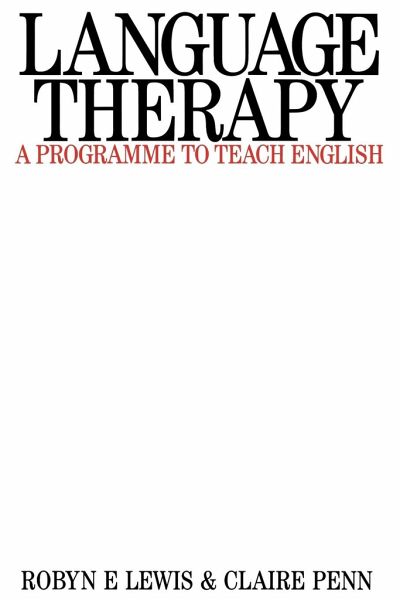
Language Therapy offers a comprehensive approach to dealing with the problem of language delay using therapy based on the LARSP and the Laura Lee frameworks.
Andere Kunden interessierten sich auch für
Wendy LynasCommunication Options in the Education of Deaf Children73,99 €
Pamela EnderbyDoes Speech and Language Therapy Work?66,99 €
Janet DoylePractical Audiology for Speech and Language Therapy Work73,99 €
Shelagh BrumfittInnovations in Professional Education for Speech and Language Therapy73,99 €
Bruce E MurdochSpeech and Language Disorders in Multiple Sclerosis76,99 €
John BamfordHearing Impairment, Auditory Perception and Language Disability80,99 €
Jean RondalSpeech and Language Intervention in Down Syndrome101,99 €-
-
-
Language Therapy offers a comprehensive approach to dealing with the problem of language delay using therapy based on the LARSP and the Laura Lee frameworks.
Produktdetails
- Produktdetails
- Verlag: Wiley
- Seitenzahl: 320
- Erscheinungstermin: 21. November 1990
- Englisch
- Abmessung: 229mm x 152mm x 17mm
- Gewicht: 449g
- ISBN-13: 9781870332323
- ISBN-10: 1870332326
- Artikelnr.: 29149839
- Herstellerkennzeichnung
- Libri GmbH
- Europaallee 1
- 36244 Bad Hersfeld
- gpsr@libri.de
- Verlag: Wiley
- Seitenzahl: 320
- Erscheinungstermin: 21. November 1990
- Englisch
- Abmessung: 229mm x 152mm x 17mm
- Gewicht: 449g
- ISBN-13: 9781870332323
- ISBN-10: 1870332326
- Artikelnr.: 29149839
- Herstellerkennzeichnung
- Libri GmbH
- Europaallee 1
- 36244 Bad Hersfeld
- gpsr@libri.de
Robyn Lewis and Clare Penn are the authors of Language Therapy: A Programme to Teach English, published by Wiley.
Introduction.
Book One - Guidelines for Assessment and Therapy.
1. Assessment - the Baseline of Therapy.
2. Planning a Session.
3. The Importance of Reception.
4. Creating Relevance and Context: situtational; intentional linguistic;
listener and conversational.
5. Motivation.
6. Techniques.
7. Equipment.
8. Home Visiting.
9. School Vist.
Summary
Book Two - LARSP - Techniques and Suggestions for each Stage.
1. Stage 1: Vocalisation and the First Lexicon.
2. LARSP - Stage I.
3. Stages II-IV - Developing Language Complexity.
4. Stage II - Clauses.
5. Stage III - Expansions.
6. Transition to Stage IV - Expansions.
7. Stage IV - Clauses.
8. Stage V - Clauses, Phrases, Word.
9. Stage VI - (+) New types of construction, (-) Errors made on all
previous constructions.
Book Three - Therapy with Special Grammatical Categories: The Phrasal
Component.
Introduction.
1. Determiners: The article: the , a(n).
2. Pronouns: Definition and description.
3. Verbs: Definition and description.
4. The Negative: Definition and description.
5. Questions: Definition and description.
6. Conjunctions: Definition and description.
7. Adverbs: Definition and description.
8. Adjectives: Definition and description.
9. Prepositions: Definition and description.
Activities to teach prepositions.
Metaphorical use of prepositions.
Conclusion.
Bibliography.
Book One - Guidelines for Assessment and Therapy.
1. Assessment - the Baseline of Therapy.
2. Planning a Session.
3. The Importance of Reception.
4. Creating Relevance and Context: situtational; intentional linguistic;
listener and conversational.
5. Motivation.
6. Techniques.
7. Equipment.
8. Home Visiting.
9. School Vist.
Summary
Book Two - LARSP - Techniques and Suggestions for each Stage.
1. Stage 1: Vocalisation and the First Lexicon.
2. LARSP - Stage I.
3. Stages II-IV - Developing Language Complexity.
4. Stage II - Clauses.
5. Stage III - Expansions.
6. Transition to Stage IV - Expansions.
7. Stage IV - Clauses.
8. Stage V - Clauses, Phrases, Word.
9. Stage VI - (+) New types of construction, (-) Errors made on all
previous constructions.
Book Three - Therapy with Special Grammatical Categories: The Phrasal
Component.
Introduction.
1. Determiners: The article: the , a(n).
2. Pronouns: Definition and description.
3. Verbs: Definition and description.
4. The Negative: Definition and description.
5. Questions: Definition and description.
6. Conjunctions: Definition and description.
7. Adverbs: Definition and description.
8. Adjectives: Definition and description.
9. Prepositions: Definition and description.
Activities to teach prepositions.
Metaphorical use of prepositions.
Conclusion.
Bibliography.
Introduction.
Book One - Guidelines for Assessment and Therapy.
1. Assessment - the Baseline of Therapy.
2. Planning a Session.
3. The Importance of Reception.
4. Creating Relevance and Context: situtational; intentional linguistic;
listener and conversational.
5. Motivation.
6. Techniques.
7. Equipment.
8. Home Visiting.
9. School Vist.
Summary
Book Two - LARSP - Techniques and Suggestions for each Stage.
1. Stage 1: Vocalisation and the First Lexicon.
2. LARSP - Stage I.
3. Stages II-IV - Developing Language Complexity.
4. Stage II - Clauses.
5. Stage III - Expansions.
6. Transition to Stage IV - Expansions.
7. Stage IV - Clauses.
8. Stage V - Clauses, Phrases, Word.
9. Stage VI - (+) New types of construction, (-) Errors made on all
previous constructions.
Book Three - Therapy with Special Grammatical Categories: The Phrasal
Component.
Introduction.
1. Determiners: The article: the , a(n).
2. Pronouns: Definition and description.
3. Verbs: Definition and description.
4. The Negative: Definition and description.
5. Questions: Definition and description.
6. Conjunctions: Definition and description.
7. Adverbs: Definition and description.
8. Adjectives: Definition and description.
9. Prepositions: Definition and description.
Activities to teach prepositions.
Metaphorical use of prepositions.
Conclusion.
Bibliography.
Book One - Guidelines for Assessment and Therapy.
1. Assessment - the Baseline of Therapy.
2. Planning a Session.
3. The Importance of Reception.
4. Creating Relevance and Context: situtational; intentional linguistic;
listener and conversational.
5. Motivation.
6. Techniques.
7. Equipment.
8. Home Visiting.
9. School Vist.
Summary
Book Two - LARSP - Techniques and Suggestions for each Stage.
1. Stage 1: Vocalisation and the First Lexicon.
2. LARSP - Stage I.
3. Stages II-IV - Developing Language Complexity.
4. Stage II - Clauses.
5. Stage III - Expansions.
6. Transition to Stage IV - Expansions.
7. Stage IV - Clauses.
8. Stage V - Clauses, Phrases, Word.
9. Stage VI - (+) New types of construction, (-) Errors made on all
previous constructions.
Book Three - Therapy with Special Grammatical Categories: The Phrasal
Component.
Introduction.
1. Determiners: The article: the , a(n).
2. Pronouns: Definition and description.
3. Verbs: Definition and description.
4. The Negative: Definition and description.
5. Questions: Definition and description.
6. Conjunctions: Definition and description.
7. Adverbs: Definition and description.
8. Adjectives: Definition and description.
9. Prepositions: Definition and description.
Activities to teach prepositions.
Metaphorical use of prepositions.
Conclusion.
Bibliography.