Praise for previous edition: "...a comprehensive, meticulously-researched study of contemporary international law governing the use of armed force in international relations.' Andrew Garwood-Gowers, Queensland University of Technology Law Review, Volume 12(2) When this first English language edition of The Law Against War published it quickly established itself as a classic. Detailed, analytically rigorous and comprehensive, it provided an indispensable guide to the legal framework regulating the use of force. Now a decade on the much anticipated new edition brings the work up to date. It…mehr
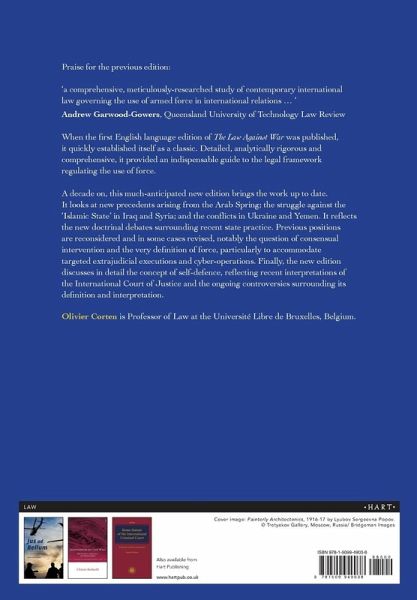
Praise for previous edition: "...a comprehensive, meticulously-researched study of contemporary international law governing the use of armed force in international relations.' Andrew Garwood-Gowers, Queensland University of Technology Law Review, Volume 12(2) When this first English language edition of The Law Against War published it quickly established itself as a classic. Detailed, analytically rigorous and comprehensive, it provided an indispensable guide to the legal framework regulating the use of force. Now a decade on the much anticipated new edition brings the work up to date. It looks at new precedents arising from the Arab Spring; the struggle against the "Islamic State" in Iraq and Syria; and the conflicts in Ukraine and Yemen. It also reflects the new doctrinal debates surrounding recent state practice. Previous positions are reconsidered and in some cases revised, notably the question of consensual intervention and the very definition of force, particularly, to accommodate targeted extrajudicial executions and cyber-operations. Finally, the new edition provides detailed coverage of the concept of self-defense, reflecting recent interpretations of the International Court of Justice and the ongoing controversies surrounding its definition and interpretation.
Olivier Corten is Professor at the Université libre de Bruxelles, Belgium.
Inhaltsangabe
1. A Choice of Method I. The Terms of the Methodological Debate on the Non-Use of Force: The Extensive Versus the Restrictive Approach A. The Extensive and Restrictive Approaches to the Interpretation of the Rule Prohibiting the Use of Force B. Towards a Disappearance of Restrictive Approaches? II. Methodological Approach of this Book A. Reliance on a Novel Right B. The Acceptance of the Modification of the Legal Rule by the International Community of States as a Whole III. Conclusion 2. What Do 'Use of Force' and 'Threat of Force' Mean? I. What Does 'Force' Mean? A. The Boundary between Military Force and Police Measures B. Determining the Threshold: 'Force' within the Meaning of Charter Article 2(4) C. A Few Problematic Situations: Humanitarian Operations or Protection of Nationals, Targeted Military Actions or 'Targeted Killings' D. The Case of 'Cyber Attacks' II. What Does 'Threat of Force' Mean? A. The Restrictive Meaning of 'Threat' under Charter Article 2(4) B. The Scope of the Prohibition of Threat: The Absence of any Specific Regime for the Contemplated Use of Force III. Conclusion 3. Do the Prohibition of the Use of Force and Self-Defence Apply to Non-State Actors? I. Exclusion of Non-State Political Entities from the Rule's Scope of Application: Rebel Groups, National Liberation Movements and Territories or Entities Whose Legal Status is Contested A. Inapplicability of the Rule Prohibiting the Use of Force to Civil Wars B. Inapplicability of the Rule to National Liberation Struggles C. The Case of Territories with Entities of Controversial Legal Status II. Exclusion of Private Groups from the Rule's Scope of Application A. Maintaining 'International Relations' as Relations among States: The Letter and Spirit of the Rule B. Maintaining 'International Relations' as Relations between States: The Interpretation of Texts in Practice C. Maintaining 'International Relations' as Relations between States: The Works of the International Law Commission and of the International Court of Justice III. Conclusion 4. Can Circumstances Precluding Wrongfulness be Invoked to Justify a Use of Force? I. Inadmissibility in Principle A. The Peremptory Character of the Rule in Charter Article 2(4) B. Inadmissibility of Circumstances Precluding Wrongfulness Not Provided for by the UN Charter II. Inadmissibility Confirmed in Practice A. Precedents Attesting to States' General Reluctance to Invoke Circumstances Precluding Wrongfulness B. Precedents Attesting Unequivocal Condemnation of Armed Reprisals C. The Rare Precedents Where Circumstances Precluding Wrongfulness Have Been Invoked to Justify the Use of Force: Necessity and 'Bona Fide Error'? III. Conclusion 5. Intervention by Invitation I. The General Legal Regime of Military Intervention by Invitation A. Consent to Armed Intervention within the Limits of Peremptory Law (Jus Cogens): The Necessity of Ad Hoc Consent B. The Requirement for Consent of the State's Highest Authorities II. Observance of the Right of Peoples to Self-Determination and the Security Council's Growing Role A. The Right of Peoples to Self-Determination: A Relevant Principle for Evaluating the Lawfulness of Intervention by Invitation? B. The Problem of Concurrent Governments C. The Problem of the Object and Effects of the Intervention by Invitation III. Conclusion 6. Intervention Authorised by the UN Security Council I. The General Legal Regime of Authorised Military Intervention A. The Lawfulness of Military Intervention Authorised by the Security Council B. The Unlawfulness of Military Intervention 'Authorised' by Another UN Body or by Another Subject of International Law II. The Problem of Presumed Authorisation A. The Absence of Recognition of Presumed Authorisation in Practice B. Refusals and Obstacles of Principle to Recognition of a Presumed Authorisation III. Conclusion 7. Self-Defence I. 'Armed Attack' According to Charter Article 51 A. 'Preventive Self-Defence' Theories B. The Question of 'Indirect Aggression' II. Necessity and Proportionality A. The Limit of Necessary Measures Adopted by the Security Council B. The General Meaning of Conditions of Necessity and Proportionality III. Conclusion 8. A Right of Humanitarian Intervention? I. Non-Recognition in Legal Texts A. The Dismissal of the Right of Humanitarian Intervention in Classical Legal Texts B. The Persistent Refusal to Accept a 'Right of Humanitarian Intervention' II. The Non-Existence of Decisive Precedents A. The Absence of Consecration of a Right of Humanitarian Intervention before 1990 B. The Absence of Consecration of a Right of Humanitarian Intervention since 1990 III. Conclusion
1. A Choice of Method I. The Terms of the Methodological Debate on the Non-Use of Force: The Extensive Versus the Restrictive Approach A. The Extensive and Restrictive Approaches to the Interpretation of the Rule Prohibiting the Use of Force B. Towards a Disappearance of Restrictive Approaches? II. Methodological Approach of this Book A. Reliance on a Novel Right B. The Acceptance of the Modification of the Legal Rule by the International Community of States as a Whole III. Conclusion 2. What Do 'Use of Force' and 'Threat of Force' Mean? I. What Does 'Force' Mean? A. The Boundary between Military Force and Police Measures B. Determining the Threshold: 'Force' within the Meaning of Charter Article 2(4) C. A Few Problematic Situations: Humanitarian Operations or Protection of Nationals, Targeted Military Actions or 'Targeted Killings' D. The Case of 'Cyber Attacks' II. What Does 'Threat of Force' Mean? A. The Restrictive Meaning of 'Threat' under Charter Article 2(4) B. The Scope of the Prohibition of Threat: The Absence of any Specific Regime for the Contemplated Use of Force III. Conclusion 3. Do the Prohibition of the Use of Force and Self-Defence Apply to Non-State Actors? I. Exclusion of Non-State Political Entities from the Rule's Scope of Application: Rebel Groups, National Liberation Movements and Territories or Entities Whose Legal Status is Contested A. Inapplicability of the Rule Prohibiting the Use of Force to Civil Wars B. Inapplicability of the Rule to National Liberation Struggles C. The Case of Territories with Entities of Controversial Legal Status II. Exclusion of Private Groups from the Rule's Scope of Application A. Maintaining 'International Relations' as Relations among States: The Letter and Spirit of the Rule B. Maintaining 'International Relations' as Relations between States: The Interpretation of Texts in Practice C. Maintaining 'International Relations' as Relations between States: The Works of the International Law Commission and of the International Court of Justice III. Conclusion 4. Can Circumstances Precluding Wrongfulness be Invoked to Justify a Use of Force? I. Inadmissibility in Principle A. The Peremptory Character of the Rule in Charter Article 2(4) B. Inadmissibility of Circumstances Precluding Wrongfulness Not Provided for by the UN Charter II. Inadmissibility Confirmed in Practice A. Precedents Attesting to States' General Reluctance to Invoke Circumstances Precluding Wrongfulness B. Precedents Attesting Unequivocal Condemnation of Armed Reprisals C. The Rare Precedents Where Circumstances Precluding Wrongfulness Have Been Invoked to Justify the Use of Force: Necessity and 'Bona Fide Error'? III. Conclusion 5. Intervention by Invitation I. The General Legal Regime of Military Intervention by Invitation A. Consent to Armed Intervention within the Limits of Peremptory Law (Jus Cogens): The Necessity of Ad Hoc Consent B. The Requirement for Consent of the State's Highest Authorities II. Observance of the Right of Peoples to Self-Determination and the Security Council's Growing Role A. The Right of Peoples to Self-Determination: A Relevant Principle for Evaluating the Lawfulness of Intervention by Invitation? B. The Problem of Concurrent Governments C. The Problem of the Object and Effects of the Intervention by Invitation III. Conclusion 6. Intervention Authorised by the UN Security Council I. The General Legal Regime of Authorised Military Intervention A. The Lawfulness of Military Intervention Authorised by the Security Council B. The Unlawfulness of Military Intervention 'Authorised' by Another UN Body or by Another Subject of International Law II. The Problem of Presumed Authorisation A. The Absence of Recognition of Presumed Authorisation in Practice B. Refusals and Obstacles of Principle to Recognition of a Presumed Authorisation III. Conclusion 7. Self-Defence I. 'Armed Attack' According to Charter Article 51 A. 'Preventive Self-Defence' Theories B. The Question of 'Indirect Aggression' II. Necessity and Proportionality A. The Limit of Necessary Measures Adopted by the Security Council B. The General Meaning of Conditions of Necessity and Proportionality III. Conclusion 8. A Right of Humanitarian Intervention? I. Non-Recognition in Legal Texts A. The Dismissal of the Right of Humanitarian Intervention in Classical Legal Texts B. The Persistent Refusal to Accept a 'Right of Humanitarian Intervention' II. The Non-Existence of Decisive Precedents A. The Absence of Consecration of a Right of Humanitarian Intervention before 1990 B. The Absence of Consecration of a Right of Humanitarian Intervention since 1990 III. Conclusion
Es gelten unsere Allgemeinen Geschäftsbedingungen: www.buecher.de/agb
Impressum
www.buecher.de ist ein Internetauftritt der buecher.de internetstores GmbH
Geschäftsführung: Monica Sawhney | Roland Kölbl | Günter Hilger
Sitz der Gesellschaft: Batheyer Straße 115 - 117, 58099 Hagen
Postanschrift: Bürgermeister-Wegele-Str. 12, 86167 Augsburg
Amtsgericht Hagen HRB 13257
Steuernummer: 321/5800/1497
USt-IdNr: DE450055826