
Andere Kunden interessierten sich auch für
 The Prohibition of Torture and Ill-Treatment under International Law138,99 €
 The Prohibition of Torture in Exceptional Circumstances47,99 €
 The Torture Debate in America92,99 €
 Terrorism and Torture76,99 €
 Torture37,99 €
 Preventing Torture161,99 €
 Unjustifiable Means: The Inside Story of How the Cia, Pentagon, and US Government Conspired to Torture19,99 €

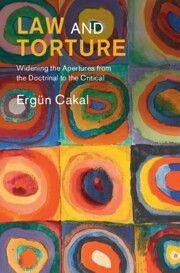
Contemporary understandings of torture are ruled by a medico-legal duopoly: the language of law (regulating definition and prohibition) and that of medicine (controlling understandings of the body in pain). This duopoly has left little space for contextual conceptualisation - of ideological, emotional and imaginational impulses which function in readily recognising some forms of violence and dismissing others. This book challenges the rigour of this prevailing duopoly. In its place, it develops a new approach to critique the central scripts of 'law and torture' scholarship (around progress, violence, evidence and senses). Drawing on socio-legal and critical-theoretical scholarship, it aims to 'widen the apertures' of the dominant dogmas to their interconnected social, political, temporal and emotional dimensions. These dimensions, the book advances, hold the key to more fully understanding not only the production of torture's definition and prohibition; but also its normative contestation - to better grasp whose pain gets recognised and redressed and why.