

Andere Kunden interessierten sich auch für
 LEADERSHP COMPETENCIES IN ORGANIZATIONS28,99 €
 Developing Leadership Character180,99 €
 Competencies for Effective Leadership104,99 €
 Leadership23,99 €
 Manual for Developing Intercultural Competencies64,99 €
 Building a Green Future Through Essential Decision-Making Competencies127,99 €
 Core Competencies21,99 €


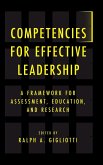




Every group has a head, but not necessarily a leader. The head can be a ruler, a manager, or a leader. This book is written for business executives, administrators, managers, HR officers, management trainers, consultants, educators, students, and others who wish to develop or improve their leadership skills for effective and efficient performance in working with others in the workplace. Many studies have concluded that management is not leadership, and regardless of how good managers are, leaders consistently achieve higher performance, greater job satisfaction, and affective organizational commitment from workers than managers do. This is largely attributed to differences in how workers respond to managerial authority versus leadership influence in achieving collective goals. Leaders' influence has been shown to achieve greater employee performance and organizational commitment than achievable under managerial directives. Leaders help workers self-actualize through influence that inspires and motivates them to achieve beyond regular job expectations. This is why good organizations invest in their managers to attain leadership qualities and competencies.This book makes the case for why managers should become leaders. It does so by recognizing and not conflating the three major forms of heading a group or an organization. The book warns of the conflation of being a ruler, manager, and leader. This conflation pervades many leadership books and even academic research reports. In particular, conflating management with leadership, as most commonly done, nullifies the importance of leadership, implying that all one has to do to become a leader is to be promoted to a management position. This assumption of leadership is an error. The importance of management in coordinating the activities of others and overseeing organizational functions is fully acknowledged. However, while management is crucial for achieving organizational success, it is not leadership. Yet, to understand leadership, a strong understanding of management is important. Hence, this book emphasizes how management provides a benchmark or a starting point for understanding leadership. The reader will enjoy the narratives of each method of headship and the contrasts of the characteristics, functions, and principles of management with the qualities of leadership. With the use of both scientific explanations and engaging stories, the reader will learn how management is a bureaucratic position awarded by an organization for the dispensation of specific duties, such as planning, supervising, controlling, coordinating, and staffing. This is in contrast to leadership, which is a non-organizational, informal, and relationship-induced position awarded by workers. The book demonstrates that organizations determine managers and subordinates, but workers determine who they follow as leaders. Followers determine leaders! The reader will learn the key leadership competencies to acquire to earn the status of a leader among workers. The book is written in clear and user-friendly language for easy understanding. It is highly compelling and recommended as a must-read for everyone, managers, and administrators who wish to become leaders to those who report to them.