
Andere Kunden interessierten sich auch für
 Generative Artificial Intelligence Empowered Learning47,99 €
 Generative Artificial Intelligence Empowered Learning62,99 €
 Artificial Intelligence in Higher Education and Scientific Research121,99 €
 Artificial Intelligence in Higher Education and Scientific Research121,99 €
 Artificial Intelligence in Education69,99 €
 Artificial Intelligence in Education92,99 €
 Teaching and Learning in the Age of Generative AI137,99 €
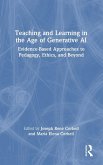
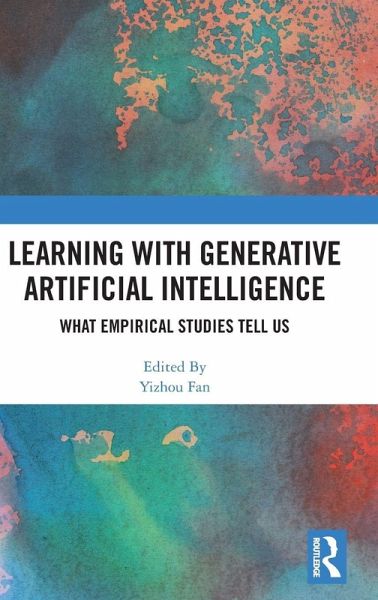
This book delves into the core of education's digital transformation, presenting a thorough and empirical examination of generative artificial intelligence (GenAI)'s impact beyond the theoretical and fragmented insights prevalent in current discourse.
Drawing from peer-reviewed and extensive empirical studies, the contributors aim to unveil the multifaceted effects of GenAI (particularly ChatGPT) on learning. They navigate through topics of interaction, assessment, emotion, effect and efficiency, meta-cognition, and ethics, offering a comprehensive exploration of GenAI's educational implications. This book presents a closed loop of learning theory, multimodal data, and learning analytics technology. Furthermore, this book builds and proposes core conceptual models for future learning and identifies potential research directions.
This book will serve as a foundational reference for educators seeking innovative learning and teaching methods and for researchers andtechnologists who seek to push the boundaries of educational technology and related areas.
Drawing from peer-reviewed and extensive empirical studies, the contributors aim to unveil the multifaceted effects of GenAI (particularly ChatGPT) on learning. They navigate through topics of interaction, assessment, emotion, effect and efficiency, meta-cognition, and ethics, offering a comprehensive exploration of GenAI's educational implications. This book presents a closed loop of learning theory, multimodal data, and learning analytics technology. Furthermore, this book builds and proposes core conceptual models for future learning and identifies potential research directions.
This book will serve as a foundational reference for educators seeking innovative learning and teaching methods and for researchers andtechnologists who seek to push the boundaries of educational technology and related areas.