
Andere Kunden interessierten sich auch für
 With General Sheridan in Lee's Last Campaign20,99 €
![]() "Mr. Lee's Plan--March 29, 1777": the Treason of Charles Lee, Major General, Second in Command in the American Army of the Revolution17,99 €
"Mr. Lee's Plan--March 29, 1777": the Treason of Charles Lee, Major General, Second in Command in the American Army of the Revolution17,99 € Lee's Dispatches; Unpublished Letters of General Robert E. Lee, C.S.A., to Jefferson Davis and the War Department of the Confederate States of America, 1862-65, From the Private Collections of Wymberley Jones De Renne ..25,99 €
 History of the Fourth Regiment of South Carolina Volunteers: From the Commencement of the War Until Lee's Surrender. Giving a Full Account of All Its18,99 €
 Three Days at Gettysburg: A Complete Hand-book of the Movements of Both Armies During Lee's Invasion of Pennsylvania, and his Return to Virginia17,99 €
 A Lieutenant of Cavalry in Lee's Army20,99 €
 Lee's Lieutenants Third Volume Abridged29,99 €


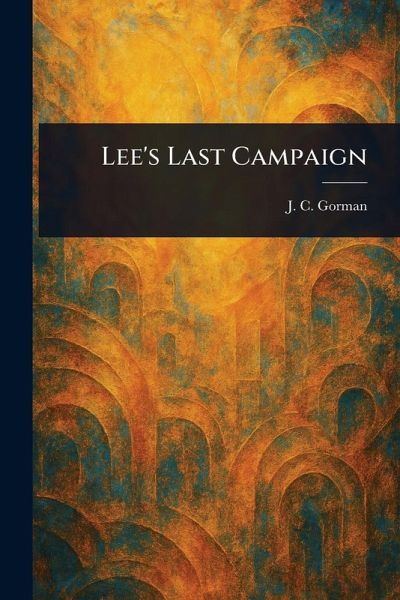
"Lee's Last Campaign" by John C. Gorman meticulously recounts the pivotal Appomattox Campaign of 1865, a turning point in the American Civil War. This historical work delves into the final military movements led by General Robert E. Lee in Virginia, chronicling the desperate struggle of the Confederacy as it faced inevitable defeat. Gorman's detailed narrative explores the strategic decisions, battlefield encounters, and ultimate surrender at Appomattox, marking the close of a defining chapter in American history. Readers gain insight into the military context of the time, examining the events that led to the end of the war and its lasting impact on the nation. A valuable resource for those interested in the American Civil War, military history, and the legacy of the Confederacy. This work has been selected by scholars as being culturally important, and is part of the knowledge base of civilization as we know it. This work is in the public domain in the United States of America, and possibly other nations. Within the United States, you may freely copy and distribute this work, as no entity (individual or corporate) has a copyright on the body of the work. Scholars believe, and we concur, that this work is important enough to be preserved, reproduced, and made generally available to the public. We appreciate your support of the preservation process, and thank you for being an important part of keeping this knowledge alive and relevant.