
Andere Kunden interessierten sich auch für
 The Undiscovered Self17,99 €
 The Unconscious35,99 €
 Leonardo da Vinci15,99 €
 Ecrits20,99 €
 The Ethics of Psychoanalysis17,99 €
 Imposter Syndrome and The 'As-If' Personality in Analytical Psychology34,99 €
 Imposter Syndrome and The 'As-If' Personality in Analytical Psychology138,99 €






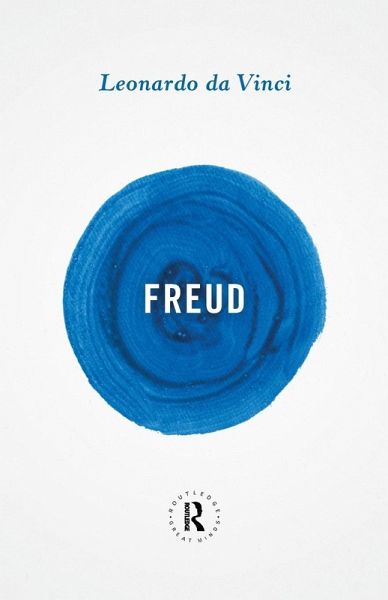
Sigmund Freud was already internationally acclaimed as the principal founder of psychoanalysis when he turned his attention to the life of Leonardo da Vinci. It remained Freud's favourite composition. Compressing many of his insights into a few pages, the result is a fascinating picture of some of Freud's fundamental ideas, including human sexuality, dreams, and repression. It is an equally compelling - and controversial - portrait of Leonardo and the creative forces that according to Freud lie behind some of his great works, including the Mona Lisa.
With a new foreword by Maria Walsh.
With a new foreword by Maria Walsh.
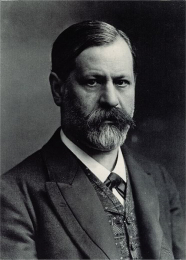
Sigmund Freud (1856-1939) Sigmund Freud was an Austrian neurologist born into a Jewish family in 1856, in Moravia, in the time of the Austrian Empire, known as the Czech Republic in the present day. Popularly known as the "father of psychoanalysis", Freud was the founder of psychoanalysis - a clinical method for treating mental disorders in a patient through a dialogue between them and the psychoanalyst. Freud introduced the concept of the unconscious through this theory with regard to dream interpretation. Later, this developed into his theory of Oedipus Complex. This field of study was carried forward by Freud's students, Alfred Adler, Carl Jung, and Erich Fromm. Freud studied medicine at the University of Vienna and also researched in the field of neurophysiology. In addition, his theorization of the human psyche, which comprises the three elements of id, ego, and superego, was revolutionary in the field of psychoanalysis. Freud authored many books from 1891 to 1967. He is also known for writing three ground-breaking essays on the subject of sexuality.
Wikipedia, urheberrechtliche Schutzfrist abgelaufen